

GAZA CITY, Gaza Strip — At least 27 Palestinians were killed Friday in a series of Israeli airstrikes across the Gaza Strip, even as Hamas leadership reviewed a new Israeli-approved ceasefire proposal that could potentially pause the grinding war and facilitate humanitarian aid to the devastated enclave.
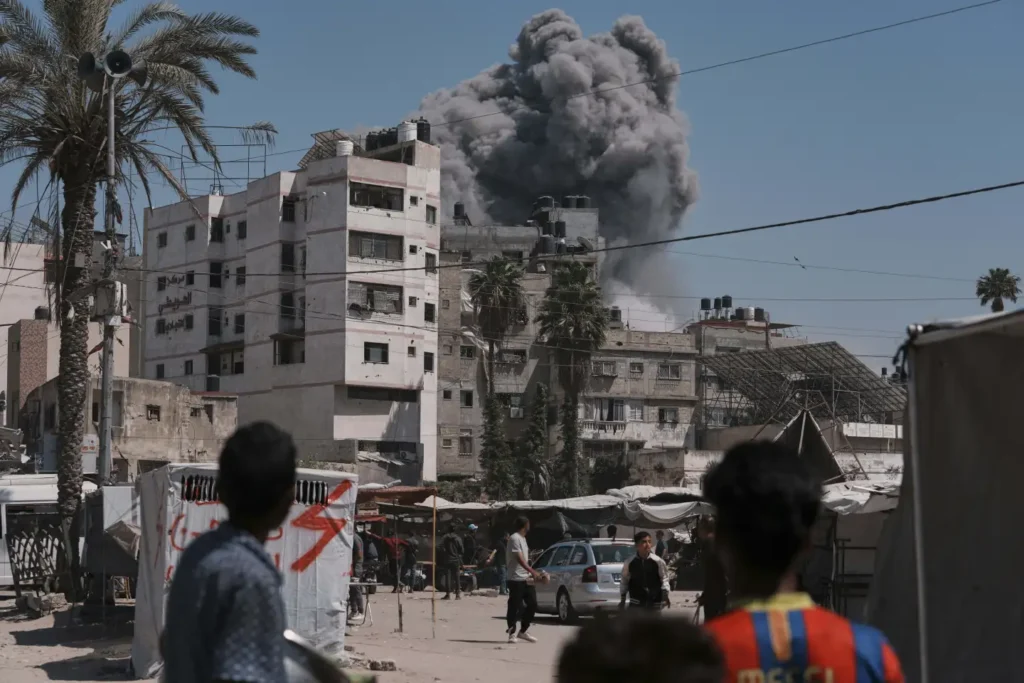
The deaths were confirmed by hospital officials in Gaza, who continue to report mounting civilian casualties amid intensified Israeli operations. The ceasefire proposal, approved by Israel earlier in the week, was met initially with skepticism by Hamas officials. However, diplomatic sources say negotiations remain active, with pressure mounting to reach a resolution that could halt hostilities, allow more humanitarian aid, and secure the release of remaining hostages.
According to U.S. officials, about 58 hostages are still believed to be held by Hamas, roughly a third of whom are presumed to be alive. President Donald Trump’s special envoy to the Middle East has expressed cautious optimism, describing the current draft agreement as the most promising pathway yet to break the stalemate.
Since the war’s eruption following Hamas’ Oct. 7, 2023, surprise attack on Israel, which killed approximately 1,200 people, Israel’s military campaign in Gaza has claimed more than 54,000 lives, according to the Gaza Health Ministry. The ministry does not differentiate between civilians and combatants, but international aid agencies estimate the majority of the dead are women and children.
With a population of around 2 million, Gaza has endured nearly three months of tight Israeli blockade, which experts warn has brought the territory to the edge of famine. Although some restrictions have eased slightly in recent days, the humanitarian crisis remains acute, and access to food, medicine, and clean water continues to be severely limited.
In a parallel escalation, the Israeli military launched airstrikes late Friday on targets in Syria, stating that the strikes hit missile storage sites on the Mediterranean coast that allegedly posed threats to “international and Israeli maritime freedom of navigation.”
Syria’s state-run news agency, SANA, confirmed the strikes in the Latakia region, reporting material damage but no casualties.

Israel’s military campaign in Syria has intensified since the fall of the Bashar Assad regime in late 2024. Israeli forces have since established a buffer zone along the Golan Heights and carried out hundreds of strikes against what they describe as hostile military infrastructure tied to Islamist insurgents and Iranian-backed groups.
The cross-border escalation comes a day after the U.S. special envoy to Syria formally reopened the American ambassador’s residence in Damascus, a symbolic move that underscores Washington’s evolving relationship with Syria’s new leadership following Assad’s ouster.
Analysts view the reopening of the diplomatic compound as a signal of U.S. intent to stabilize post-Assad Syria, even as Israel continues to enforce red lines against any perceived regional threats — especially those involving Hezbollah, Iran, or remaining Islamist factions.
The ongoing review of the Israeli ceasefire proposal by Hamas represents a fragile window of opportunity in a war that has devastated Gaza and displaced over a million residents. Sources close to the negotiations suggest that the proposal includes incremental aid deliveries, phased withdrawals, and hostage exchanges — all tied to a broader regional realignment being navigated by U.S., Qatari, and Egyptian diplomats.
Still, Israeli military operations show no signs of slowing, and the latest fatalities in Gaza further complicate the prospects for a sustainable truce. Hamas’ formal response is expected in the coming days, as mediators attempt to bridge deep divides between the warring parties.
AP





