

WASHINGTON (BN24) — The U.S. Food and Drug Administration has approved a powerful new HIV prevention drug, Yeztugo, which nearly eliminated new infections in clinical trials. The landmark approval, announced by Gilead Sciences on Wednesday, comes at a moment of high promise — but also mounting concern that political headwinds could severely restrict the drug’s real-world impact.
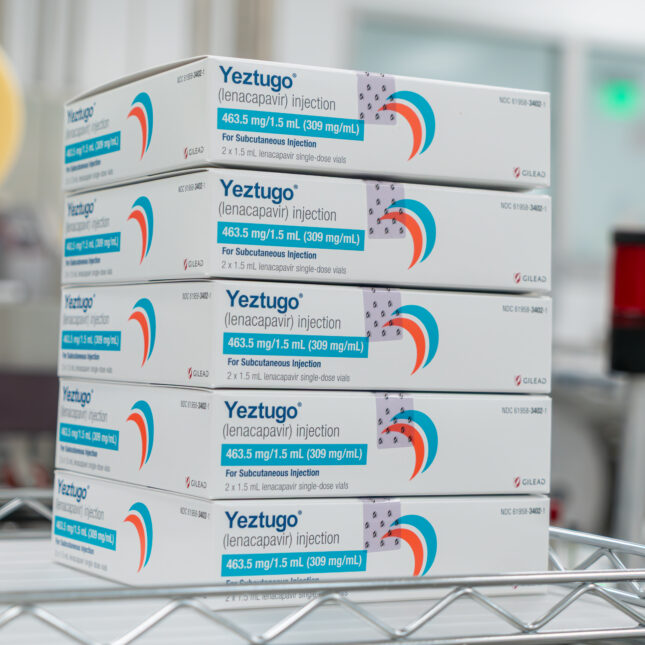
Yeztugo, the brand name for lenacapavir, is administered as a twice-yearly injection and represents the most potent form of pre-exposure prophylaxis (PrEP) developed to date. It significantly outperformed daily PrEP pills in trials, with an 89% lower HIV rate among gay, bisexual, and transgender recipients compared to those taking daily Truvada. In a separate study involving cisgender women in sub-Saharan Africa, not a single person on Yeztugo contracted HIV.
Advocates hailed the approval as a milestone in the fight against HIV. “This is the single best opportunity in 44 years of HIV prevention,” said Mitchell Warren, executive director of the advocacy group AVAC. Gilead CEO Daniel O’Day added that Yeztugo could “end the HIV epidemic once and for all.”
However, that goal may be undermined by deep federal budget cuts. The Trump administration has proposed a 35% slash in domestic HIV funding, including a plan to shut down the Centers for Disease Control and Prevention’s (CDC) $794 million HIV-prevention division. While $220 million in HIV-specific funds would be retained under the administration’s Ending the HIV Epidemic initiative, much of the infrastructure that supports PrEP education, access, and implementation faces elimination.
Health policy experts warn that such cuts could dramatically reduce the ability of local health departments and community-based organizations to deliver the new treatment to vulnerable populations. Already, disparities in PrEP use persist, particularly among Black and Latino gay and bisexual men, who remain underrepresented among PrEP users despite experiencing higher rates of HIV.
Yeztugo’s clinical success lies in part in its ability to solve adherence problems common with daily oral PrEP. Unlike Truvada or Descovy, which must be taken every day, lenacapavir stays in the body long enough to require only two injections a year. Still, at a list price of $14,109 per shot, the drug’s cost poses a significant barrier, particularly for uninsured and underinsured patients.
Insurers may hesitate to cover the new injection when far cheaper generic versions of Truvada are available. Elizabeth Kaplan, director of health care access at Harvard Law School’s Health Law and Policy Clinic, said insurers could instead impose higher copays for Yeztugo or deny coverage entirely. A pending Supreme Court case concerning the Affordable Care Act’s preventive care mandates could also jeopardize free access to PrEP medications.
Gilead said it would cover up to $7,200 in annual out-of-pocket costs for insured patients and provide free access through its patient assistance program for those who qualify. Still, even under ideal circumstances, it could take up to two months after a patient requests the drug before they receive their first injection.
While oral PrEP drugs like Truvada and Descovy reduce HIV risk by over 99% when taken daily, their effectiveness plummets with inconsistent use. Previous attempts to simplify PrEP delivery through long-acting options like Apretude, a bimonthly injection approved in 2021, have seen slow uptake, with only around 21,000 users nationwide.
Dr. Susanne Doblecki-Lewis of the University of Miami, who led Yeztugo’s clinical trials in gay men and injection drug users, said lenacapavir’s potential to reduce racial disparities in HIV prevention depends on whether it’s made broadly accessible. “If there are barriers like high copays or complicated prior authorizations, we could see disparities just get worse,” she warned.
Despite the political and financial hurdles, telehealth providers like Mistr are preparing to offer Yeztugo through clinics and storefronts in major urban centers. Gilead has also begun lobbying insurers for broader coverage.
Whether Yeztugo becomes a transformative public health tool or another underused breakthrough may depend less on its science and more on whether the infrastructure supporting HIV prevention can survive the Trump administration’s budget ax. As the nation faces a crossroads in its decades-long fight against HIV, the stakes have never been higher.





