

BEERSHEBA, Israel (BN24) — A direct Iranian missile strike on Thursday morning slammed into Soroka Medical Center, the main hospital in southern Israel, causing widespread structural damage and prompting a temporary closure to all but life-threatening cases. The impact, which Israeli media broadcast live with footage showing shattered windows and thick black smoke, came amid a series of missile and drone attacks that wounded at least 40 people in areas near Tel Aviv and Beersheba.
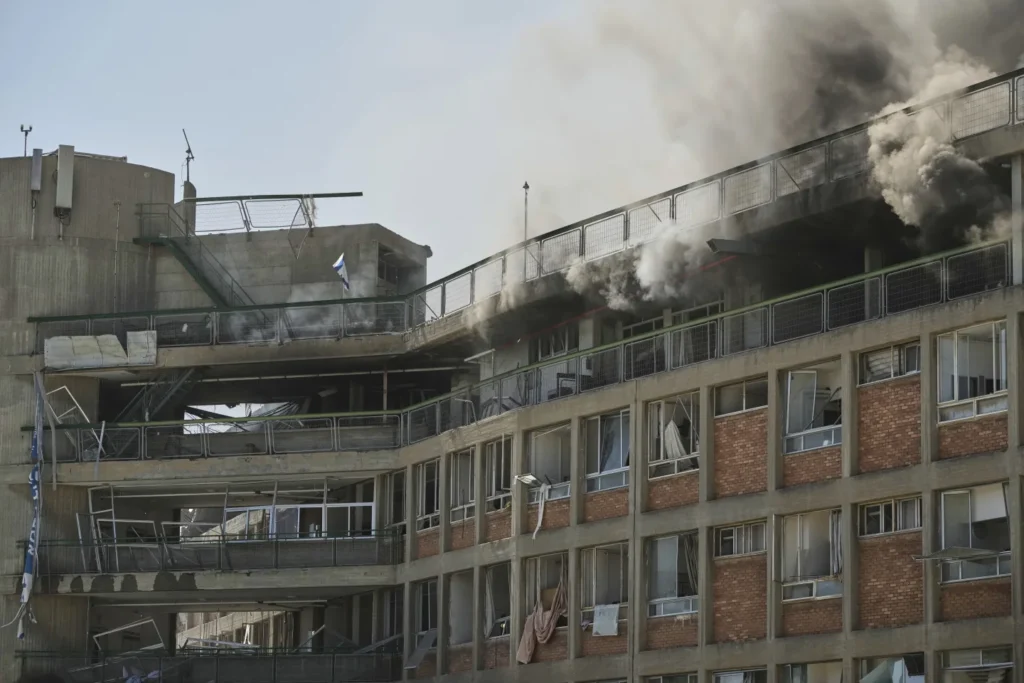
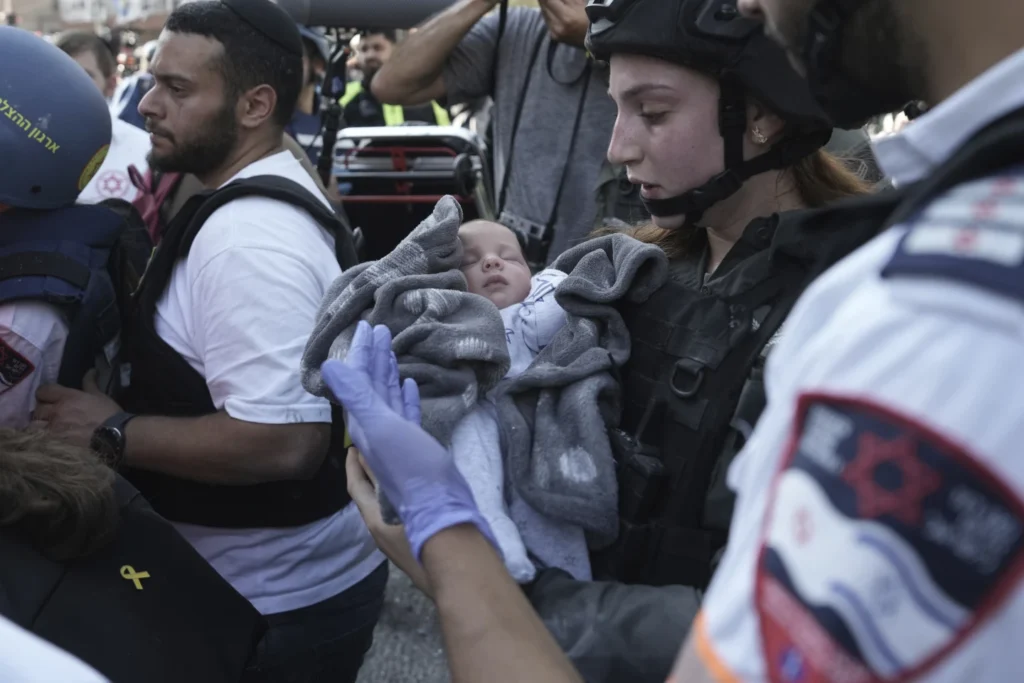
Israeli emergency services, including Magen David Adom, reported scores of injuries as missile barrages hit multiple high-rise and residential buildings across central and southern Israel. While Israel’s layered air defense system intercepted many incoming projectiles, officials acknowledged it was unable to stop all of them. One of those that broke through struck Soroka Hospital, a vital facility that serves more than a million residents in the Negev region.
The missile detonated near the hospital’s older surgical building, which had recently been evacuated. Emergency protocols were enacted immediately as black smoke poured from the structure and patients were moved to underground wards. Firefighting and rescue operations continued into the morning, with officials describing the damage as “extensive.” Local police commander Haim Bublil said several people were lightly injured and that rescuers were still combing the building to reach those in isolated areas.
Prime Minister Benjamin Netanyahu called the strike an act of terror against civilian infrastructure and vowed retaliation. “We will exact the full price from the tyrants in Tehran,” he said. Iranian state media, meanwhile, confirmed the missile launches and framed the hospital strike as an unintentional consequence of its “strategic deterrence.”
Shortly after the hospital was hit, Israel launched a retaliatory strike on Iran’s Arak heavy water reactor — a key facility in the country’s nuclear infrastructure. According to the Israeli military, precision strikes targeted the reactor’s core seal and components involved in plutonium production, aiming to permanently impair the site’s ability to be used for nuclear weapons development.
Iranian state television confirmed the attack on the Arak site but claimed no radiation had been released and said the area had been evacuated in advance. “There is no radiation danger whatsoever,” said a state TV reporter broadcasting live from Khondab, near the facility. The reactor, located 250 kilometers southwest of Tehran, had been redesigned under the 2015 nuclear agreement to limit its proliferation potential, but Israeli intelligence long suspected efforts to restore its original capabilities.
Israel’s strike on Arak followed earlier attacks on other elements of Iran’s nuclear program, including enrichment facilities in Natanz and Isfahan. Over the past week, Israeli airstrikes have killed several Iranian nuclear scientists and high-ranking military officials. Iranian retaliatory fire has included more than 400 missiles and hundreds of drones, leaving 24 people dead and hundreds wounded in Israel. In Iran, human rights monitors report 639 killed — including 263 civilians — and over 1,300 injured since the outbreak of hostilities.
The Arak facility’s history has been a flashpoint in nuclear diplomacy. After President Donald Trump withdrew the U.S. from the Iran nuclear deal in 2018, Tehran began quietly rebuilding portions of the reactor that were disabled under the agreement. At the time, Iranian nuclear chief Ali Akbar Salehi admitted Iran had secretly procured replacement components even before the original structure was dismantled. Thursday’s strike appears to reflect Israeli fears that Arak could again be used to produce plutonium, offering Iran a second pathway to nuclear weapons capability alongside its uranium enrichment activities.
Iran continues to insist its nuclear program is for peaceful energy purposes, despite enriching uranium to levels approaching weapons-grade. Israel, which does not officially acknowledge possessing nuclear weapons, views a nuclear-armed Iran as an existential threat and has consistently vowed to act unilaterally if necessary to prevent it.
The International Atomic Energy Agency (IAEA), which last visited the Arak site in May, has cautioned against military strikes on nuclear facilities. The agency recently acknowledged it no longer has “continuity of knowledge” about Iran’s heavy water production — a lapse that now complicates verification of Tehran’s compliance.
Amid intensifying conflict, U.S. officials have reiterated calls for de-escalation, but both Iran and Israel appear resolute. Supreme Leader Ayatollah Ali Khamenei on Wednesday rejected American demands to surrender and warned of “irreparable consequences” should the U.S. directly intervene. Iran’s foreign ministry has also dismissed reports of backchannel negotiations and mocked President Donald Trump’s threats against Khamenei as “cowardly bluster from a has-been warmonger.”
As the war enters its second week, Israel has slightly eased some civilian restrictions, suggesting confidence in its air defenses. Still, the attack on Soroka Medical Center underscores the vulnerability of critical infrastructure — and the growing civilian toll — as the region teeters on the brink of broader war.





