

WASHINGTON (BN24) — The Trump administration is preparing to deport Kilmar Abrego for a second time, but this time the Salvadoran national will not be returned to El Salvador, the country where he was wrongly deported in March, a Justice Department attorney told a federal judge on Thursday.
During a hearing in U.S. District Court in Maryland, government attorney Jonathan Guynn said the administration currently has “no imminent plans” to remove Abrego from the country. However, should a deportation take place, Abrego would be sent to a third, unnamed nation—not back to El Salvador, where his life was previously deemed at risk.
Abrego, 29, is at the center of a growing legal and political controversy after his March deportation violated a 2019 federal court order barring his removal to El Salvador over concerns of potential persecution. After being imprisoned in El Salvador, he was recently returned to the U.S. under federal custody to face criminal charges for allegedly smuggling undocumented migrants into the country. He has pleaded not guilty.
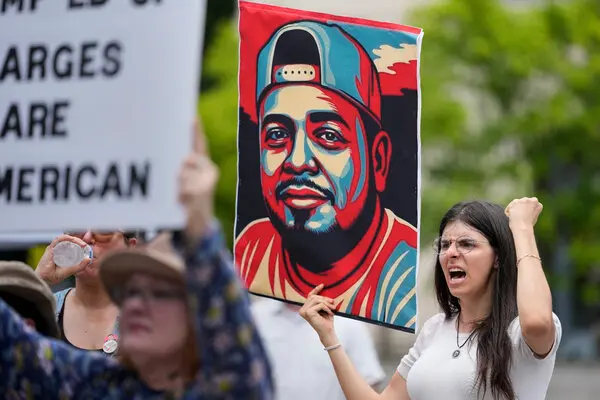
The Trump administration’s effort to remove Abrego again, even as legal proceedings remain underway, has further inflamed tensions surrounding the president’s aggressive immigration enforcement strategy. Abrego, who had been living in Maryland with his U.S. citizen wife and young child, has drawn widespread attention as a symbol of what critics say is a system disregarding due process protections for migrants.
A federal judge in Maryland has ordered that Abrego be released ahead of trial, possibly as early as Friday. However, the Department of Homeland Security has indicated it will take him into immigration custody immediately, raising fresh questions about his fate and the administration’s legal responsibilities.
Abrego’s attorneys have urged the court to keep him in Maryland while both the immigration and criminal cases proceed, and to ensure no further deportation is attempted until the legal matters are resolved. Two federal courts—one in Maryland and the other in Tennessee, where the criminal charges were filed—have yet to issue final rulings on those requests.
The Justice Department has remained largely silent about where Abrego might be deported if the removal goes ahead. “He will not be sent to El Salvador,” Guynn said Thursday, without providing further detail.
Meanwhile, Assistant U.S. Attorney Robert McGuire, who is leading the prosecution in Nashville, told Magistrate Judge Barbara Holmes this week that he would coordinate with DHS “as best as he could,” but acknowledged that prosecutorial discretion does not extend to immigration enforcement decisions.
The case has become a flashpoint in the Trump administration’s broader immigration agenda, which has faced repeated judicial challenges and criticism from human rights groups. Abrego’s wrongful deportation, his subsequent return to the United States, and now the uncertainty over a potential second removal have further underscored the legal complexity and human toll of fast-tracked immigration enforcement.





