

WASHINGTON (BN24) — The Senate is expected to hold a critical procedural vote late Saturday on President Trump’s sweeping tax and spending proposal, branded by Trump as the “One Big Beautiful Bill,” even as support within the Republican caucus remains uncertain.
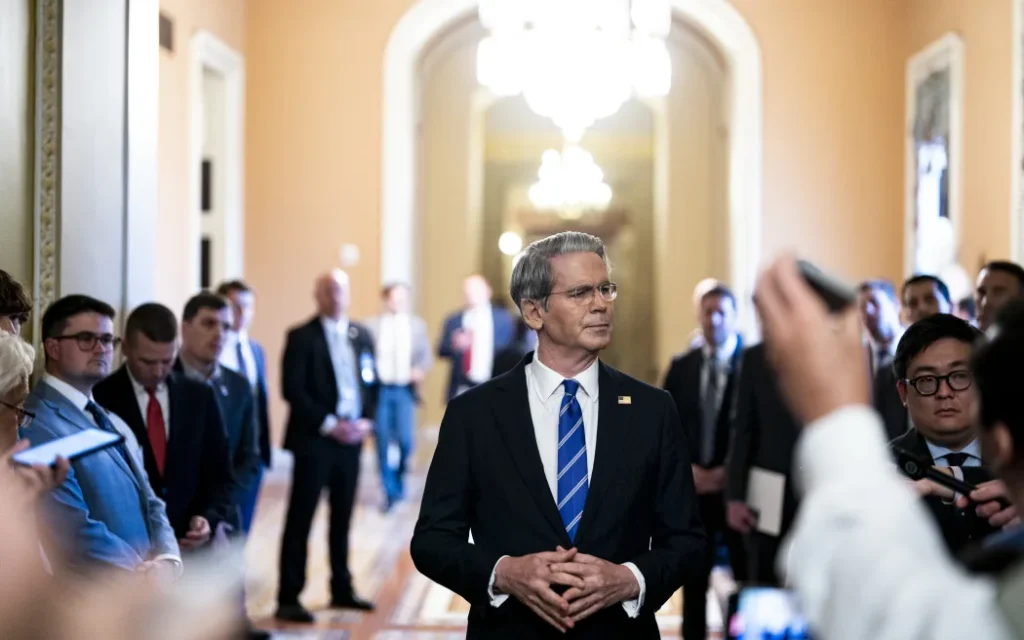
Senate Majority Leader John Thune (R-S.D.) acknowledged Friday he was still short of commitments to guarantee the measure could clear the initial hurdle. The bill’s prospects were complicated by lingering policy disputes and last-minute rulings from the Senate parliamentarian, who determined that several controversial provisions violated reconciliation rules that require measures to directly impact federal spending.
Senate Republicans released the updated 1,200-page bill only late Friday night, leaving lawmakers little time to review the text before the vote to proceed. Trump has pressed Congress to deliver the legislation before the Fourth of July holiday, describing it as a signature fulfillment of his promises to voters.
In a statement to CBS News on Saturday, the White House warned that failure would amount to a betrayal of trust.
“The One Big Beautiful Bill Act reflects the shared priorities of both the Congress and the Administration,” the statement said. “President Trump is committed to keeping his promises, and failure to pass this bill would be the ultimate betrayal.”
The proposal pairs sweeping tax cuts with funding increases for defense and Trump’s immigration priorities. To offset costs, it would cut spending on Medicaid and trim benefits under the Supplemental Nutrition Assistance Program.
Over the past week, the parliamentarian ruled that several sections — including provisions curbing the state and local tax deduction and a mechanism for raising the debt ceiling — would have to be dropped or rewritten to comply with reconciliation rules.
While Republican leaders scrambled to salvage the bill, signs of progress emerged Saturday. Two GOP senators who had criticized aspects of the legislation said they would vote to advance it.
Sen. Susan Collins (R-Maine) announced she would support the procedural vote but left her position on final passage open.
“If the bill is not further changed, I would be leaning against the bill,” Collins said.
Sen. Josh Hawley (R-Mo.), who previously blasted the Medicaid cuts, said he would support final passage after securing concessions for Missouri, including delays in proposed changes to the provider tax framework and an increase in rural hospital funding.
“With these changes, Missouri’s Medicaid dollars will actually increase over the next four years,” Hawley said. “But I want to be clear: I’m going to spend however long it takes trying to make sure the cuts we’ve delayed never take place.”
Several Republicans remained firmly opposed. Sen. Thom Tillis (R-N.C.) confirmed he would vote against both advancing the bill and its final passage. Sens. Rand Paul (R-Ky.) and Ron Johnson (R-Wis.) have repeatedly warned of the bill’s impact on the deficit and signaled continued opposition.
Paul golfed with Trump earlier Saturday, according to Sen. Lindsey Graham (R-S.C.). Asked if Paul could be persuaded, Graham said, “There’s some things we might be able to do if we need to, but I don’t think he’ll vote for final passage.”
With a narrow 53-seat majority, Republicans can only lose three votes before requiring Vice President JD Vance to cast a tie-breaker. Thune said Vance would be available if needed.
The House passed its version of the bill by a thin margin in May. If the Senate amends the measure, the House would have to reconvene to consider the changes, a process complicated by House Republicans’ warnings that substantial revisions could sink the legislation altogether.
On the Senate floor Saturday, Thune acknowledged the divisions but urged unity.
“Fifty-three members will never agree on every detail,” Thune said. “But we are united in our commitment to what we’re doing in this bill. It’s time to get this legislation across the finish line.”
Democrats, powerless to block the bill outright under reconciliation rules, prepared procedural tactics to delay final passage. Senate Minority Leader Chuck Schumer (D-N.Y.) instructed Democrats to demand a full reading of the bill on the floor, a maneuver that could stall proceedings for hours.





