

GAZA CITY (BN24) — The Israeli military ordered Palestinians to evacuate areas in northern Gaza on Sunday before intensified fighting against Hamas, as President Donald Trump called for an end to the 20-month conflict amid renewed international efforts to broker a ceasefire.
Trump’s early morning post on his Truth Social platform delivered a direct message regarding the ongoing hostilities: “Make the deal in Gaza, get the hostages back.” The presidential intervention came as Arab mediators backed by the United States launched a new diplomatic push to halt the protracted conflict and secure the release of Israeli and foreign hostages still held by Hamas.
Israeli Prime Minister Benjamin Netanyahu was scheduled to hold discussions later Sunday on the progress of Israel’s military offensive. A senior security official indicated that military commanders would inform Netanyahu that the campaign was approaching its strategic objectives while warning that expanding operations to new areas in Gaza could endanger the remaining Israeli hostages.
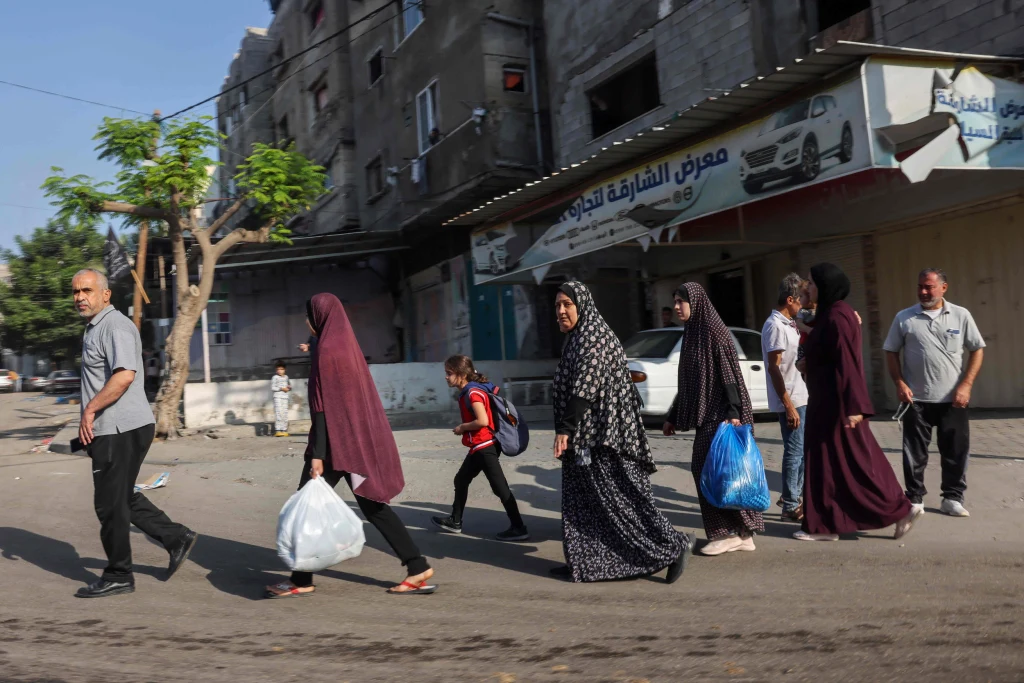
Despite these internal deliberations, the Israeli military issued evacuation orders covering the Jabalia area and most Gaza City districts through statements posted on social media platform X and text messages sent directly to residents. The military directed Palestinians in northern parts of the enclave to move south toward the Al-Mawasi area in Khan Younis, which Israel has designated as a humanitarian zone.
The military statement emphasized the intensity of planned operations, declaring that “The Defense Forces is operating with extreme force in these areas, and these military operations will escalate, intensify, and extend westward to the city center to destroy the capabilities of terrorist organizations.”
Palestinian and United Nations officials contested the safety of designated evacuation areas, maintaining that nowhere in Gaza remains secure for civilians. The evacuation directive came as Israeli bombardments escalated in the early morning hours in Jabalia, with medics and residents reporting the destruction of several houses and at least six fatalities.
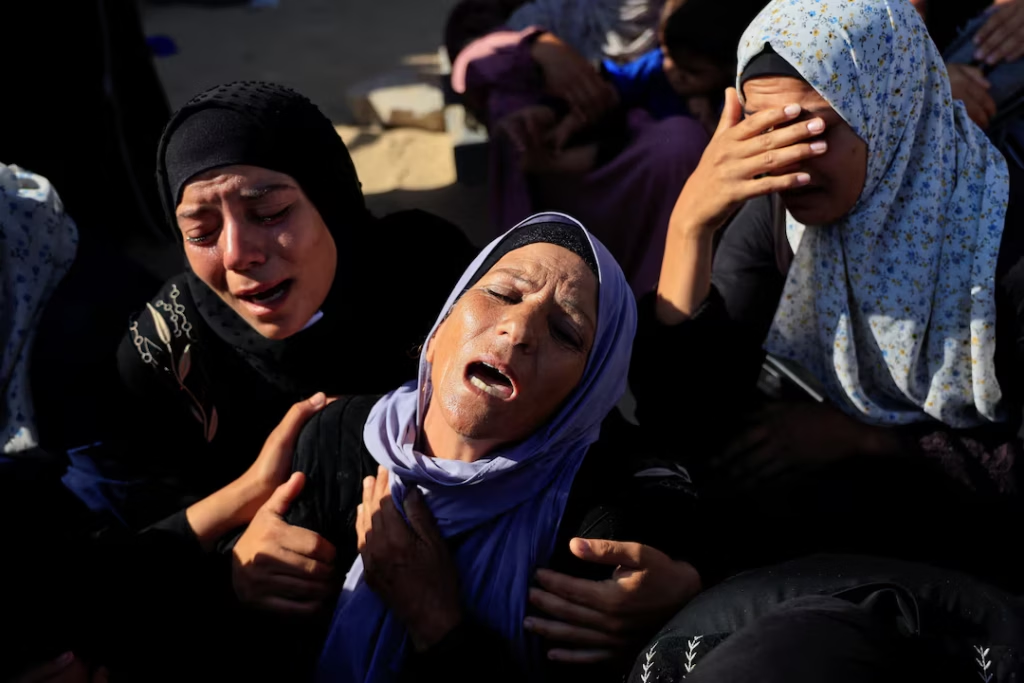
The violence extended to southern Gaza, where five people were killed in an airstrike on a tent encampment near Mawasi in Khan Younis, according to medical officials. The attacks underscored the continued intensity of combat operations despite international diplomatic efforts.
The renewed ceasefire initiative involves Arab mediators Egypt and Qatar, supported by the United States, seeking to end the prolonged conflict and secure hostage releases. Interest in resolving the Gaza situation has intensified following recent U.S. and Israeli bombing campaigns targeting Iran’s nuclear facilities, which have heightened regional tensions.
A Hamas official confirmed to Reuters that the organization had informed mediators of its readiness to resume ceasefire negotiations. However, the group reaffirmed its established demands that any agreement must definitively end the war and guarantee complete Israeli withdrawal from the coastal territory.
Hamas maintains its position that it will only release the remaining hostages in Gaza, with approximately 20 believed to still be alive, as part of a comprehensive deal ending the conflict. Israel has consistently stated it can only conclude the war if Hamas is completely disarmed and dismantled as an organization. Hamas leadership refuses to surrender its weapons or dissolve its military capabilities.
The current escalation represents the latest chapter in the decades-old Israeli-Palestinian conflict, which reached a devastating turning point in October 2023. Hamas launched a surprise attack against Israel, resulting in 1,200 Israeli deaths and the capture of 251 hostages, according to Israeli government tallies.
Israel’s subsequent military response has resulted in more than 56,000 Palestinian deaths according to the Gaza health ministry, displaced nearly the entire population of 2.3 million residents, created a severe humanitarian crisis, and left large portions of the territory in ruins. The sustained military campaign has fundamentally altered the landscape and infrastructure of the densely populated coastal enclave.
The international community continues to grapple with the humanitarian implications of the conflict, as evacuation orders affect hundreds of thousands of Palestinians who have already been displaced multiple times throughout the 20-month war. The repeated displacement has created logistical challenges for aid organizations attempting to provide essential services to the civilian population.
Netanyahu’s upcoming security briefing will likely address the military’s assessment of Hamas capabilities and the strategic value of continued operations versus the risks to hostage safety. The tension between achieving military objectives and protecting civilian lives, including hostages, remains a central challenge in Israeli decision-making.
The renewed diplomatic efforts come at a critical juncture, with Trump’s direct involvement signaling potential shifts in U.S. engagement with the conflict resolution process. The coordination between American officials and regional mediators represents an attempt to leverage multiple diplomatic channels to achieve breakthrough agreements.
As military operations continue in northern Gaza, the humanitarian situation deteriorates further for Palestinian civilians caught between evacuation orders and ongoing combat. The cycle of displacement, bombardment, and diplomatic efforts reflects the complex dynamics that have sustained this conflict for nearly two years without resolution.
Reuters





