

The Trump administration has formalized its push to revoke the U.S. citizenship of some naturalized Americans, releasing a Justice Department memo that directs government attorneys to prioritize denaturalization cases involving individuals convicted of certain crimes.
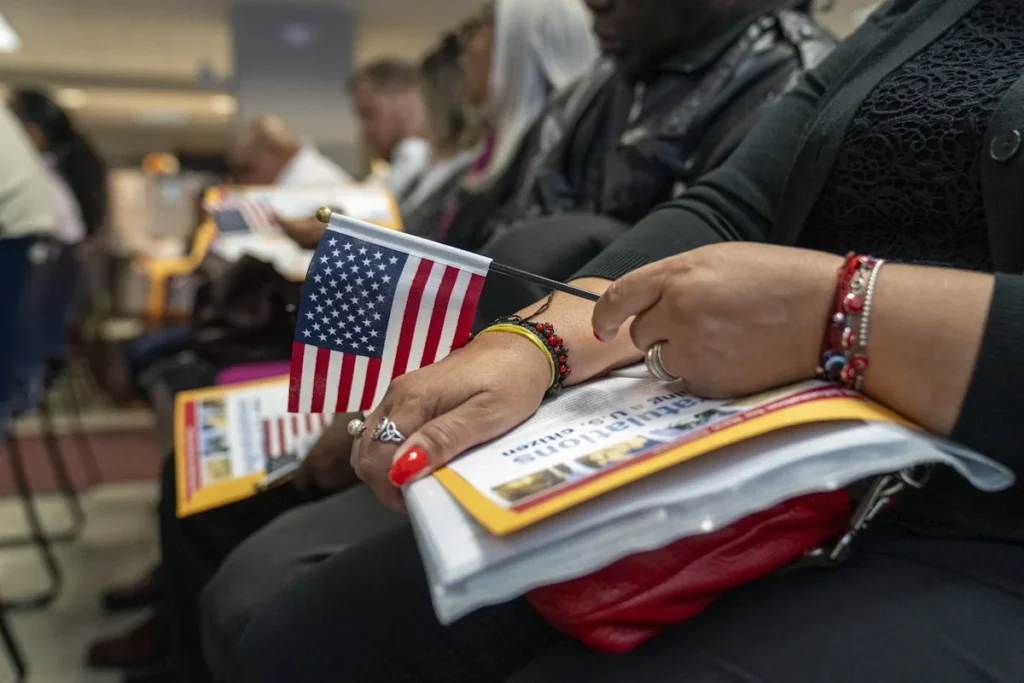
The memo, dated June 11, instructs federal lawyers to pursue civil proceedings against any person who either illegally obtained naturalization or who secured citizenship by concealment of a material fact or willful misrepresentation.
This move could affect many of the approximately 25 million U.S. citizens who immigrated to the country after birth, according to 2023 data. The directive identifies 10 priority categories for denaturalization, focusing on individuals involved in war crimes, extrajudicial killings, serious human rights violations, gang activity, and other criminal conduct deemed to pose an ongoing threat to the United States.
Unlike criminal cases, civil denaturalization proceedings do not guarantee the right to an attorney. The government also faces a lower burden of proof, making it easier to revoke citizenship.
The directive grants Justice Department lawyers broad latitude to bring cases, including against those who lie on immigration forms, commit financial or medical fraud, or are referred by a U.S. Attorney’s Office in connection with pending criminal charges.
A Justice Department official described the policy as necessary to protect national security and the integrity of the immigration system. But immigration advocates and civil liberties organizations have raised alarm, saying the policy risks creating a second-class status for millions of Americans.
“It is kind of, in a way, trying to create a second class of U.S. citizens,” Sameera Hafiz, policy director of the Immigration Legal Resource Center, told NPR. “It strips people of rights—including the right to counsel—and lowers the evidentiary bar to take away citizenship.”
The denaturalization directive is part of broader efforts by Trump’s Justice Department Civil Rights Division to reshape longstanding priorities. Under Trump, the division has been tasked with dismantling diversity, equity, and inclusion (DEI) programs in government and opposing transgender medical care, among other initiatives.
The civil rights division has also launched high-profile investigations, including a probe into the University of Virginia’s DEI programs that led to the resignation of the university’s president, Jim Ryan, on Friday.
Meanwhile, the department recently sued 15 district attorneys in Maryland over an order blocking deportations of migrants challenging their removal.
Internal turmoil has reportedly accompanied these shifts. According to NPR, about 250 attorneys—roughly 70% of the Civil Rights Division’s legal staff—departed between January and May.
The memo’s release follows at least one recent denaturalization. On June 13, a judge ordered the citizenship revocation of Elliott Duke, a U.S. military veteran born in the U.K., after he was convicted of distributing child sexual abuse material he had failed to disclose during naturalization.
Immigration lawyers fear more cases could soon follow.





