

CULIACÁN, Mexico (BN24) — A fresh wave of cartel violence struck the Mexican state of Sinaloa on Monday as authorities discovered four decapitated bodies dangling from a freeway bridge in Culiacán, the capital of the western state long regarded as the heart of the nation’s drug trade.
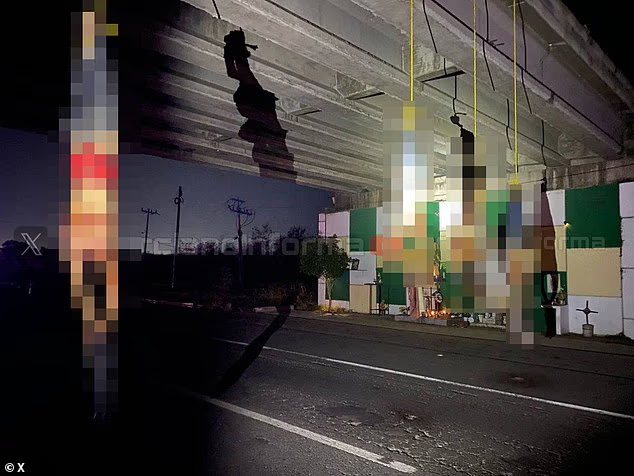
The grisly display underscored the escalating power struggle within the powerful Sinaloa Cartel, where rival factions have been locked in open warfare since last year. Officials said the four corpses were suspended over the main road exiting the city, their severed heads stuffed into a plastic bag discarded nearby.
Elsewhere along the same highway, investigators found 16 additional male bodies crammed into a white van, many bearing gunshot wounds and at least one also decapitated. A note left at the scene, purportedly authored by one of the warring groups, declared ominously: “WELCOME TO THE NEW SINALOA.”
The killings are the latest chapter in a violent struggle for dominance between the factions known as Los Chapitos—led by the sons of imprisoned drug lord Joaquín “El Chapo” Guzmán—and their internal rivals in La Mayiza. Once credited with maintaining a relative calm across Sinaloa through near-total control, the cartel has fractured, plunging Culiacán into a state of siege that has become almost routine.
Since the conflict erupted last September, shootouts and ambushes have left homes and businesses bullet-riddled and forced repeated school closures. Heavily armed young men patrol intersections on motorcycles, their faces hidden by masks.
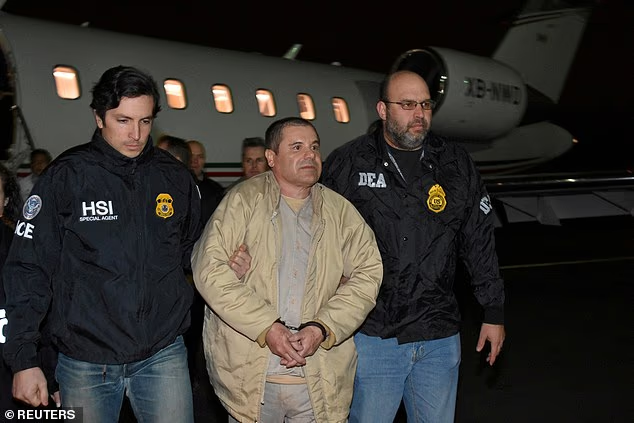
According to Sinaloa state prosecutors, the surge in violence followed the abduction of a faction leader by one of El Chapo’s sons, who allegedly delivered the captive to U.S. authorities aboard a private plane. The dramatic move ignited a bloody feud that has drained resources and upended alliances.
Officials and analysts say Los Chapitos have become so desperate to maintain their grip that they have forged a pact with the Sinaloa Cartel’s historical enemy, the Jalisco New Generation Cartel. The New York Times reported that in exchange for cash and weapons, Los Chapitos agreed to cede swaths of territory to their longtime rivals—a bargain that could undermine their capacity to control trafficking routes critical to moving drugs from production to export corridors.
One senior Sinaloa Cartel member, speaking anonymously to U.S. media, described the group’s financial collapse under the costs of sustained warfare. “Los Chapitos were gasping for air, they couldn’t take the pressure anymore,” he said. “Imagine how many millions you burn through in a war every day: the fighters, the weapons, the vehicles. The pressure mounted little by little.”
Vanda Felbab-Brown, a scholar at the Brookings Institution who specializes in armed groups, warned the ramifications of the internal fracture could reshape criminal markets across the hemisphere. “It’s like if the eastern coast of the U.S. seceded during the Cold War and reached out to the Soviet Union,” she said. “This has global implications for how the conflict will unfold and how criminal markets will reorganize.”
While Sinaloa officials insisted Monday that military and police operations would restore order, many residents believe the government has lost control of the violence. Feliciano Castro, a spokesman for the state government, acknowledged the magnitude of the crisis and said security forces were coordinating efforts to “reestablish total peace in Sinaloa.”
Yet for people in Culiacán, the carnage has become a grim part of daily life—dead bodies turning up with sickening regularity as cartel factions battle for supremacy in the birthplace of Mexico’s most notorious drug dynasty.
Source: dailymail





