

GAZA CITY, Gaza Strip (BN24) — Israeli airstrikes killed at least 40 Palestinians in the Gaza Strip on Wednesday, including 10 members of a single family sheltering in a tent, as President Donald Trump continued diplomatic efforts to broker a ceasefire that could end the 21-month war and secure the release of dozens of Israeli hostages.
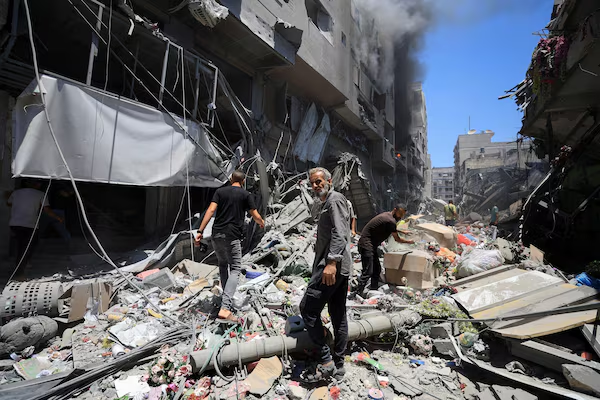
The deadly strikes occurred as Trump met with Israeli Prime Minister Benjamin Netanyahu for the second time in two days at the White House on Tuesday evening, though the high-level discussions showed no apparent signs of breakthrough in the protracted negotiations.
Hospital officials at Nasser Hospital in the southern Gaza city of Khan Younis confirmed the casualties included 17 women and 10 children among the dead. The medical facility has continued operating despite Gaza’s severely damaged health system, with several hospitals rendered inoperable and leading physicians killed in Israeli strikes throughout the conflict.
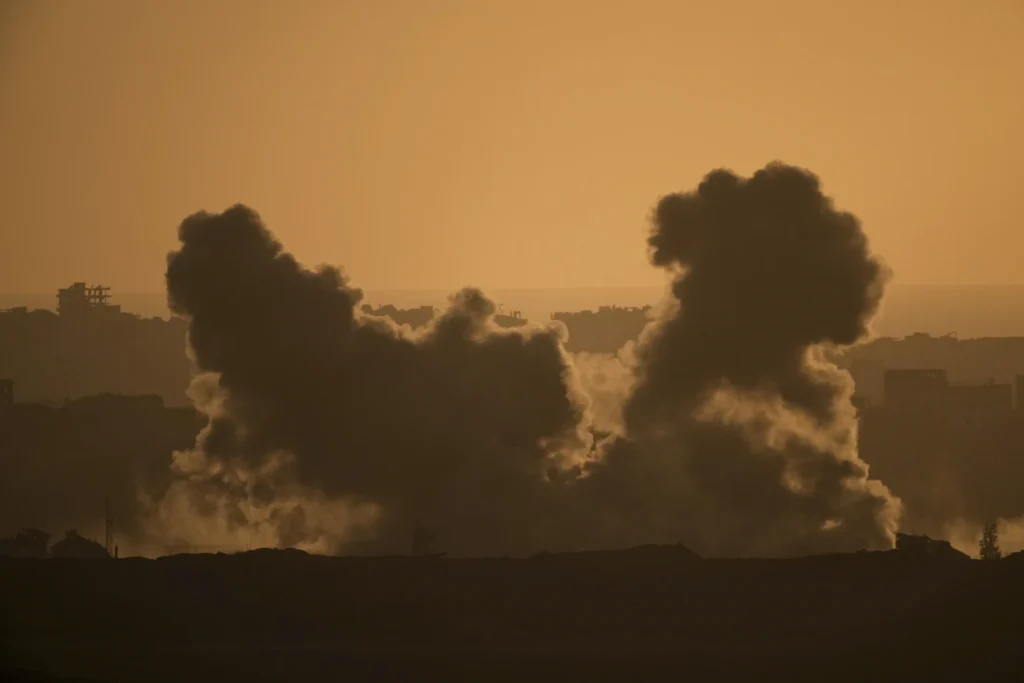
The Israeli military reported conducting strikes against more than 100 targets across Gaza over the past day, including militant positions, booby-trapped structures, weapons storage facilities, missile launchers and tunnel systems. Israeli forces maintain that Hamas deliberately positions weapons and fighters among civilian populations, complicating military operations.
Um Mohammad Shaaban, whose nickname means Mohammad Shaaban’s mother, mourned the loss of the 10 Shaaban family members killed in the Israeli strike while they sheltered inside their tent in Khan Younis. The grieving woman discovered the devastating scene after the attack on what she believed was a designated safe area.
“I found all my children dead, and my daughters’ three children dead,” Um Mohammad Shaaban said through tears. “It’s supposed to be a safe area where we were.”
She noted that strikes have intensified despite rising hopes for a potential ceasefire agreement. “The hospital last night was jam-packed,” she observed, reflecting the surge in casualties from the ongoing bombardment.
Crowds of Palestinians gathered Wednesday to bid farewell to the Shaaban family members, with mourners struggling to release the bodies of the three grandchildren before burial. The emotional scene underscored the human cost of the continuing conflict as diplomatic efforts remain stalled.
Palestinians throughout Gaza are desperately seeking an end to the war that has killed tens of thousands, destroyed vast areas of the territory and displaced approximately 90 percent of the population. Aid organizations report that Israeli restrictions and the breakdown of law and order have severely hampered humanitarian assistance delivery, creating widespread hunger and fears of famine.
In the sprawling coastal Muwasi area, where hundreds of thousands of displaced people live in tents after fleeing their homes, residents described the daily struggle to secure basic necessities. Abeer al-Najjar said she had battled constant bombardments to obtain food and water for her family in the temporary settlement.
“I pray to God that there would be a pause, and not just a pause where they would lie to us,” she said, referencing an earlier ceasefire that Israel ended in March. “We want a full ceasefire.”
Her husband, Ali al-Najjar, emphasized that life has become especially difficult during the summer months with limited access to drinking water. “We hope this would be the end of our suffering and we can rebuild our country again,” he said before rushing through crowds with two buckets to fill them from a water truck.
Desperate residents chased the water vehicle as it departed for another location, highlighting the severe shortage of basic resources. Amani Abu-Omar explained that the water truck arrives only every four days, insufficient for her dehydrated children who have developed skin rashes from the summer heat and harsh living conditions.
“We had expected ceasefires on many occasions, but it was for nothing,” Abu-Omar said, expressing the frustration felt by many Palestinians who have endured repeated false hopes for peace.
The current conflict began after Hamas attacked Israel on October 7, 2023, killing approximately 1,200 people and taking 251 hostages. Most hostages have been released through earlier ceasefire agreements, though dozens remain in captivity. Israel’s military offensive in Gaza has killed more than 57,000 Palestinians, with more than half identified as women and children, according to Gaza’s Health Ministry.
The Health Ministry, operating under Gaza’s Hamas-run government, does not distinguish between civilian and combatant casualties in its reporting. The United Nations and other international organizations consider the ministry’s figures to be the most reliable statistics available on war casualties.
Netanyahu has maintained his commitment to continue the war until Hamas is completely destroyed, while the militant group insists it will only release the remaining hostages in exchange for a lasting ceasefire and complete Israeli withdrawal from Gaza. The fundamental disagreement between the parties has complicated diplomatic efforts to reach a resolution.
Netanyahu told reporters Tuesday that he and Trump see “eye to eye” on the necessity of destroying Hamas and that coordination between Israel and the United States has reached unprecedented levels. The Israeli leader’s comments suggested alignment on military objectives despite ongoing negotiations over ceasefire terms.
Trump’s Middle East envoy, Steve Witkoff, is expected to travel to Doha, Qatar, later this week to continue indirect negotiations with Hamas regarding the ceasefire proposal. The diplomatic mission represents a continuation of intensive efforts to break the deadlock in peace talks.
Witkoff and other senior administration officials met with Israeli Minister for Strategic Affairs Ron Dermer and Qatari officials at the White House on Tuesday to address remaining obstacles in the negotiations. A key sticking point involves Israel’s desire to maintain a military presence in Gaza during a potential 60-day truce, according to a White House official who spoke on condition of anonymity.
When asked about the meeting, Trump declined to confirm that “secret” talks had occurred but expressed hope that such engagement would advance peace efforts. “We want to have peace. We want to get the hostages back. And I think we’re close to doing it,” Trump stated, suggesting cautious optimism about the diplomatic progress.
The ongoing violence in Gaza continues despite the intensive diplomatic efforts, with Palestinian civilians bearing the brunt of the conflict as both sides maintain their fundamental positions. The international community watches closely as Trump administration officials work to bridge the gap between Israeli security demands and Palestinian calls for an end to the devastating war.





