

WASHINGTON (BN24) — President Donald Trump expressed surprise at Liberian President Joseph Boakai’s English-speaking abilities during a White House meeting Wednesday, asking where the African leader learned the language despite English serving as Liberia’s official language for more than two centuries.
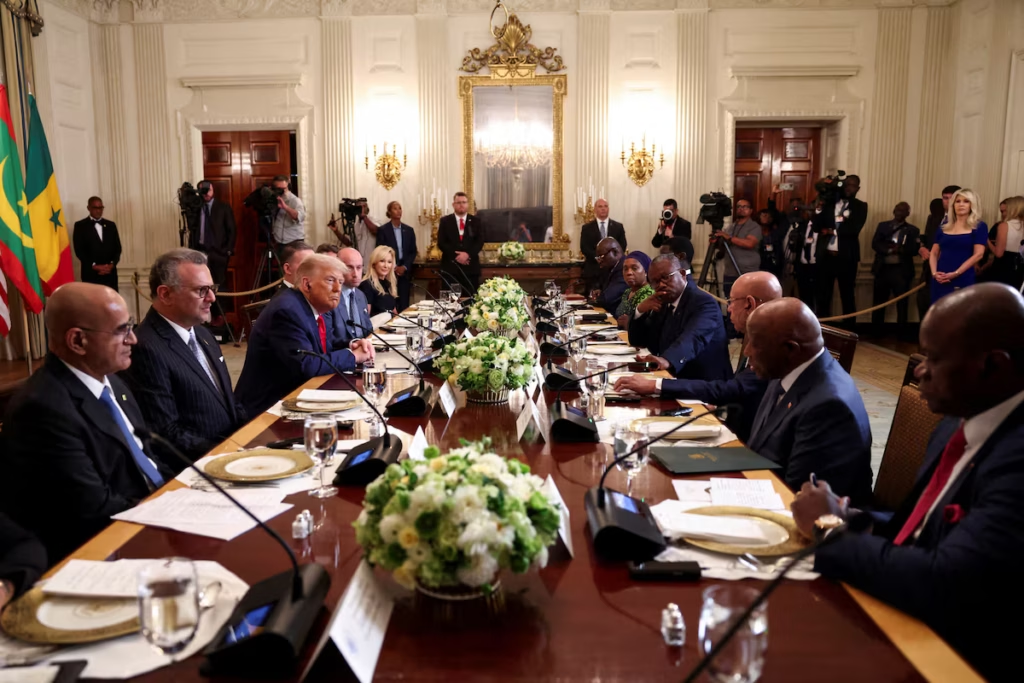
The exchange occurred as Trump hosted a group of African leaders at the White House, with many participants speaking through interpreters in their native languages. When Boakai addressed the gathering in fluent English, Trump appeared genuinely impressed by the president’s command of the language.
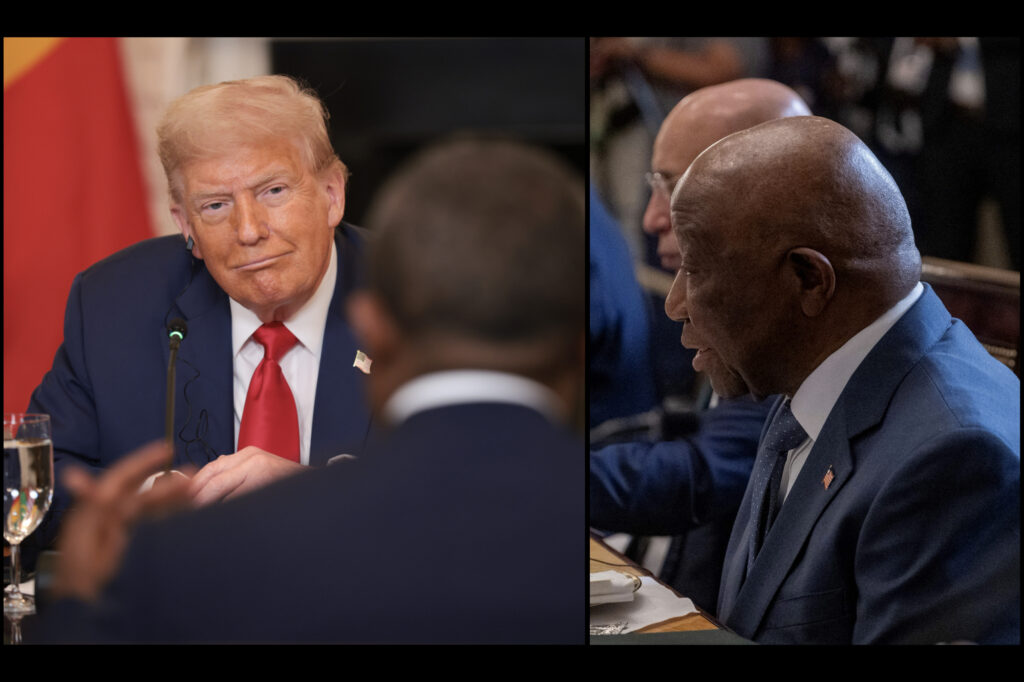
“Liberia is a longtime friend of the United States and we believe in your policy of making America great again,” Boakai said during the diplomatic meeting, before advocating for increased U.S. investment in his West African nation. “We just want to thank you so much for this opportunity.”
Trump responded with apparent admiration for Boakai’s linguistic skills, though his comments revealed a lack of awareness about Liberia’s colonial history and official language status. The American president’s inquiry suggested unfamiliarity with the unique relationship between the United States and Liberia.
“Such good English,” Trump said during the meeting. “Where did you learn to speak so beautifully?”
Boakai appeared to react with amusement to the question, chuckling softly before responding to Trump’s continued inquiries about his language acquisition. The Liberian leader’s reaction suggested awareness of the historical context that Trump seemed to miss.
“In Liberia?” Trump asked, seeking clarification about where Boakai had developed his English proficiency. “Yes sir,” Boakai confirmed, maintaining diplomatic composure despite the nature of the question.
Trump expressed continued fascination with Boakai’s language abilities, making a comparison that drew attention to the communication skills of his own administration officials. The president’s comments reflected his apparent surprise at encountering an African leader who spoke English as fluently as native speakers.
“That’s very interesting,” Trump said following Boakai’s confirmation. “I have people at this table who can’t speak nearly as well.”
The exchange highlighted a significant gap in understanding about Liberia’s unique history and its deep connections to the United States. Liberia was established in 1822 as a colony specifically designed for free Black Americans, representing a complex chapter in American history that directly explains the country’s adoption of English as its official language.
The West African nation emerged from the efforts of white Americans who sought to address what they perceived as a demographic challenge following the abolition of slavery. These colonization advocates believed that creating a separate African homeland for freed slaves would resolve questions about the future integration of Black Americans into post-slavery society.
Liberia’s founding as an American colonial project established English as the primary governmental and educational language from the nation’s inception. The American Colonization Society, which orchestrated the settlement, ensured that English would serve as the official language of the new republic, making it integral to Liberian governance, education, and official communications.
While English functions as Liberia’s official language for government operations, legal proceedings, and formal education, the country maintains rich linguistic diversity through multiple indigenous languages spoken by various ethnic groups throughout the nation. These local languages continue to play important roles in daily communication and cultural preservation.
The historical connection between the United States and Liberia extends beyond language to encompass political, economic, and cultural ties that have persisted for more than two centuries. Liberia’s constitution and governmental structure were modeled after American institutions, reflecting the deep influence of its American founders.
Boakai’s presence at the White House represented continuation of the long-standing diplomatic relationship between the two nations. His advocacy for increased American investment in Liberia during the meeting demonstrated ongoing efforts to strengthen economic partnerships that trace back to the countries’ shared historical foundations.
The diplomatic encounter occurred as part of Trump’s broader engagement with African leaders, though the president’s surprise at Boakai’s English proficiency revealed limitations in his understanding of Africa’s colonial history and contemporary realities. Many African nations maintain European languages as official languages due to their colonial experiences.
Trump’s comments about his own officials’ speaking abilities compared to Boakai’s English skills added an unexpected dimension to the diplomatic exchange. The comparison suggested that the president found the Liberian leader’s articulation superior to that of some members of his own administration.
The incident underscored broader questions about diplomatic preparation and cultural awareness in high-level international meetings. Such exchanges between world leaders often require careful attention to historical context and cultural sensitivity to avoid misunderstandings or unintended diplomatic complications.
Liberia’s status as Africa’s oldest republic and its unique relationship with the United States make it an important partner in American diplomatic efforts across the African continent. The nation’s English-speaking leadership has historically facilitated communication and cooperation between the two countries in various international forums.





