

MEKELE, Ethiopia (BN24) — A chilling exposé by Dailymail.com has brought to light the scale of sexual violence endured by women and girls during Ethiopia’s Tigray war, with survivors recounting scenes of unimaginable brutality, including the gang-rape of a mother and her toddler, and the torture and dismemberment of civilians by armed forces. The report, published by Le Monde and supported by rights groups and humanitarian organizations, points to more than 120,000 victims of sexual violence during the two-year conflict.
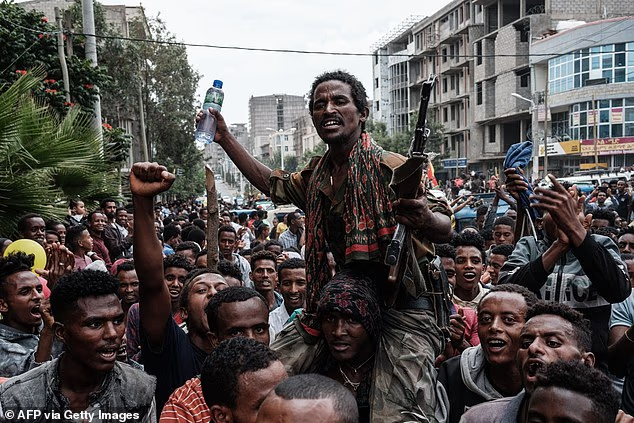
Among the most disturbing accounts is that of Tseday, a mother of two who fled Ethiopia’s Oromia region as the war intensified. She told Le Monde that she and her two-year-old daughter were gang-raped by federal soldiers before being forced to watch as her husband was butchered in front of them.
“They raped me first, then my daughter,” she said. “Then they killed my husband and cut him up while we watched.”
In another case, 17-year-old Nigist described being attacked by unidentified armed men in her village in Kafta Humera, western Tigray, in an incident that left her unconscious after repeated sexual assaults. “They tore off my clothes and raped me,” she recalled. “Then I fainted.”
The atrocities described in the report are part of what regional officials and international human rights groups have termed a systematic campaign of sexual violence. According to Tigrayan authorities, nearly one in ten women and girls in the region were subjected to sexual assault during the conflict, many of whom were mutilated or left with lasting psychological and physical trauma.
Torture, Forced Abortions and Mutilation
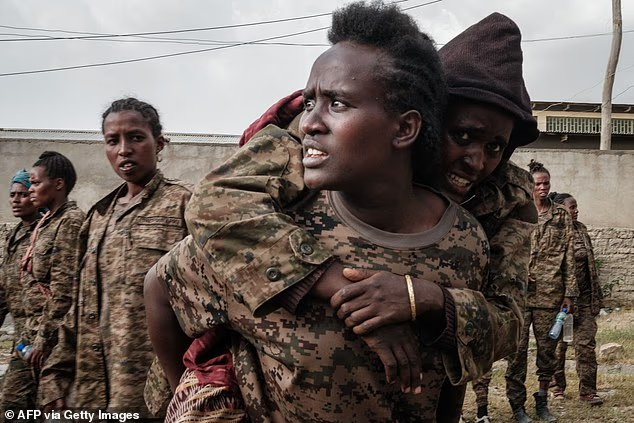
Birhan Gebrekristos, an author and researcher, detailed numerous acts of sexual torture, including the insertion of metal objects, screws, and needles into women’s reproductive organs. One pregnant woman reportedly suffered a forced abortion when Eritrean soldiers inserted needles into her womb, leading to a fatal infection after her unborn child died.
Testimonies suggest that many of these acts were deliberately carried out to terrorize the civilian population. The use of rape as a weapon of war was documented by rights groups, with accusations leveled against Ethiopian federal troops, Eritrean forces, and the Tigray People’s Liberation Front (TPLF).
Widespread Impunity and Continued Violence
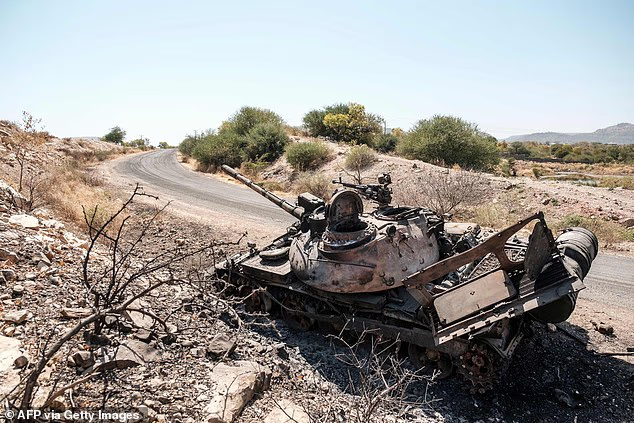
Despite the November 2022 peace deal that officially ended hostilities between Ethiopia’s federal government and Tigrayan leaders, the violence and trauma have not ceased. Survivors speaking with Le Monde and The Reporter Ethiopia say they continue to face threats, social stigma, and a lack of support.
Meseret Hadush, founder of the Hiwyet Charity Association (HCA) in Mekele, said her group has provided emergency aid and counseling to nearly 6,000 survivors but remains unfunded by the government. “The war may be over, but the suffering is not,” she said. “Sexual violence continues, driven by poverty, trauma, and impunity.”
Hadush noted that many women have been ostracized by their communities or abandoned by their husbands, especially those who became pregnant due to rape. “They’re blamed, not supported,” she said. “And many prefer to remain silent to protect what’s left of their families’ reputations.”
Unfolding Ethnic Cleansing and War Crimes
The Tigray war began in November 2020 after Prime Minister Abiy Ahmed ordered a military offensive against the TPLF, accusing it of attacking federal military bases. The TPLF denied the accusations, claiming the offensive was a pretext for political repression after the federal government postponed regional elections.
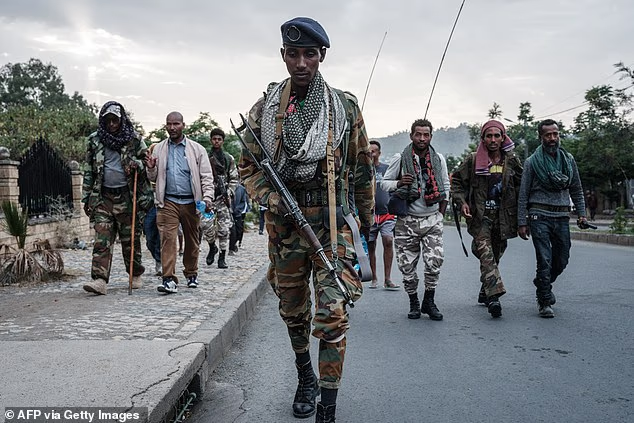
As war erupted, Eritrean forces entered Tigray from the north while Ethiopian troops advanced from the south. Although Abiy denied the involvement of Eritrean troops for months, he later admitted their presence in March 2021. Reports quickly emerged of massacres, rape, and ethnic cleansing.
In one of the war’s most gruesome chapters, Amnesty International reported in February 2021 that Eritrean soldiers had killed hundreds of civilians in Axum. U.S. officials later declared that ethnic cleansing had occurred in Western Tigray.
By June 2023, Human Rights Watch had gathered testimony from 35 people detained between September 2022 and April 2023. They described detention centers where Tigrayans were held purely based on their ethnicity. One detainee at Bet Hintset prison in Humera recalled a place where “people were left to die without medical care.”
Millions Displaced, Thousands Dead
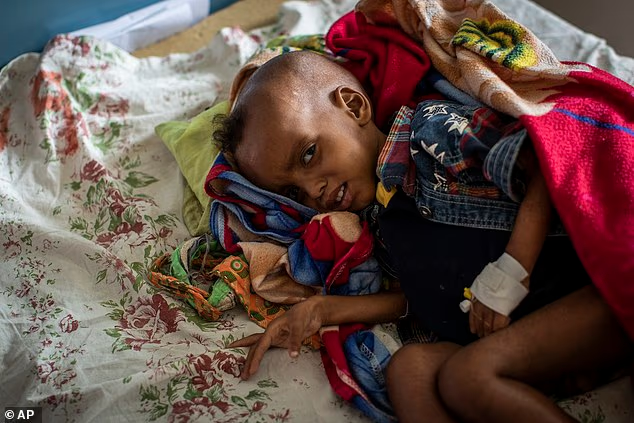
More than two million people were forced from their homes during the conflict. Entire towns, hospitals, and schools were looted or destroyed. Reports from international agencies revealed that 47,000 refugees had crossed into Sudan by the end of 2022.
The war’s legacy is being carried in the bodies and minds of survivors. Some, like Tseday, endured daily rape in makeshift cells before being freed when Tigrayan fighters recaptured territory.
A Forgotten Crisis
Despite the scale of the violence, many victims say they feel abandoned by both the Ethiopian and international communities. Investigative journalist Lucy Kassa, who has documented federal abuses, claimed she received threats for exposing atrocities.
The Nobel Peace Prize awarded to Abiy Ahmed in 2019 for brokering peace with Eritrea has been widely criticized in hindsight, with critics accusing the prime minister of using war to consolidate power.
For the women of Tigray, peace remains elusive.





