

WASHINGTON (BN24) — The United States is preparing to deport certain Haitian lawful permanent residents accused of supporting violent gang leaders tied to a U.S.-designated terrorist organization, Secretary of State Marco Rubio announced Monday, as President Donald Trump’s administration intensifies its hardline immigration policies.
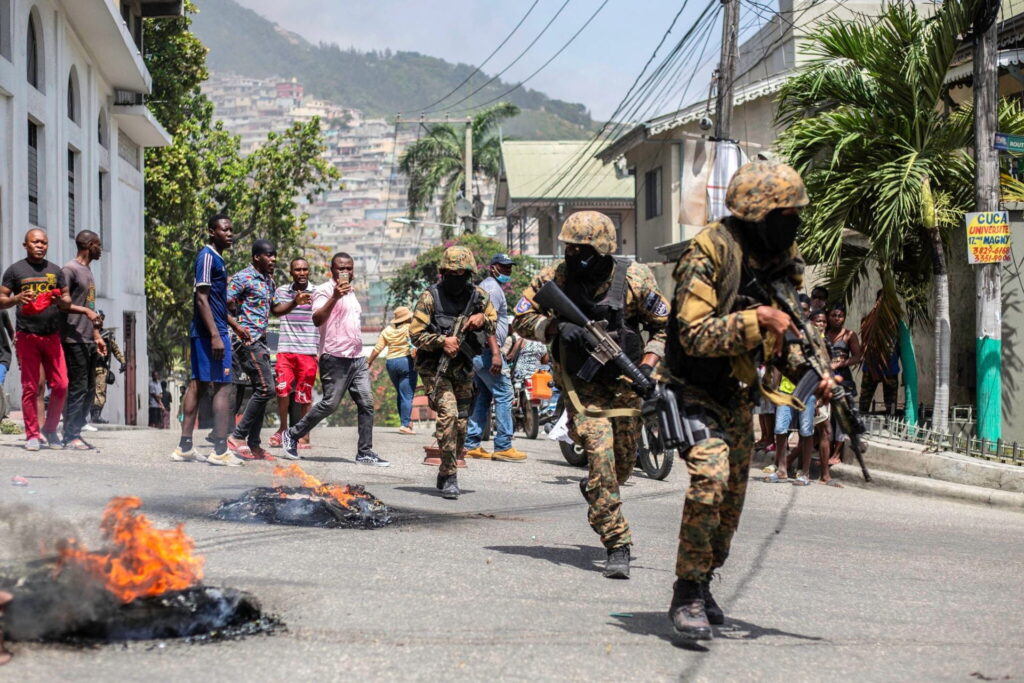
Rubio said in a statement that some green card holders had provided support to gang figures linked to Viv Ansanm, a powerful armed coalition that has seized control over most of Haiti’s capital, Port-au-Prince. In May, the Trump administration designated Viv Ansanm a Foreign Terrorist Organization under U.S. law, opening the door for legal action against individuals aiding the group.
“The United States will not allow individuals to enjoy the benefits of legal status in our country while they are facilitating the actions of violent organizations or supporting criminal terrorist organizations,” Rubio said.
The announcement allows the Department of Homeland Security to begin revoking the legal status of those involved, though no specific individuals were named, and the total number of green card holders targeted remains unclear. The measure marks a significant escalation in the administration’s immigration enforcement efforts.
The move comes amid a broader crackdown under Trump, whose policies have increasingly aimed at revoking visas and permanent residency for immigrants linked to groups deemed hostile or dangerous, including recent efforts to strip pro-Palestinian student protesters of their legal status. Experts say such steps were almost unheard of prior to this administration.
“This type of action was very rare before,” said Stephen Yale-Loehr, a retired immigration law professor at Cornell University. “Identifying individuals and proving in court that they supported terrorist groups is extremely difficult. I suspect very few Haitians will ultimately be deported based on this policy.”
The Haitian government has not commented on the U.S. announcement.
The deportation order comes amid a wave of deadly violence in Haiti, where nearly 5,000 people have been killed since October 2024, according to a report by the U.N. High Commissioner for Human Rights. As gangs continue to tighten their grip on the country, international responses have remained limited.
Despite repeated appeals from the United Nations to halt deportations to Haiti over humanitarian concerns, the U.S. has continued returning migrants to the crisis-hit Caribbean nation. The situation has fueled fears of regional instability and triggered widespread criticism from rights groups.
Trump, who is pursuing a second term in the White House, has escalated rhetoric and policies targeting Haitian immigrants. Earlier this month, a federal judge blocked his administration’s effort to terminate Temporary Protected Status (TPS) for more than 500,000 Haitians living in the U.S. During a 2024 campaign debate, Trump sparked controversy by falsely claiming that Haitian immigrants in Ohio had been “eating people’s pets.”
Washington’s decision to brand Viv Ansanm and another gang, Gran Grif, as terrorist organizations aligns with recent U.S. actions against Latin American drug cartels. The designation is designed to cut off gang leaders from U.S.-based financial support and partnerships.
As Haiti’s humanitarian crisis deepens, the administration’s immigration crackdown signals a firm stance that may further complicate the already fraught U.S.-Haiti relationship.





