

LOUISVILLE, Ky. (BN24) — A former Louisville police detective was sentenced to nearly three years in federal prison Monday for civil rights violations stemming from the botched 2020 police raid that resulted in the fatal shooting of Breonna Taylor, whose death sparked nationwide protests.
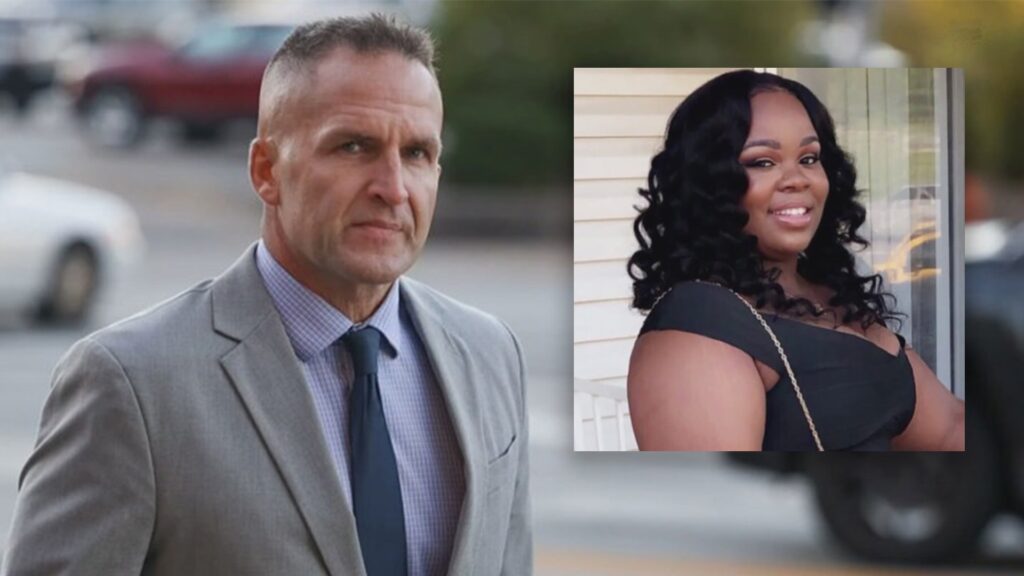
Brett Hankison, who fired 10 rounds blindly into Taylor’s apartment through a covered window and sliding glass door during the no-knock raid, received a 33-month prison sentence followed by three years of supervised release, according to Taylor family attorney Lonita Baker.
Though Hankison’s bullets did not strike Taylor, prosecutors said his actions endangered the lives of her and others in the apartment complex. Taylor, a 26-year-old emergency room technician, was ultimately killed by other officers who opened fire after her boyfriend, Kenneth Walker, fired a shot believing intruders were breaking in.
The jury convicted Hankison in November of two counts of violating Taylor’s civil rights under color of law. Despite the conviction, the U.S. Department of Justice had recently recommended that he serve only a single day in prison, arguing Hankison posed no continuing threat to public safety — a suggestion Taylor’s family denounced as an insult.
Speaking outside the courthouse Monday, Taylor’s mother, Tamika Palmer, acknowledged the court did what it could but criticized the prosecution for falling short.
“There was no prosecution in there for us,” Palmer said. “There was no prosecution in there for Breonna. We got something. I don’t think it was a fair sentencing, but it was a start.”
Federal sentencing guidelines had recommended a prison term of between 135 and 168 months. But the DOJ’s unusually lenient sentencing memo raised eyebrows and drew strong condemnation from the family’s legal team, who said it sent a “dangerous precedent” that civil rights violations against Black Americans would not be taken seriously.
“It is unfathomable that, after finally securing a conviction, the Department of Justice would seek a sentence so drastically below the federal guidelines,” Taylor’s lawyers said in a statement. “It sends the unmistakable message that white officers can violate the civil rights of Black Americans with near-total impunity.”
U.S. District Judge Rebecca Jennings ultimately handed down a harsher sentence than the DOJ requested, though still well below the guideline range.
Outside the courthouse, demonstrators gathered in support of Taylor’s family. At one point, several protesters were arrested after police said they created an “unsafe environment.” Among those taken into custody was Taylor’s aunt, Bianca Austin, who faced charges of disorderly conduct and obstructing a highway after allegedly blocking traffic and confronting officers.
The Louisville Metro Police Department later issued a statement acknowledging the sensitivity of the case but defending its response to the protest, saying: “We particularly respect and value the First Amendment. However, what we saw today in front of the courthouse was not safe, acceptable, or legal.”
During the trial, federal prosecutors emphasized Hankison’s recklessness. They said he fired blindly through curtained glass into a darkened apartment, with rounds passing through Taylor’s home and into a neighboring unit where a family was sleeping. None of his bullets hit anyone, but prosecutors argued the conduct constituted a blatant disregard for human life.
Taylor was shot and killed by other officers who returned fire during the chaotic forced entry. Her death and the subsequent lack of initial criminal charges against the officers involved drew national outrage, further fueling the Black Lives Matter movement.
Judge Jennings said Hankison’s conduct merited prison time, but added she would request a psychiatric evaluation before setting a minimum term to be served. She reminded the courtroom that while justice was being sought, it was critical to examine the circumstances fully.
“I want to know if there is anything in this case going on that we do not know about,” she said.
NBCNEWS





