

UBON RATCHATHANI, Thailand (BN24) — A border dispute between Thailand and Cambodia has erupted into deadly armed conflict, forcing tens of thousands of civilians to flee their homes and prompting urgent international appeals for restraint and peace talks.
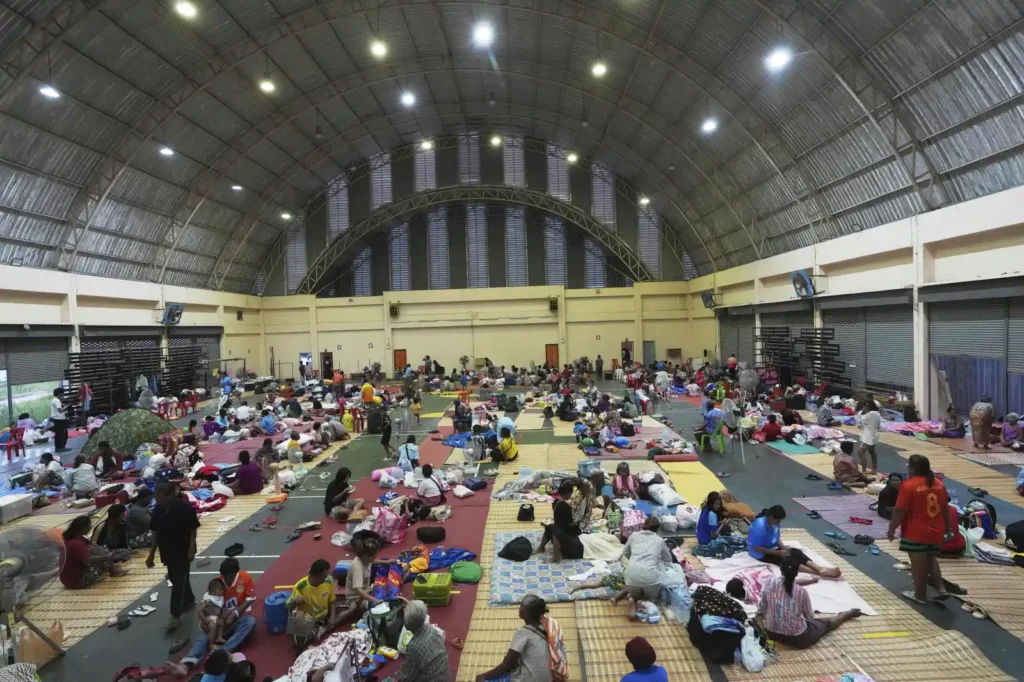
The fighting, now in its second day, has already claimed at least 14 lives on the Thai side and one in Cambodia, according to officials. The violence began after five Thai soldiers were injured by a land mine explosion near the disputed border, igniting fierce military exchanges that have escalated into what some fear could become a broader regional conflict.
As of Friday, Thailand’s Health Ministry reported that more than 58,000 people had been evacuated from four provinces bordering Cambodia, with temporary shelters overwhelmed. Cambodian officials said over 4,000 villagers had fled border zones in Oddar Meanchey province and nearby areas.
Artillery and Rocket Fire Engulf Border Villages
Clashes have been reported across several flashpoints, including Chong Bok and Phu Makhuea in Thailand’s Ubon Ratchathani province, Phanom Dong Rak in Surin, and areas surrounding the ancient Ta Muen Thom temple, a longstanding source of dispute between the two countries.
Thai military officials say Cambodian forces used heavy artillery and BM-21 multiple rocket launchers in Thursday and Friday’s attacks. Thailand responded with what it called “appropriate supporting fire,” including two airstrikes conducted by F-16 fighter jets on Cambodian positions, after reports of truck-mounted rocket attacks.
The violence has resulted in multiple civilian casualties, including children. Thai authorities confirmed the deaths of 13 civilians and one soldier, with at least 45 others injured. Cambodia’s provincial military commander, Gen. Khov Ly, said a man was killed Thursday when a Thai rocket struck a Buddhist pagoda sheltering villagers.
Cambodia has accused Thai forces of striking near the Preah Vihear temple, a UNESCO World Heritage site central to past disputes. Phnom Penh released photos showing alleged structural damage to the temple and has vowed to seek international accountability.
Mass Civilian Displacement and Desperation
On both sides of the border, residents have been fleeing en masse. In Thailand’s Surin province, hundreds of evacuees took shelter at a local university gymnasium, where families gathered on blankets, clutching bags of essentials and food supplies.
Seamstress Pornpan Sooksai, who escaped the shelling near Ta Muen Thom with her four cats in cloth cages, recalled the chaos: “I just heard boom, boom. We had everything ready, and we ran. I was frightened.”
Another evacuee, Rattana Meeying, who had survived the 2011 clashes, said this outbreak was far worse. “Children, old people—were hit out of the blue. I never imagined it would be this violent,” she said.
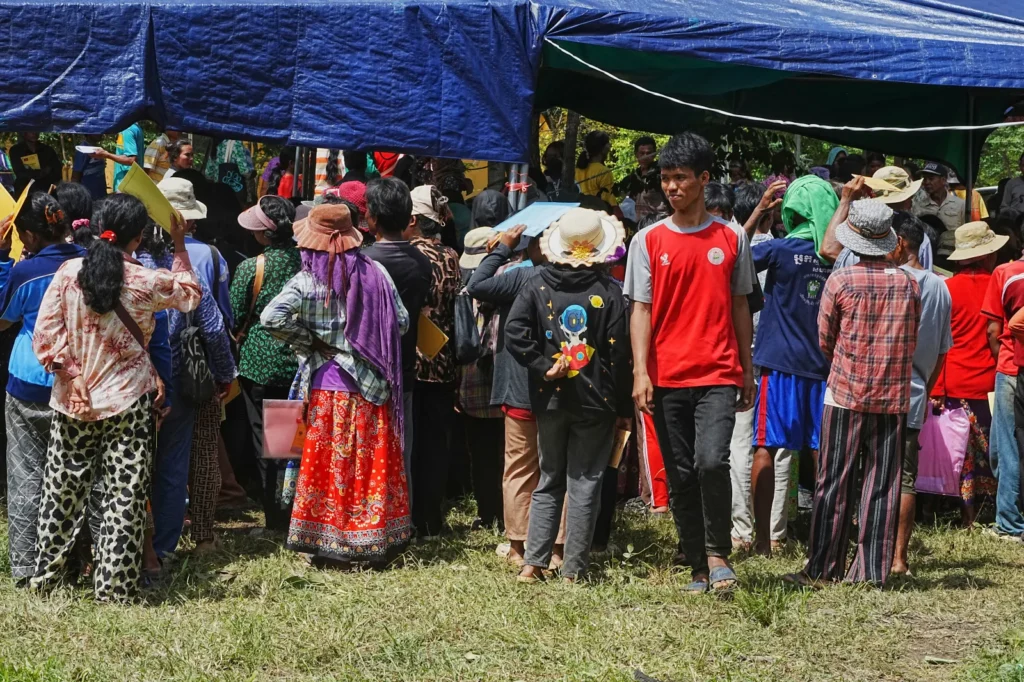
In Cambodia, deserted villages in Oddar Meanchey province revealed the fear gripping communities. Residents had dug makeshift underground shelters and were seen fleeing on foot, by motorbike, or riding makeshift tractors loaded with possessions.
Several hundred Cambodian evacuees sought refuge at a remote Buddhist temple surrounded by rice paddies, where women rocked infants in hammocks and plastic tents were hastily assembled under trees. Veng Chin, 74, said: “Please let both governments negotiate so I can go home and work on my farm again.”
Diplomatic Fallout and Regional Alarm
The fighting has prompted swift international concern. The U.N. Security Council was scheduled to hold an emergency meeting Friday in New York, while U.N. Secretary-General António Guterres called for immediate restraint and dialogue.
The crisis also raised alarms within the Association of Southeast Asian Nations (ASEAN). Malaysia, the current chair of the bloc, expressed deep concern and offered to mediate. Prime Minister Anwar Ibrahim said he had spoken with both Cambodian Prime Minister Hun Manet and Thai Acting Prime Minister Phumtham Wechayachai, urging both sides to pursue diplomatic solutions.
“This is a time for peaceful dialogue and not military confrontation,” Anwar said.
Escalating Tensions and Political Repercussions
Tensions had been simmering for months, especially since May, when a Cambodian soldier was killed in an earlier confrontation. Although both sides initially pledged to de-escalate, continued military posturing, trade restrictions, and travel warnings kept friction high.
Wednesday’s land mine incident marked a tipping point. Thailand responded by expelling Cambodia’s ambassador and sealing all border crossings. Seven Thai airlines were placed on standby to evacuate Thai citizens from Cambodia.
Phnom Penh retaliated by downgrading diplomatic relations and withdrawing its diplomatic staff from Bangkok.
The conflict has also sent ripples through Thai politics. Prime Minister Paetongtarn Shinawatra was suspended from office on July 1, amid scrutiny over a phone call with Cambodia’s former Prime Minister Hun Sen, who still wields considerable influence. Thai investigators are probing whether the call violated official ethics guidelines.
Historical Flashpoint
The 800-kilometer (500-mile) Thai-Cambodian border has long been contested, with previous flare-ups occurring in 2008 and 2011. The latter left 20 people dead and saw similar scenes of evacuation and international mediation. However, analysts warn the current escalation—marked by airstrikes, rocket attacks, and mounting casualties—represents one of the most serious confrontations in recent years.
As villagers continue to flee and shells fall near cultural heritage sites, pressure is building on both nations to step back from the brink and re-engage through diplomacy.





