

BOSTON (BN24) — A federal judge on Friday issued a sweeping ruling blocking President Donald Trump’s attempt to end birthright citizenship for children born in the United States to undocumented immigrants, marking the third court to do so since a pivotal Supreme Court ruling on nationwide injunctions last month.
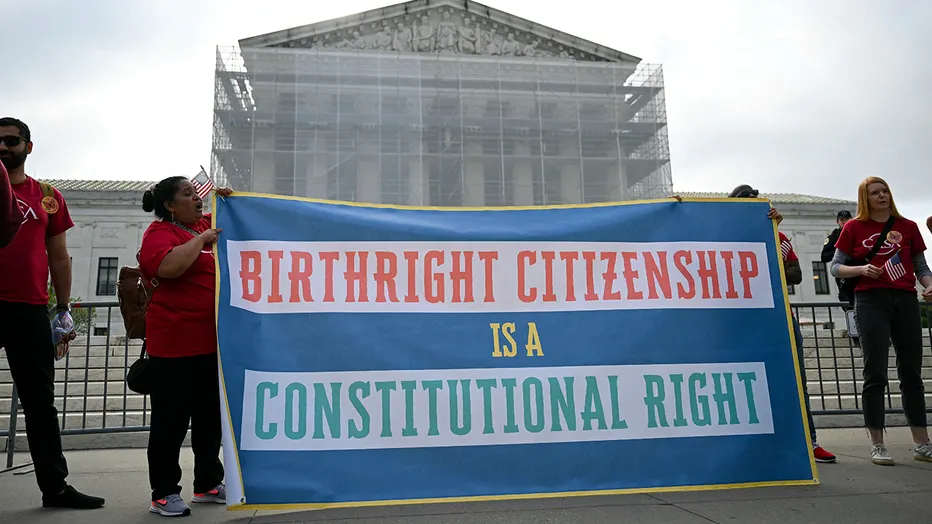
U.S. District Judge Leo Sorokin ruled from Boston that the executive order remains blocked nationwide, reinforcing decisions from both a federal court in New Hampshire and the 9th U.S. Circuit Court of Appeals in San Francisco. Sorokin’s ruling maintains a previous injunction covering over a dozen states that challenged the order, finding the administration’s attempt to narrow protections was inconsistent with federal law and constitutional guarantees.
The order — which seeks to deny automatic U.S. citizenship to babies born on American soil to parents in the country illegally or temporarily — has been widely condemned by opponents as unconstitutional. Attorneys general from multiple states have argued that the policy would strip citizenship from hundreds of thousands of children and deprive states of crucial funding tied to citizen status.
New Jersey Attorney General Matthew Platkin, who helped lead the suit, praised the ruling: “American-born babies are American, just as they have been at every other time in our nation’s history. The president cannot change that legal rule with the stroke of a pen.”
Judge Sorokin rejected the Trump administration’s request to limit the scope of his injunction to only the states involved in the lawsuit, citing the reality that people move between states and that the administration failed to present a workable alternative. “The defendants’ position in this regard defies both law and logic,” Sorokin wrote, criticizing the administration for offering no viable framework for how such a limited injunction would operate without burdening state governments.
Sorokin also acknowledged that while his ruling may not be the final word on the matter, the current order stands as unconstitutional under the 14th Amendment — which guarantees birthright citizenship and was ratified in the aftermath of the Civil War.
Trump’s administration contends that the amendment’s phrase “subject to the jurisdiction” of the United States does not apply to children born to noncitizens. That interpretation has been broadly rejected by legal scholars and repeatedly challenged in federal court.
The case is expected to return swiftly to the U.S. Supreme Court, which in June limited but did not fully bar lower courts from issuing nationwide injunctions. The justices left open exceptions for cases brought by states or involving class-action lawsuits, which judges have cited in preserving the broader blocks.
Earlier this month, a federal judge in New Hampshire ruled the executive order unconstitutional and issued a nationwide block, which went into effect after the Trump administration failed to appeal in time. On Wednesday, the 9th Circuit upheld a similar ruling by a California district court. A Maryland-based judge has indicated she would join in blocking the policy if an appellate court affirms the authority to do so.
The core of the legal battle lies in the 14th Amendment, enacted in 1868 to reverse the infamous Dred Scott decision. That ruling denied citizenship to an enslaved man despite his residence in a free state. The amendment was crafted to guarantee that anyone born in the United States, regardless of their parents’ status, is a citizen — a principle that has remained largely unchallenged until now.
State officials opposing the executive order also emphasized that stripping citizenship from American-born children would jeopardize access to federal support for services such as foster care, health care for low-income families, and special education programs.
The White House has yet to respond to Friday’s ruling. Trump’s order remains blocked nationwide unless and until the Supreme Court rules otherwise.





