

Texas (BN24) – Elon Musk’s artificial intelligence company xAI has filed a federal lawsuit against Apple and OpenAI, accusing the tech giants of colluding to suppress competition in the rapidly expanding AI industry. The lawsuit, filed Monday in a Texas federal court, alleges that Apple and OpenAI struck an exclusive partnership that unfairly blocked Musk’s xAI and its products—including the Grok chatbot—from gaining visibility in Apple’s App Store.
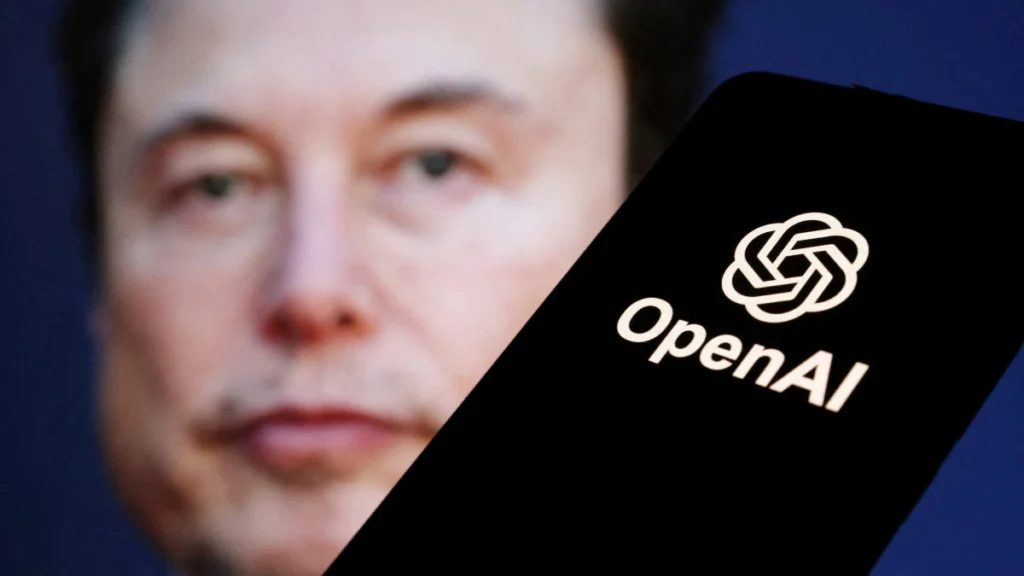
According to the filing, Apple integrated OpenAI’s ChatGPT into its operating system for iPhones, iPads, and Macs, effectively locking rivals out of top search rankings and reducing opportunities for AI challengers. xAI claims that Apple’s deal with OpenAI maintained monopolistic control over the AI marketplace while denying fair access to innovators.
“If not for its exclusive deal with OpenAI, Apple would have no reason to refrain from more prominently featuring the X app and the Grok app in its App Store,” the lawsuit stated. xAI is seeking billions of dollars in damages, alleging that the conspiracy has limited consumer choice and stifled innovation.
An OpenAI spokesperson dismissed the case, calling it part of Musk’s “ongoing pattern of harassment.” Apple has not yet responded to requests for comment.
The lawsuit comes weeks after Musk publicly warned he would take Apple to court, accusing the company of making it “impossible for any AI company besides OpenAI to reach #1 in the App Store.”
A Fight Over the Future of AI
The case highlights growing tensions as Big Tech companies race to dominate artificial intelligence. OpenAI’s ChatGPT became the fastest-growing consumer app in history following its late 2022 release, while Musk launched xAI in 2023 to compete in the same field. Earlier this year, Musk’s xAI acquired X, his social media platform, in a $33 billion deal to expand AI training data for its chatbot Grok. Musk has also integrated Grok into Tesla vehicles to enhance in-car digital assistants.
Legal experts say the case could mark a turning point for antitrust law and AI. Christine Bartholomew, a law professor at the University at Buffalo, said the lawsuit may push U.S. courts to define what constitutes a “market for AI” and how competition should be regulated in the space. “It’s a canary in the coal mine in terms of how courts will treat AI, and treat antitrust and AI,” she said.
Apple, meanwhile, has faced multiple antitrust battles over its App Store practices, including an ongoing case with Epic Games, the maker of “Fortnite,” which forced Apple to loosen restrictions on app payments. Legal analysts say Apple could argue that its partnership with OpenAI was a business choice in a competitive landscape, while also citing security or operational reasons for restricting AI apps.
The Texas lawsuit is not Musk’s only legal battle with OpenAI. In a separate California case, Musk is suing OpenAI and CEO Sam Altman to block the company’s transition from a nonprofit to a for-profit business model. Musk co-founded OpenAI with Altman in 2015 but later split from the group, accusing it of betraying its founding mission.
With AI becoming a cornerstone of global tech competition, Musk’s case against Apple and OpenAI could shape not just the future of the App Store, but also how courts define antitrust boundaries in artificial intelligence.
Reuters





