

WASHINGTON (BN24) — The Trump administration is preparing to ease U.S. corruption sanctions against Equatorial Guinea’s vice president, Teodoro “Teddy” Nguema Obiang, allowing him to travel beyond New York for the upcoming United Nations General Assembly despite a long record of embezzlement and luxury excess.
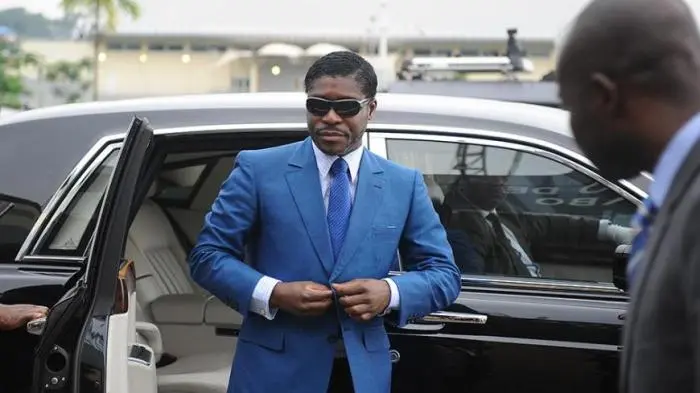
Two U.S. officials confirmed Friday that the State Department is processing a one-month sanctions waiver for Obiang, who is widely seen as the heir to his father, President Teodoro Obiang Nguema Mbasogo, Africa’s longest-serving leader. The decision, they said, was driven by U.S. national security interests, particularly countering China’s growing influence in the West African nation and safeguarding American oil and gas investments.
The waiver would grant Obiang freedom to visit cities including Miami and Los Angeles, where he has owned property and luxury vehicles. In the past, he has faced restrictions that limited his U.S. travel to New York for U.N. meetings — a move that embarrassed him and strained relations with Washington.
Obiang, 56, has long been accused of siphoning off Equatorial Guinea’s oil wealth while most of the country’s 1.6 million citizens live in poverty. In 2017, a French court convicted him of embezzlement, handing down a suspended three-year prison sentence, a €30 million fine, and the seizure of multimillion-euro properties and supercars. He has also been forced to surrender assets in the United States, including a Malibu mansion, luxury vehicles, and Michael Jackson memorabilia valued at more than $30 million, following a Justice Department corruption case.
“Through relentless embezzlement and extortion, Vice President Nguema Obiang shamelessly looted his government to support his lavish lifestyle, while many of his fellow citizens lived in extreme poverty,” then–Assistant Attorney General Leslie Caldwell said in 2014 when announcing the U.S. settlement.
The vice president’s wealth has come under scrutiny elsewhere as well. South Africa seized two of his villas and a superyacht last year in a lawsuit alleging unlawful detention and torture by Equatorial Guinea’s government.
Despite his notoriety, U.S. officials argue that allowing Obiang broader travel serves strategic goals. Beijing is seeking to establish a naval base in Equatorial Guinea — its first on the Atlantic Ocean — while Moscow has also expanded its footprint in the region. By softening its stance, Washington hopes to maintain influence in Malabo and secure a favorable environment for American energy companies.
The move comes as the Trump administration has otherwise tightened visa policies, including blocking entry to Palestinian Authority officials, imposing restrictions on Iranian and Brazilian delegations, and cracking down on foreign students accused of pro-Palestinian activism. Critics say the contrasting treatment of Obiang underscores inconsistencies in Washington’s approach to human rights and corruption.
Neither the Equatorial Guinea government nor its U.N. mission responded to requests for comment. The State Department declined to address the waiver, saying visa applications are considered on a case-by-case basis.
Equatorial Guinea, a former Spanish colony, remains one of Africa’s most resource-rich yet economically unequal nations. While the Obiang family has amassed mansions, superyachts, and fleets of exotic cars, the World Bank estimates more than 70% of the population lives in poverty.





