

BRASÍLIA, Brazil (BN24) — Brazilian President Luiz Inácio Lula da Silva on Monday accused the United States of engaging in “tariff blackmail,” sharply criticizing a 50 percent import duty imposed by U.S. President Donald Trump that has triggered a steep drop in Brazil’s exports to its second-largest trading partner.
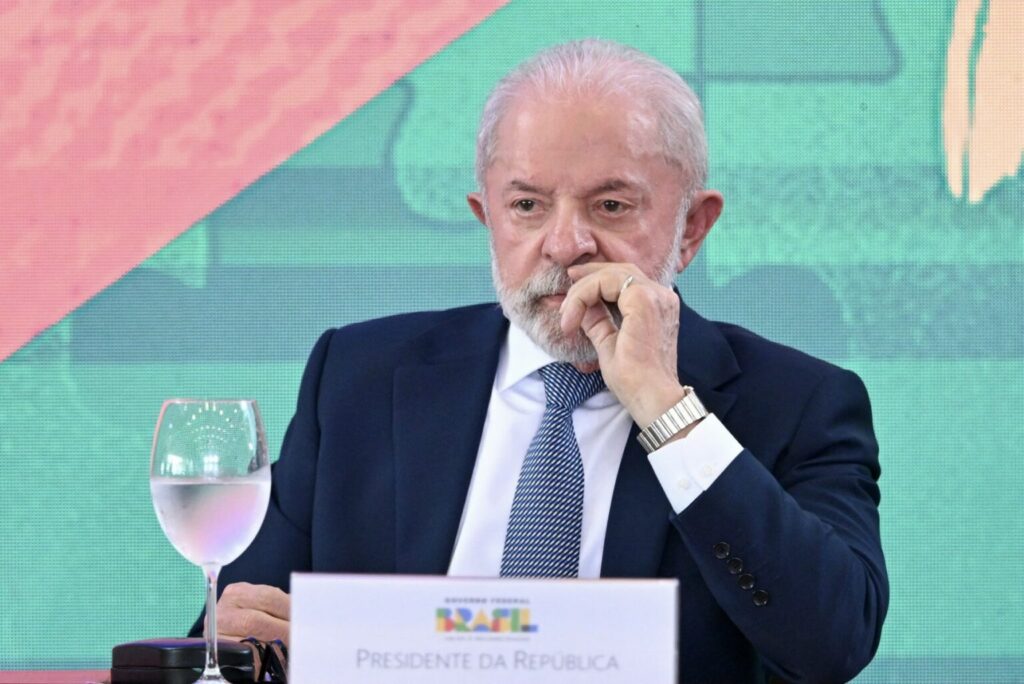
Speaking during a virtual summit of BRICS leaders—including Chinese President Xi Jinping, Russian President Vladimir Putin, and South African President Cyril Ramaphosa—Lula said the tariff move by Washington represents a growing threat to international trade norms.
“Tariff blackmail is being normalized as an instrument for market conquest and to interfere in domestic affairs,” Lula warned. His remarks came as Brazil’s exports to the U.S. plunged by 18.5 percent in August compared to the same period last year, following the Trump administration’s decision to impose its highest level of trade duties on a broad range of Brazilian goods.
The U.S. tariffs appear to be politically motivated, with Trump citing what he called a “witch hunt” against his close ally, Brazil’s former far-right president Jair Bolsonaro. Bolsonaro, who was defeated by Lula in the 2022 presidential election, is currently on trial for allegedly plotting to overturn the election results and reclaim power. A verdict in that case is expected later this week.
Trump’s remarks and the corresponding trade actions have drawn sharp rebukes from Brasília. The Brazilian government has announced it is considering retaliatory measures and has formally requested the intervention of the World Trade Organization (WTO) to mediate the escalating trade dispute.
“Brazil will not allow its economy to be held hostage to external political agendas,” a senior official in Brazil’s foreign ministry told reporters on Monday, signaling a hardening stance from South America’s largest economy.
The tension underscores the broader challenges facing global trade, particularly as geopolitical rivalries and domestic political calculations begin to shape tariffs and other trade policies. BRICS nations, which include Brazil, Russia, India, China, and South Africa, have increasingly pushed for reforms in global institutions like the WTO to counter what they describe as U.S. dominance in international economic frameworks.
The latest tariff row between Washington and Brasília threatens to strain bilateral relations further, just as both countries navigate high-stakes political transitions and upcoming elections.





