

KATHMANDU, Nepal (BN24) — At least 19 people were killed and more than 140 injured Monday in Nepal’s worst unrest in decades as police opened fire on protesters in Kathmandu and other cities during demonstrations against corruption and a government-imposed social media ban.
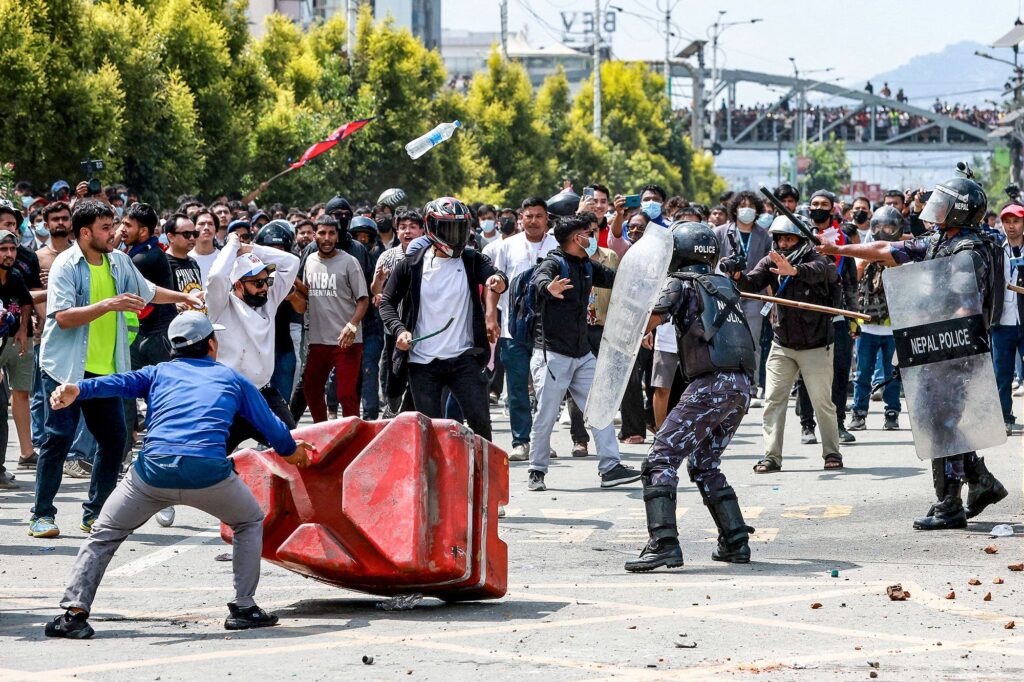
The violence erupted after thousands of mostly young demonstrators, many in school or college uniforms, surged toward Nepal’s parliament complex in the capital, tearing down barricades, setting an ambulance ablaze, and hurling rocks and other objects at riot police. Officers responded with tear gas, water cannons, batons, rubber bullets — and eventually live rounds, witnesses said.
“This is a protest by the new generation of Nepal,” one demonstrator told ANI news agency, accusing police of firing indiscriminately into the crowds. Doctors said many of the wounded had gunshot injuries to the head and chest.
Authorities confirmed two people also died in protests in the eastern city of Itahari. Similar demonstrations were reported in Biratnagar, Bharatpur, and Pokhara, underscoring the national scale of the unrest.
The protests, which organizers have called “Gen Z demonstrations,” were sparked by the government’s decision last week to block Facebook, YouTube, X and other social media platforms, citing the companies’ failure to register locally and growing concerns over hate speech, fake accounts, and online fraud. But critics say the move is a thinly veiled attempt to censor dissent and silence opposition voices.
Placards carried by protesters read: “Shut down corruption, not social media” and “Unban social media.”
Interior Minister Ramesh Lekhak resigned late Monday, taking “moral responsibility” for the bloodshed, according to cabinet officials. Prime Minister K.P. Sharma Oli convened an emergency meeting as the army was deployed to secure parliament and government buildings. Authorities later announced a curfew across key areas of Kathmandu.
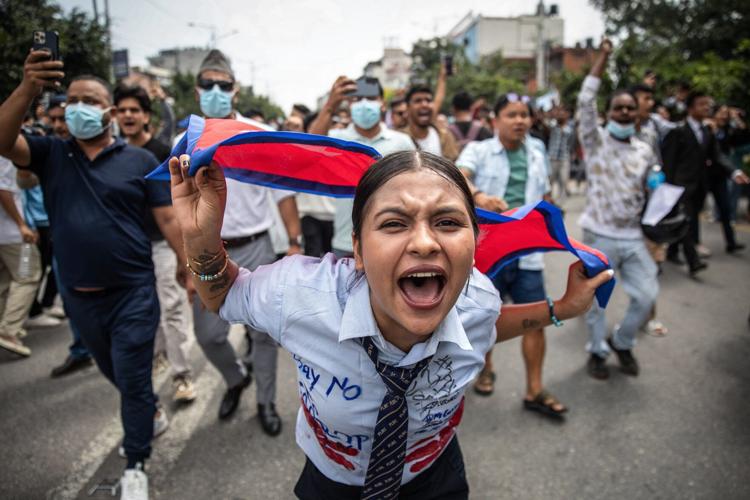
The United Nations and rights groups expressed alarm. Human Rights Watch urged Nepal’s government to recognize the demonstrations as a legitimate expression of public anger at corruption, nepotism and weak governance, warning that the excessive use of force risked deepening instability.
“Nineteen young people died today because authorities treated this as a law enforcement problem instead of a political one,” said a rights advocate in Kathmandu. “This is the loudest sign yet that Nepali youth have lost patience with corruption and authoritarianism.”
Nepal, which abolished its monarchy in 2008, has struggled with political instability, cycling through 14 governments since then without one completing a full term. Oli, now serving his fourth term as prime minister, has faced growing criticism for failing to curb corruption or expand job opportunities, leading many young Nepalis to seek work abroad.
With nearly 90 percent of Nepal’s 30 million people online, the social media shutdown has amplified anger and mobilized disaffected youth in unprecedented numbers. Analysts say the protests mark one of the most serious challenges to Oli’s government since he took office.





