

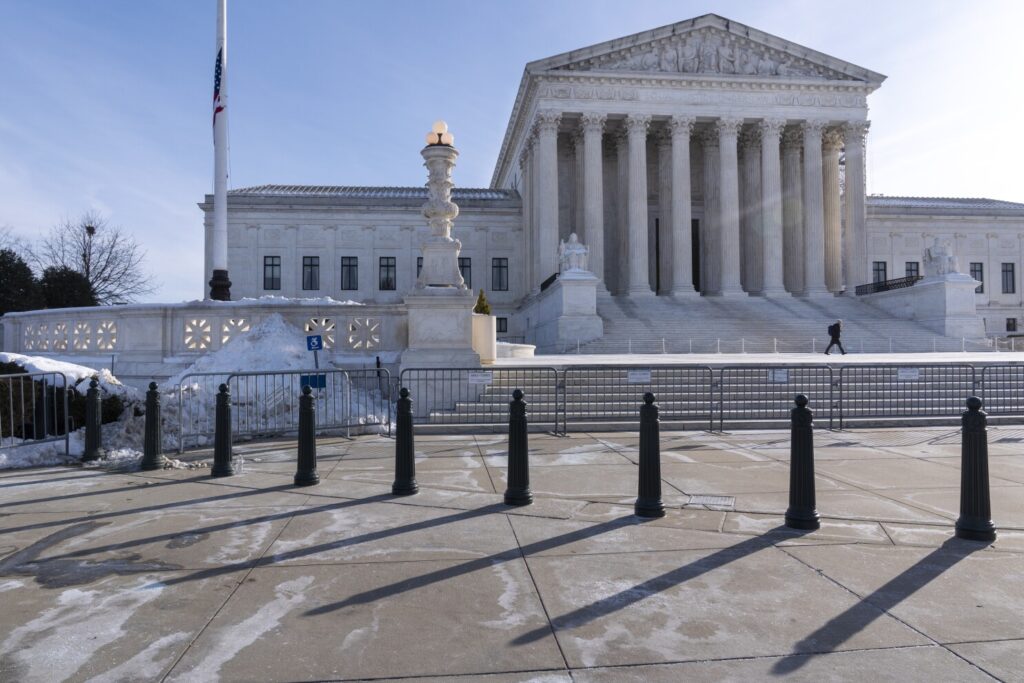
WASHINGTON (BN24) — The Supreme Court allowed President Trump’s administration Friday to withhold more than $4 billion in foreign aid funding approved by Congress, granting emergency relief in a high-stakes dispute over the separation of powers between the executive and legislative branches.
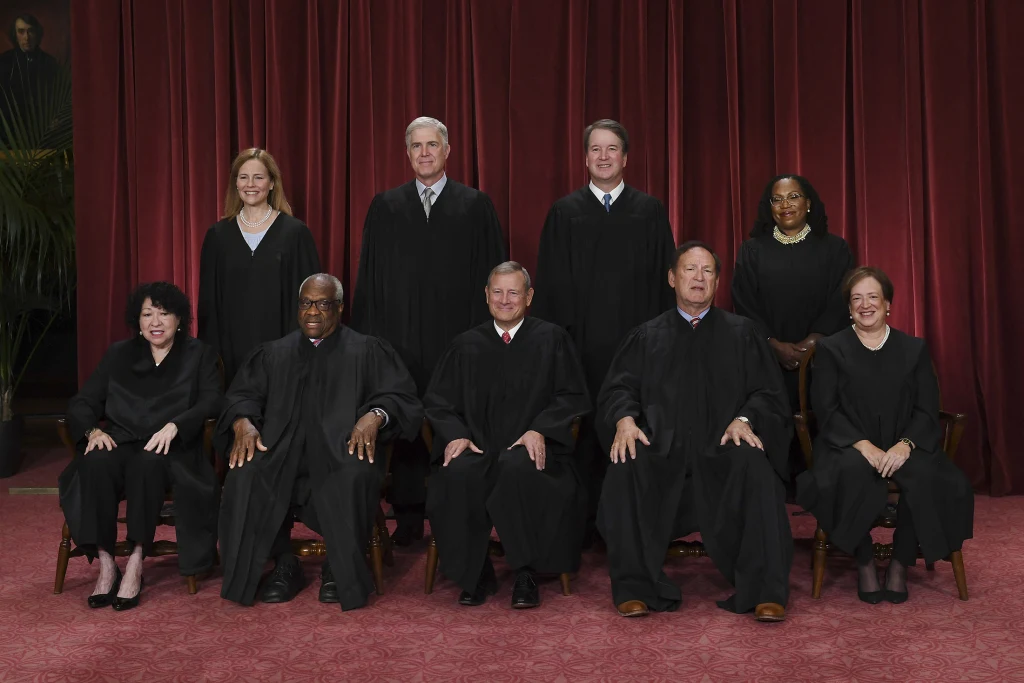
The court appeared to divide 6-3 along ideological lines, with Chief Justice John Roberts joining the conservative majority while Justices Elena Kagan, Sonia Sotomayor and Ketanji Brown Jackson dissented from the unsigned order that permits the withholding of congressionally appropriated funds.
The decision follows Roberts’ earlier temporary order this month that froze a district court injunction requiring the Trump administration to spend the money Congress allocated for foreign aid projects by the September 30 fiscal year deadline.
The Supreme Court stated in its unsigned order that potential harm to the executive branch’s ability to conduct foreign affairs appears to outweigh harm faced by organizations and businesses that receive funding for overseas projects. The court emphasized that the ruling “should not be read as a final determination on the merits” and represents only a “preliminary view, consistent with the standards for interim relief.”
The legal dispute centers on more than $4 billion Congress approved last year for overseas development assistance, peacekeeping operations and democracy promotion programs globally. Trump notified Congress last month of his intention to claw back $4.9 billion through a maneuver known as “pocket rescission” before the fiscal year ends September 30.
The Government Accountability Office has declared Trump’s move illegal, but the Supreme Court found that the administration “has made a sufficient showing” that the Impoundment Control Act precludes the plaintiffs’ lawsuit seeking to compel presidential compliance with appropriations law.
Justice Kagan emphasized the high stakes in her dissenting opinion, writing that the case involves fundamental questions about power allocation between executive and legislative branches. “The consequence of today’s grant is significant,” she stated, noting that the ruling allows the executive to cease obligating $4 billion that “will now never reach its intended recipients.”
“Because that result conflicts with the separation of powers, I respectfully dissent,” Kagan wrote, though acknowledging the majority’s restraint from offering definitive views on the underlying legal questions.
U.S. District Judge Amir Ali ruled in early September that the administration’s refusal to spend congressionally approved funds likely violates federal law governing agency rulemaking processes. Ali determined that the Trump administration could withhold funding only if Congress rescinded it through proper legislative procedures.
The legal battle began in February when nonprofit organizations and development companies sued after the Trump administration imposed a 90-day pause on foreign development assistance to review whether programs aligned with presidential foreign policy objectives.
The case has repeatedly reached the Supreme Court, including a March ruling where the justices split 5-4 to maintain Ali’s order requiring the administration to pay roughly $2 billion in invoices for already-performed foreign aid work.
The U.S. Court of Appeals for the District of Columbia Circuit initially ruled that nonprofits and businesses could not sue on separation of powers grounds, voting 2-1 to eliminate Ali’s prohibition on withholding congressionally appropriated money. However, an amended appellate opinion later provided alternative legal grounds for seeking relief.
Following the amended ruling, Trump informed Congress of his plan to rescind $4.9 billion in foreign aid funding, characterizing the programs as “wasteful” and inconsistent with his “America First” foreign policy agenda.
Plaintiffs filed a new request for preliminary relief with Ali, who found the Trump administration had a duty to comply with congressional directives by spending the $4 billion before the fiscal year’s end. The administration unsuccessfully sought relief from the D.C. Circuit before approaching the Supreme Court.
Solicitor General D. John Sauer argued in Supreme Court filings that Ali’s injunction “raises a grave and urgent threat to the separation of powers” by forcing the executive branch to advocate against its own objectives.
“The President can hardly speak with one voice in foreign affairs or in dealings with Congress when the district court is forcing the Executive Branch to advocate against its own objectives,” Sauer wrote, claiming the injunction “puts the executive branch at war with itself.”
Lawyers for the plaintiffs countered that the government has been obligated to spend congressionally approved money since at least March 2024, arguing that last year’s appropriations legislation remains binding on the executive branch.
The plaintiffs warned that the government’s legal theory would grant presidents “vast new powers to impound funds” while making court challenges to impoundments “virtually impossible,” creating a “self-defeating statute” that Congress would never have enacted.
Organizations dependent on federal funding face serious consequences from the withheld appropriations. Democracy International, which received 98 percent of its 2024 revenues from U.S. Agency for International Development awards, faces potential bankruptcy if the expiring appropriations remain unspent.
“The pocket rescission of democracy promotion funds is an existential threat to Democracy International,” plaintiff lawyers wrote in court filings, highlighting the immediate impact on organizations conducting overseas democracy and development work.
The Supreme Court’s decision represents a significant victory for Trump’s efforts to reshape foreign aid spending priorities, allowing the administration to effectively nullify congressional funding decisions through executive action rather than seeking legislative rescission.
The ruling may establish precedent for future presidential attempts to withhold congressionally appropriated funds, particularly in foreign policy areas where courts traditionally defer to executive branch authority.
The case underscores ongoing tensions between Trump’s “America First” agenda and traditional congressional oversight of federal spending, with implications extending beyond foreign aid to broader questions of executive power and legislative authority.
The decision leaves nonprofit organizations and development contractors facing uncertainty about future funding while potentially emboldening the administration to pursue additional rescissions of congressionally approved programs deemed inconsistent with presidential priorities.





