

BAGHDAD (BN24) — Iraq has resumed crude oil exports from its semi-autonomous Kurdistan region to Turkey after a two-and-a-half-year suspension, marking a significant breakthrough following a series of legal and technical disputes. The resumption of the oil flow began at 6 a.m. local time (03:00 GMT) on Saturday, according to a statement from Iraq’s oil ministry.
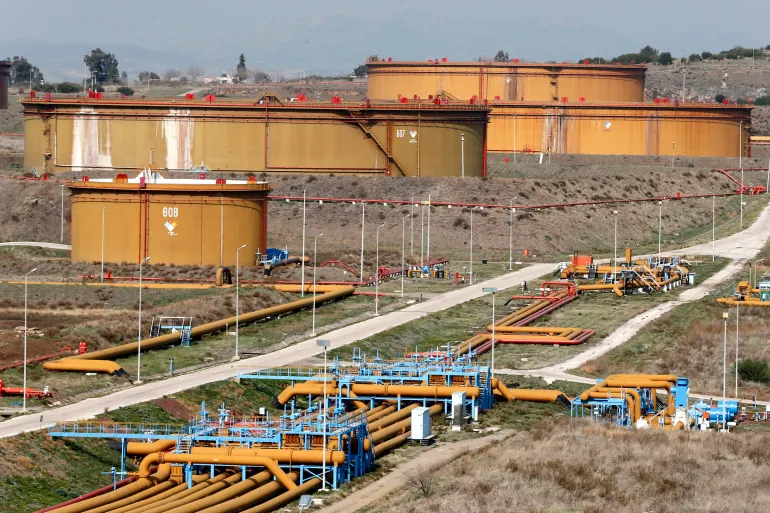
The statement confirmed that operations proceeded smoothly, with no significant technical issues reported. Turkish Energy Minister Alparslan Bayraktar also confirmed the resumption of exports in a post on the social media platform X, further validating the significance of the development.
The decision comes after a key agreement was struck between Iraq’s federal government, the Kurdistan regional government (KRG), and international oil companies operating in the region. Under the terms of the deal, between 180,000 and 190,000 barrels per day (bpd) of crude will be transported to Turkey’s Ceyhan port, which serves as the main terminal for Kurdish oil exports. Iraq’s Oil Minister confirmed the deal on Kurdish broadcaster Rudaw, signaling the successful resolution of ongoing disputes.
The deal had been heavily backed by the United States, which had pushed for the resumption of exports. The restart of the oil flow is expected to bring up to 230,000 bpd of crude back to international markets, which comes at a crucial time as the Organization of the Petroleum Exporting Countries (OPEC) aims to increase production to gain a larger share of the global market. U.S. Secretary of State Marco Rubio welcomed the deal, noting that it “will bring tangible benefits for both Americans and Iraqis.”
Mohammed al-Najjar, Iraq’s delegate to OPEC, added that the country could export even more oil in the future as new projects come online, including efforts to increase capacity at the Basra port. His comments underscored the broader potential for Iraq to boost its oil production and meet rising global demand, in line with OPEC’s objectives.
Under the terms of the deal, companies operating in the Kurdish region will receive $16 per barrel to cover production and transportation costs. The eight oil companies involved in the agreement, alongside Kurdish authorities, have also agreed to meet within 30 days of the resumption to discuss a mechanism for settling the Kurdish region’s outstanding debt of approximately $1 billion to the firms.
The resumption of oil exports is seen as a critical step toward improving Iraq’s oil revenues, which have been significantly affected by the suspension of exports. It also represents an effort to stabilize the often tense relationship between Baghdad and the Kurdistan region, which has long held control over its oil exports without federal oversight. The Kirkuk-Ceyhan pipeline, which serves as the primary conduit for these exports, had been shut down in March 2023, after an international arbitration ruling required Turkey to pay Iraq $1.5 billion in damages for allowing unauthorized Kurdish exports.
The Kurdish oil industry has suffered significant financial losses during the hiatus, with the Association of the Petroleum Industry of Kurdistan estimating Iraq’s losses at over $35 billion due to the pipeline’s closure.
The resumption of Kurdish oil exports is seen as a critical move not only for the economic benefit of Iraq but also for the broader stability of the region. However, the situation remains fluid, and the long-term success of the deal will depend on how effectively both the federal government in Baghdad and the Kurdish authorities can navigate their complex relationship and ensure that oil revenues are managed transparently and equitably.





