

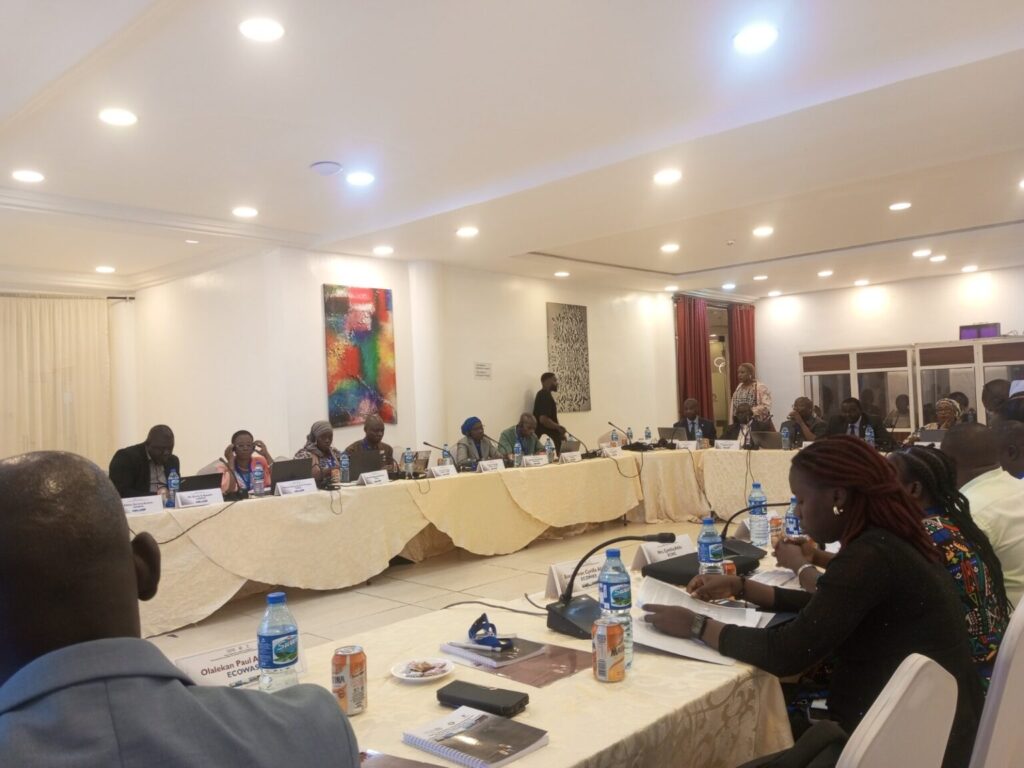
ABUJA, Nigeria (BN24)— The Economic Community of West African States (ECOWAS) has restarted its efforts to finalize a long-stalled Regional Blue Economy Strategy, beginning with a high-level consultative workshop held Monday in Abuja. The meeting brought together representatives from ECOWAS member states, regional economic blocs, and continental institutions to review and validate a draft strategy that has remained dormant since its initial development in 2022.
The blue economy, encompassing marine resources, aquaculture, maritime transport, ocean conservation, and climate resilience, is seen as a crucial pillar for sustainable development across the region. The strategy was originally developed under the Programme for Improved Regional Fisheries Governance in Western Africa (PESCAO), but progress stalled following the end of that project due to administrative delays.
Djiga Thiao, Programme Officer for Fishery Development and ECOWAS Focal Person for the Blue Economy, addressed the gathering on behalf of the outgoing Director of Agriculture and Rural Development, Alain Traoré. Thiao emphasized the urgent need for policy coordination among member states to unlock the full potential of the region’s marine and water resources.
“You know that the marine resources and the water resources are the crossroads of many sectors—fisheries, aquaculture, shipping—also in the context of climate change and sustainable livelihood that we need to get from these resources. So we need to have harmonised policies and guiding policies to get the best benefit from these resources,” he said. “That’s why we need a blue economy strategy. ECOWAS needs to have a regional one.”
Thiao acknowledged the draft’s extended stagnation since 2022, noting that it remained untouched following the conclusion of the PESCAO project. Despite this setback, he stressed that the strategy remains a key priority within the ECOWAS Commission.
“The Commissioner said she wanted this blue economy strategy to be one of ECOWAS’ biggest legacies,” he added, referring to the outgoing leadership. “But like the French people say, les personnes partent, les institutions demeurent—people leave, institutions remain. So this blue economy will still be a big priority for the new director and Commissioner who are coming.”
He framed the workshop as a shared responsibility between ECOWAS and member states, urging collaboration toward successful validation of the final strategy draft.
“This work we are doing, if we get success, it will be our success together. But if we fail, we will fail together,” Thiao said. “We have the duty to work closely with the experts so that we get this blue economy strategy validated.”
Support from the African Union was visible throughout the workshop. Linda Etta, Blue Economy Advisor at the African Union Commission (AUC), delivered virtual remarks on behalf of Hassan Nyambe, Director of the AUC’s Sustainable Environment and Blue Economy Division. She affirmed the AU’s commitment to assisting regional blocs in translating strategy into impact.
“The African Union Commission is deeply committed to supporting member states and regional economic communities in translating the strategic ambitions into tangible outcomes,” Etta said. “Initiatives like the ECOWAS regional blue economy strategy are critical to ensuring policy harmonisation, shared best practices, and investment mobilisation across our region.”
AU-IBAR Blue Economy Expert Dr. Mohammed Seisay reiterated that support, noting the AU’s involvement in helping member countries develop national strategies. “We started with four countries. Then we supported another 11 countries. We have also been supporting regional economic communities,” he said, citing recent assistance to Burkina Faso as an example of timely engagement.
Participants included national delegates from ECOWAS member states, technical experts, and officials from the African Union InterAfrican Bureau for Animal Resources (AU-IBAR), the AUC, and the Fisheries Committee for the West Central Gulf of Guinea. The workshop marks a critical step in reviving the regional blueprint for managing ocean and water resources in a coordinated, sustainable way.





 has restarted its efforts to finalize a long-stalled Regional Blue Economy Strategy, beginning with a high-level consultative workshop held Monday in Abuja.)