

PARIS (BN24) — France plunged deeper into political turmoil Monday after Prime Minister Sébastien Lecornu resigned less than a month into his tenure, marking the latest twist in a period of sustained governmental instability under President Emmanuel Macron.
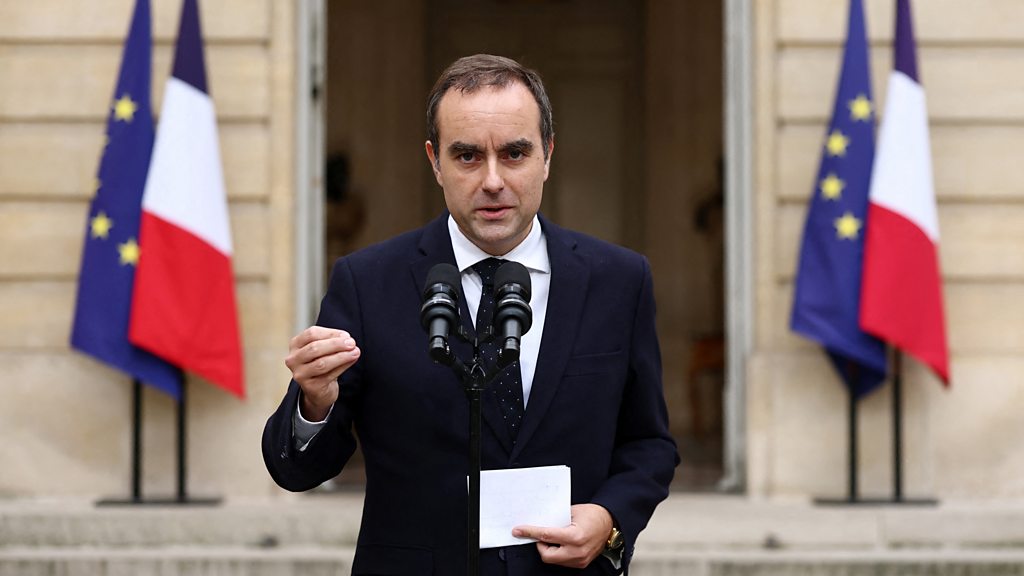
Lecornu, who took office only 26 days ago following the collapse of François Bayrou’s government, stepped down amid mounting pressure and parliamentary hostility. The move leaves the country once again without a head of government and adds to the growing uncertainty over how Macron plans to govern with a deeply fragmented National Assembly.
The 38-year-old former armed forces minister had just unveiled his cabinet over the weekend, a lineup that closely resembled that of his predecessor. But the continuity failed to win over lawmakers. Parties across the political spectrum quickly condemned the appointments and signaled their intent to reject Lecornu’s government in a looming confidence vote.
In a brief address outside the Hôtel de Matignon, Lecornu criticized the entrenched partisanship that he said paralyzed any attempt at compromise.
“All parties are behaving as if they had an absolute majority,” he said. “It wouldn’t take much for this to work, but that would require humility and the willingness to cast some egos aside.”
President Macron has not commented publicly on the resignation, and the Élysée Palace offered no immediate signal of his next move. With no clear path forward, speculation swirls around three options: appointing a new prime minister, dissolving the National Assembly to call new elections, or resigning, though the latter remains highly unlikely.
Lecornu, seen by many as Macron’s most loyal lieutenant, was widely viewed as a last resort in a rapidly shrinking pool of viable leaders. His departure underscores the depth of the crisis now gripping France’s executive and legislative branches.
Macron’s troubles began in earnest after his centrist coalition failed to secure a majority in July 2024’s snap parliamentary elections, called in the wake of a bruising defeat in the European Parliament vote. The result left the National Assembly fractured among ideologically rigid blocs unwilling to form coalitions.
Since then, successive governments have collapsed under the weight of political deadlock and fiscal strain. Michel Barnier was ousted in a no-confidence vote just three months after being named prime minister. His successor, François Bayrou, lasted nine months before his austerity budget proposing €44 billion in spending cuts was rejected by lawmakers.
France’s economic pressures continue to mount. The country’s budget deficit reached 5.8% of GDP in 2024, and public debt now stands at 114% of GDP, one of the highest ratios in the eurozone, behind only Greece and Italy. That amounts to nearly €50,000 per French citizen.
The political instability rattled financial markets on Monday. Paris stock exchange indices dropped sharply following news of Lecornu’s resignation.
Calls for new legislative elections are growing louder. Marine Le Pen, leader of the far-right National Rally (RN), described the current situation as untenable.
“The joke’s gone on long enough,” Le Pen said. “The French people are fed up. Macron has put the country in an extremely difficult position. The only wise thing to do now is to hold elections.”
Yet elections could deliver further blows to Macron’s already weakened centrist alliance, potentially handing major gains to Le Pen’s RN or the hard-left.
With his authority diminished and options narrowing, Macron faces one of the most perilous moments of his presidency. The next steps may determine whether France can emerge from its legislative deadlock or sink further into dysfunction.





