

KYIV, Ukraine (BN24) — Russia launched a sweeping aerial attack against Ukraine’s energy infrastructure early Friday, killing civilians and plunging large areas of the country into darkness, as the onset of winter deepens concerns about humanitarian conditions across the war-torn nation.
Ukrainian officials said the strike, which began before dawn on October 10, was among the most intense in recent months. President Volodymyr Zelensky described the barrage as a “massive attack” involving more than 450 Iranian-made Shahed drones and over 30 missiles, aimed deliberately at civilian and energy targets.
“It is a cynical and calculated attack,” Zelensky said in a statement. “Russia’s goal is to leave us in darkness, without water and heat, as winter sets in. This is terrorism with clear intent.”
The latest wave of strikes inflicted widespread damage across Ukraine’s energy grid, which has already been under near-daily assault since late September. Officials said energy production, distribution systems, and gas facilities were hit, resulting in casualties, severe infrastructure damage, and power outages in multiple regions.
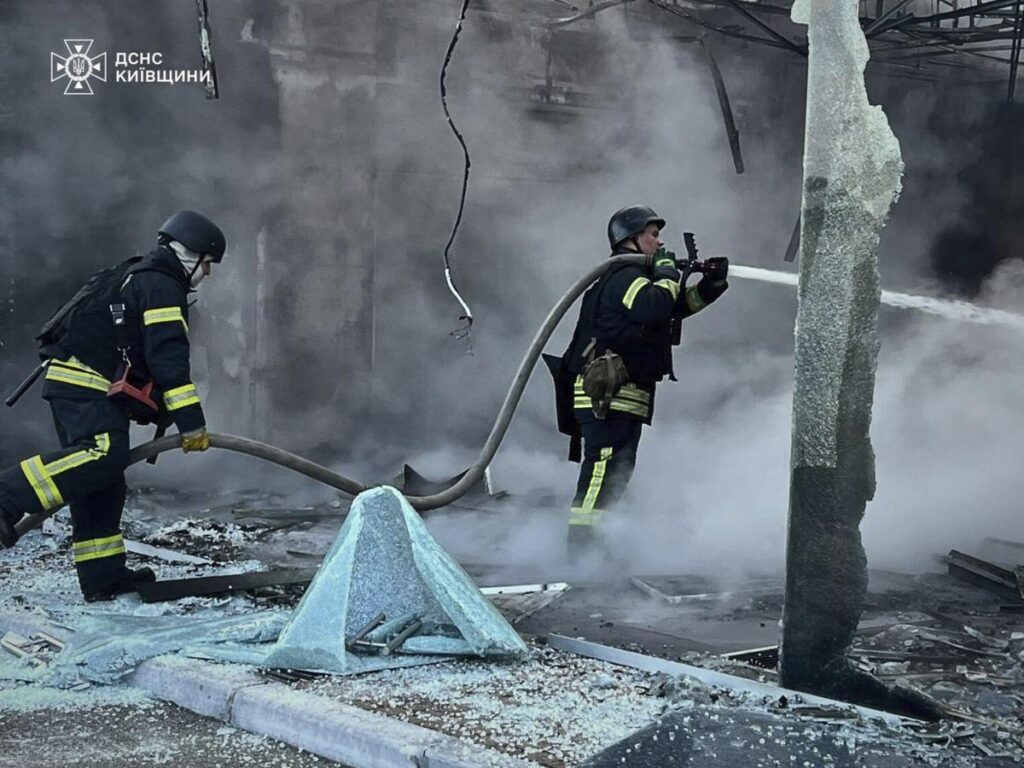
In Zaporizhzhia, a missile strike killed a 7-year-old boy, local authorities confirmed. More than a dozen others were injured nationwide, including at least 12 in Kyiv. Emergency responders shared footage of firefighting efforts and rescue operations, including residents being evacuated from burning buildings in the capital.
Kyiv and its surrounding regions bore the brunt of the attack. According to Kyiv regional governor Mykola Kalashnik, approximately 28,000 households in Brovary and Boryspil districts lost electricity. The capital’s left bank also experienced serious disruptions in both power and water supplies.
In the Poltava region, over 16,500 households and 800 businesses were left without power. Blackouts were also reported in Kharkiv, Dnipro, and Zaporizhzhia, where ongoing repair efforts continue amid threats of renewed strikes.
Ukraine’s largest private energy producer, DTEK Group, confirmed its facilities were directly targeted. This marked the third strike on DTEK infrastructure in a single week. The latest attack caused major equipment damage and injured at least one energy worker.
“Our facilities are under targeted assault,” the company said in a statement. “Repair crews are working around the clock to restore services, but the damage is extensive.”
Ukraine’s Emergency Services released images and videos from the aftermath, showing flames engulfing energy facilities and workers pulling people to safety. Energy Minister Svitlana Grynchuk reassured the public that swift measures are underway to restore power and secure vital infrastructure before the arrival of peak winter temperatures.
“This attack once again shows that Russia is not just fighting a war against our military,” Grynchuk said. “They are trying to break the civilian spirit by freezing our homes, crippling our hospitals, and disrupting our lives.”
Ukrainian authorities have repeatedly warned that Moscow is resuming a winter campaign of energy terror, similar to the strikes seen last year that left millions without heating for extended periods during sub-zero weather.
International monitors, including the United Nations and the International Energy Agency (IEA), have previously condemned these attacks on civilian infrastructure as potential violations of international law.
While Ukraine’s air defense systems intercepted many incoming threats, the sheer volume of drones and missiles overwhelmed some defense sectors. Zelensky again called on Western allies to expedite the delivery of air defense systems and energy recovery aid to bolster Ukraine’s resilience ahead of another brutal winter.
Military analysts say Russia appears to be repeating a strategy designed to exhaust Ukraine’s power grid and strain civilian morale, after its battlefield momentum slowed. Targeting energy hubs not only causes human suffering, experts say, but also disrupts supply chains, slows military logistics, and strains Ukraine’s economy.
“This isn’t just an attack on infrastructure, it’s an attack on national survival,” said Serhii Kovalenko, a Ukrainian energy analyst based in Lviv.
The Kremlin has not publicly commented on Friday’s strikes. Russian state media has previously framed such attacks as attempts to disable Ukraine’s “military command and logistics.”
Meanwhile, Ukraine’s repair teams continue their work under the threat of renewed attacks. “Our people are exhausted,” said a DTEK engineer in a video shared by the company. “But we’ll keep going. We have no choice.”





