

ABIDJAN, Ivory Coast (BN24) — Ivory Coast’s President Alassane Ouattara was reelected to a fourth term in an election marked by low turnout and empty streets in the economic capital of Abidjan, provisional results showed Monday.
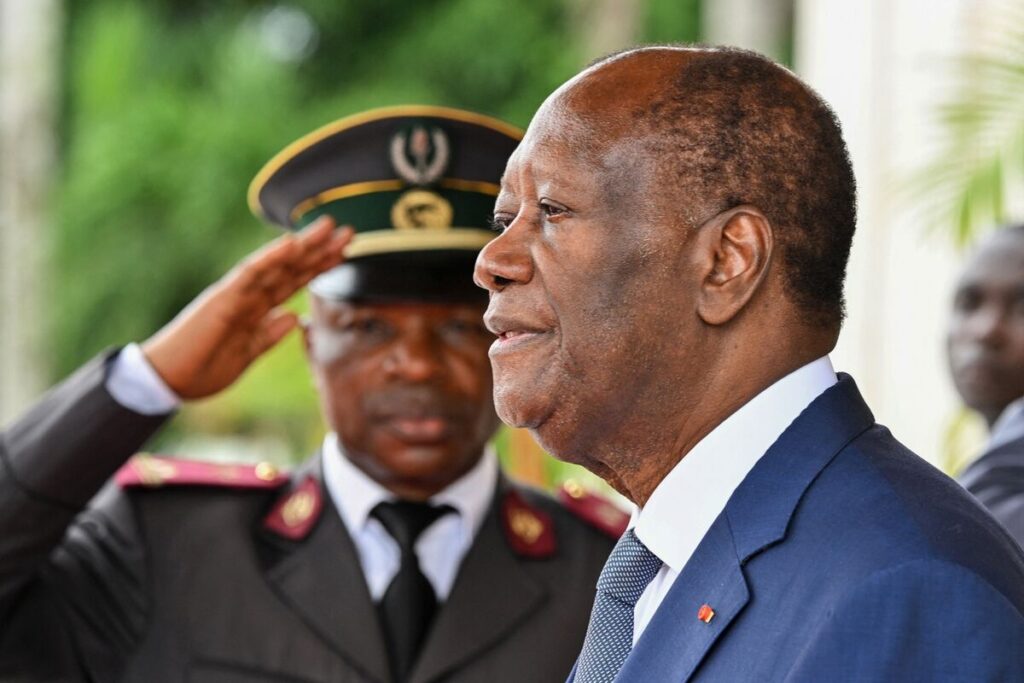
Ouattara, first elected president in the West African nation in 2011, won eighty-nine point seven percent of the vote, Electoral Commission head Ibrahime Kuibiert Coulibaly said Monday. Jean-Louis Billon, a former commerce minister from one of Ivory Coast’s richest families, came in a distant second with three percent of the vote. Simone Gbagbo, a former first lady, came in third with two point four percent under the provisional results.
Final results are expected by November 3, though they could be announced sooner. Some eight point five million people were registered to vote. Voter turnout was around fifty percent.
Nearly nine million Ivorians were eligible to vote on Saturday in a race that excluded Ouattara’s top rivals. Former President Laurent Gbagbo was barred over a criminal conviction, and former Credit Suisse CEO Tidjane Thiam was disqualified for acquiring French citizenship.
The remaining four candidates were not seen as viable contenders, as they lacked backing from a major political party and significant financial resources.
Billon on Sunday congratulated Ouattara after early partial results showed the latter with a strong lead nationwide, winning upwards of ninety percent of the vote with turnout close to one hundred percent in northern strongholds.
The political veteran was also ahead in traditionally pro-opposition areas in the south and parts of the economic hub Abidjan where turnout was low. In the southern city of Gagnoa, he won ninety-two percent of the vote but with a turnout rate of only twenty percent.
Many abstained amid widespread anger over Ouattara’s decision to run for a fourth consecutive term. Under the constitution, presidents may only serve a maximum of two terms, but the president argued his limit was “reset” by a 2016 constitutional overhaul.
In the weeks leading up to the election, sporadic protests broke out in response to the ban on key contenders from the polls, prompting the government to ban demonstrations and arrest over two hundred people from campaign group the Common Front political movement.
Electoral commission president Ibrahime Coulibaly-Kuibiert earlier put turnout at around fifty percent, a similar level to 2020 when Ouattara won ninety-four percent of the vote in an election boycotted by the main opponents.
The low turnout and overwhelming victory margin reflect the contentious nature of Ouattara’s bid for a fourth term. Critics have accused the president of undermining democratic norms by circumventing constitutional term limits through his interpretation of the 2016 constitutional changes.
Ouattara’s supporters argue the constitutional overhaul legitimately reset presidential term counts, making him eligible for what they characterize as a second two-term cycle. Opposition voices and many constitutional scholars reject this interpretation as contrary to the spirit of term limit protections.
The exclusion of Gbagbo and Thiam removed Ouattara’s most formidable potential challengers from the ballot. Gbagbo, who served as president from 2000 to 2011, was ousted following a disputed election and subsequent civil conflict. His barring based on criminal conviction has been criticized as politically motivated, particularly after his acquittal by the International Criminal Court on related charges.
Thiam’s disqualification for holding dual citizenship prevented a potentially competitive race. The prominent banker and former corporate executive had been viewed as a strong opposition candidate before his exclusion under Ivory Coast’s electoral laws prohibiting dual nationals from seeking the presidency.
The stark contrast between turnout rates in different regions underscores political divisions in Ivory Coast. While Ouattara’s northern strongholds saw near-universal participation and overwhelming support, southern opposition areas showed both lower turnout and reduced enthusiasm, though the president still won majorities even there.
The arrest of more than two hundred opposition activists in the weeks before the election drew criticism from international observers and human rights organizations. The government defended the crackdown as necessary to prevent violence and maintain public order during a tense political period.
Ivory Coast, once considered among West Africa’s more stable democracies, has experienced recurring political crises tied to presidential succession. The country endured a brief civil war following disputed 2010 election results that left thousands dead and deeply scarred the national psyche.
Ouattara has presided over significant economic growth during his tenure, with Ivory Coast becoming one of Africa’s fastest-growing economies. The country is the world’s leading cocoa producer and has seen substantial infrastructure development and improved public services under his leadership.
However, critics argue that economic progress has not been accompanied by corresponding political liberalization. The exclusion of major opposition figures, suppression of protests and controversial constitutional interpretation raise concerns about democratic backsliding in one of the region’s largest economies.
The election results, while giving Ouattara an overwhelming victory, occur against a backdrop of questions about the health of Ivorian democracy. The fifty percent turnout represents significant portions of the electorate choosing not to participate, suggesting widespread disillusionment with a political process many view as predetermined.
Regional context for the election includes broader concerns about democratic governance across West Africa. Several countries in the region have experienced military coups or controversial constitutional changes extending presidential tenure in recent years, making Ivory Coast’s situation part of a troubling pattern.
International reaction to the election has been measured, with Western nations and regional bodies offering cautious statements calling for political dialogue and respect for constitutional processes without directly challenging the legitimacy of Ouattara’s victory.
The next five years will test whether Ouattara can address the political divisions his extended tenure has exacerbated while maintaining the economic progress that has characterized his time in office. The combination of low turnout, excluded opposition and widespread protests leaves questions about the mandate he carries into this fourth term.





