

Washington (BN24) – The U.S. Supreme Court on Friday granted a temporary reprieve to President Donald Trump’s administration, allowing it to withhold roughly $4 billion in Supplemental Nutrition Assistance Program (SNAP) benefits that a lower court had ordered to be paid in full by the end of the day.

The emergency order, issued by Justice Ketanji Brown Jackson, temporarily blocked a directive from U.S. District Judge John McConnell of Rhode Island that required the administration to release the full monthly food aid despite the ongoing government shutdown. The order effectively gives the Trump administration more time to argue its case before the 1st U.S. Circuit Court of Appeals, which had earlier said it would act “as quickly as possible” on the matter.
The decision comes after a day of confusion for states and millions of Americans who rely on SNAP, commonly known as food stamps. Hours before the Supreme Court’s order, the U.S. Department of Agriculture (USDA) had informed states in a memo that it would proceed with making full November payments. Patrick Penn, deputy undersecretary for Food, Nutrition and Consumer Services, told states that the USDA “will complete the processes necessary” to issue full benefits “for the time being.”
But the administration quickly reversed course, petitioning the Supreme Court to intervene. The Justice Department argued that Judge McConnell’s order violated constitutional limits on judicial power by compelling the executive branch to spend unappropriated funds.
Solicitor General D. John Sauer warned in the administration’s filing that paying the full benefits would deplete funds needed for other vital nutrition programs, such as school lunches. “Once those billions are out the door, there is no ready mechanism for the government to recover those funds — to the significant detriment of other critical social programs whose budgets the district court ordered the government to raid,” Sauer wrote.
Nearly 42 million Americans depend on SNAP benefits each month. Under normal circumstances, the program provides up to $300 per individual and around $1,000 for a family of four. Because of the shutdown, the Trump administration had previously authorized $4.65 billion in contingency funds—enough to cover about 65% of benefits for November—but declined to draw from a separate $4 billion reserve tied to child nutrition programs known as Section 32 funds.
Earlier this week, U.S. Agriculture Secretary Brooke Rollins confirmed that partial payments had already been distributed to states, which oversee the process of loading benefits onto electronic cards. The administration argued it had met its obligations by releasing those partial funds.
However, Judge McConnell rebuked that position Thursday, saying the administration’s delays were “simply unacceptable.” In a strongly worded order, he chastised officials for allowing Americans to go hungry during the shutdown. “People have gone without for too long. Not making payments to them for even another day is simply unacceptable,” McConnell wrote. “This should never happen in America.”
The ongoing dispute over SNAP funding marks the first time in the program’s 61-year history that benefits have been disrupted due to a federal government shutdown. Advocacy groups, including Democracy Forward, have filed lawsuits challenging the administration’s handling of the payments, arguing that withholding food aid during a shutdown violates federal law and puts millions of vulnerable households at risk.
Attorney General Pam Bondi celebrated Friday’s Supreme Court order, writing on X that “The Supreme Court just granted our administrative stay in this case. Our attorneys will not stop fighting, day and night, to defend and advance President Trump’s agenda.”
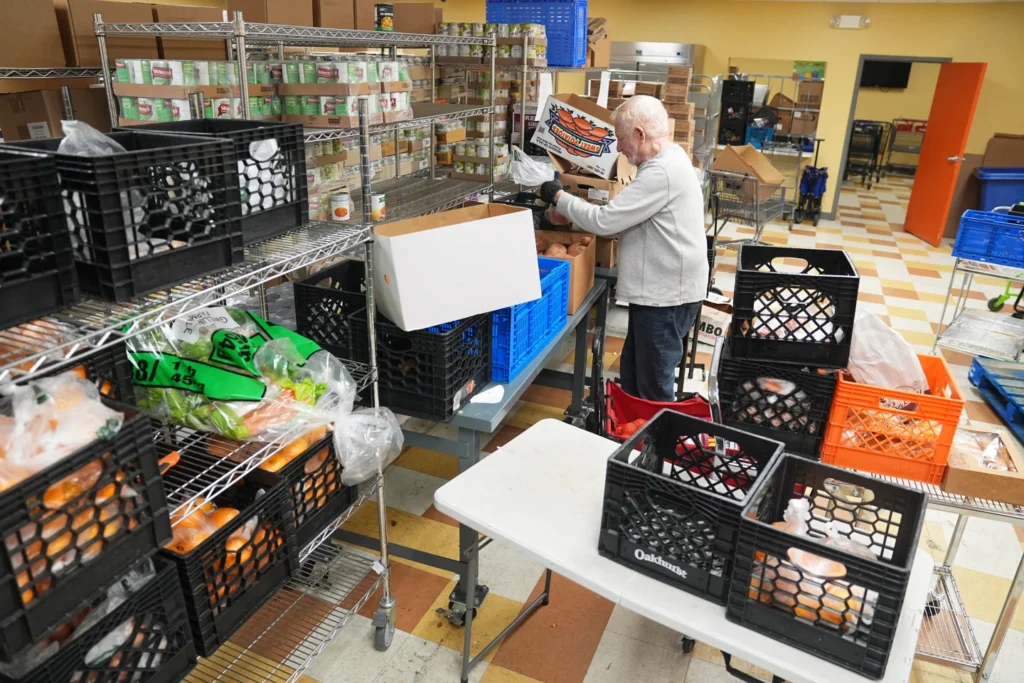
For families dependent on SNAP, however, the ruling means continued uncertainty. Reports from across the country indicate that many households have already begun skipping meals or surviving on what little food remains in their pantries. In cities like Detroit, Atlanta, and Newark, families have turned to food banks to fill the gap while awaiting word on when—or if—their full November benefits will arrive.
As the case moves forward in the appeals court, millions of Americans remain in limbo, anxiously watching the legal and political battle unfold over the very aid that keeps food on their tables.





