

LONDON (BN24) — BBC Director General Tim Davie and CEO of News Deborah Turness have resigned following criticism that a Panorama documentary misled viewers by editing a speech by U.S. President Donald Trump.
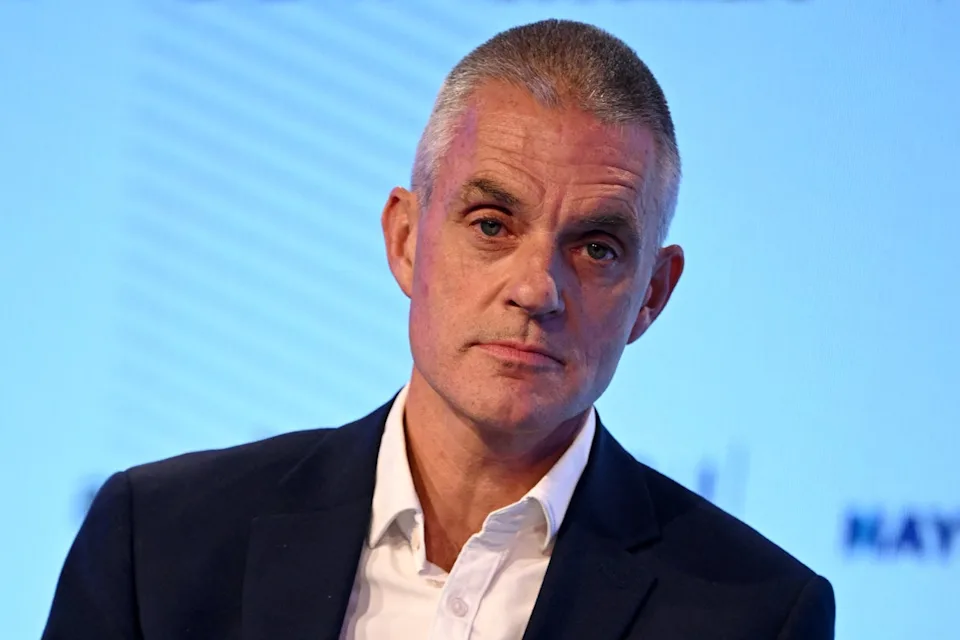
It comes after The Telegraph published details of a leaked internal BBC memo suggesting the programme edited two parts of Trump’s speech together so he appeared to explicitly encourage the Capitol Hill riots of January 2021.
In a statement, Davie said: “Overall the BBC is delivering well, but there have been some mistakes made and as director general I have to take ultimate responsibility.”
Turness said that “the ongoing controversy” around the Panorama documentary “has reached a stage where it is causing damage to the BBC.” She added that “the buck stops with me.”
Davie’s departure after five years as boss follows other separate BBC controversies in recent months, including Glastonbury coverage. He and Turness had already been under pressure over a range of issues, including the Gaza: How To Survive A Warzone documentary, where the BBC failed to disclose that the narrator was the son of a Hamas official.
Culture Secretary Lisa Nandy welcomed Davie’s resignation and thanked him for his leadership of the BBC through a period of “significant change.” There is no information yet on when a new director general will be appointed.
In his resignation statement, Davie said he wanted to let staff know that he had decided to leave the BBC after 20 years. “This is entirely my decision, and I remain very thankful to the Chair and Board for their unswerving and unanimous support throughout my entire tenure, including during recent days,” he said.
Davie said he had been reflecting on the “very intense personal and professional demands of managing this role over many years in these febrile times,” combined with the fact that he wanted to give a successor time to help shape the Charter plans they will be delivering.
“In these increasingly polarised times, the BBC is of unique value and speaks to the very best of us,” Davie said. “It helps make the UK a special place; overwhelmingly kind, tolerant and curious. Like all public organisations, the BBC is not perfect, and we must always be open, transparent and accountable. While not being the only reason, the current debate around BBC News has understandably contributed to my decision.”
BBC Chair Samir Shah extended his sincere gratitude to both Davie and Turness for their “unwavering service and commitment to the BBC.”
“This is a sad day for the BBC,” Shah said. He said he understood the “continued pressure on him, personally and professionally, which has led him to take this decision today.”
“The whole Board respects the decision and the reasons for it,” Shah added, noting that Davie is a “devoted and inspirational” leader who has “achieved a great deal.”
The resignations come after The Telegraph reported on a leaked internal BBC memo from Michael Prescott, a former independent external adviser to the broadcaster’s editorial standards committee who left the role in June. Prescott raised concerns over the documentary Trump: A Second Chance?, which was broadcast last year and made for the BBC by independent production company October Films Ltd.
On Sunday, Nandy said the Panorama issue was “very serious” but there were a series of “very serious allegations” that had been made about the broadcaster, “the most serious of which is that there is systemic bias in the way that difficult issues are reported at the BBC.”
Turness said in her resignation statement that she had “taken the difficult decision that it will no longer be my role to lead you in the collective vision that we all have: to pursue the truth with no agenda.”
She added that “the ongoing controversy around the Panorama on President Trump has reached a stage where it is causing damage to the BBC – an institution that I love.”
“The buck stops with me,” she said, adding that she offered her resignation to Davie on Saturday.
“While mistakes have been made, I want to be absolutely clear recent allegations that BBC News is institutionally biased are wrong,” she added.
Nandy thanked Davie “for his service to public broadcasting over many years” in a statement on social media. “He has led the BBC through a period of significant change and helped the organisation to grip the challenges it has faced in recent years,” she wrote.
“Now more than ever, the need for trusted news and high quality programming is essential to our democratic and cultural life, and our place in the world,” Nandy continued. “As a government, we will support the Board as it manages this transition and ensure that the Charter Review is the catalyst that helps the BBC to adapt to this new era and secures its role at the heart of national life for decades to come.”
Davie became the director general of the BBC in September 2020, the 17th person tasked with overseeing the corporation’s services as its editorial, operational and creative leader. He was not a new figure to the BBC; prior to becoming director general, Davie was chief executive of BBC Studios for seven years. He oversaw the merger of BBC Worldwide, the distribution company, and the corporation’s production arm. He was also acting director general of the BBC between November 2012 and April 2013. He is stepping down after 20 years with the corporation.
Before joining the BBC, Davie worked for organizations such as Procter and Gamble, and PepsiCo. In 2018, he was appointed CBE for his services to international trade.
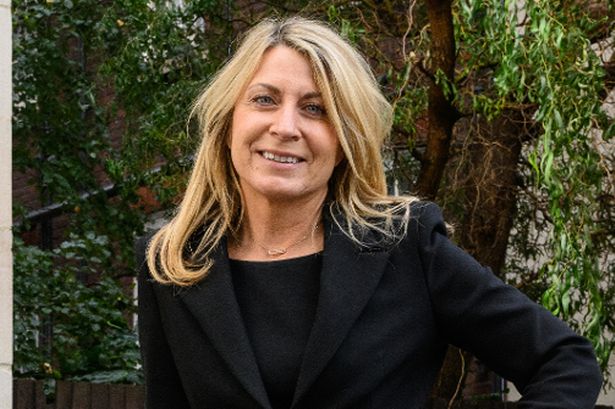
Turness has been the CEO of BBC News since 2022, overseeing BBC News and Current Affairs programming. In her role, she had responsibility for a team of around 6,000 people, broadcasting to almost half a billion people across the world in more than 40 languages.
She was previously CEO of ITN, and had led the organization’s post-Covid strategy for growth. Prior to working at the BBC and ITN, she was president of NBC News from 2013 until 2017, and later president of NBC News International. Before her stint at NBC, she was editor of ITV News where she was their first female editor and the youngest ever editor of ITV News.
Davie weathered many scandals and crises during his five years at the helm of the BBC, including the Gary Lineker controversy, Bob Vylan at Glastonbury, the Gaza documentary and the transgressions of a string of high-profile presenters. He was nicknamed “Teflon Tim” because nothing seemed to stick.
The resignations come at a sensitive time for the BBC, with the government set to review the corporation’s royal charter, which essentially gives it the right to exist, before the current term expires in 2027.
Liberal Democrat leader Ed Davey said: “The BBC isn’t perfect, but it remains one of the few institutions standing between our British values and a populist, Trump-style takeover of our politics.” He said the resignations “must be an opportunity for the BBC to turn a new leaf.”
Reform UK leader Nigel Farage said Davie and Turness resigning from the BBC must be “the start of wholesale change.” He said the government needs to appoint somebody with “a record of coming in and turning companies and their cultures around.”
“This is the BBC’s last chance. If they don’t get this right, there will be vast numbers of people refusing to pay the licence fee,” Farage added.
White House press secretary Karoline Leavitt posted two words on social media in response to the resignations. She posted two screenshots of news articles side by side, writing “shot” over a Telegraph article with the headline “Trump goes to war with ‘fake news’ BBC” and “chaser” above a BBC News article announcing Davie’s resignation.
Earlier this week, Leavitt called the BBC “100 percent fake news” in response to the Panorama documentary which was criticized as misleading viewers over the way Trump’s speech was edited.
Conservative leader Kemi Badenoch said it was right that Davie and Turness resigned, but added there has been a “catalogue of serious failures that runs far deeper.”
“The Prescott report exposed institutional bias that cannot be swept away with two resignations – strong action must be taken on all the issues it raised,” she wrote on social media, adding: “BBC Arabic must be brought under urgent control. The BBC’s US and Middle East coverage needs a full overhaul.”
Badenoch said the new leadership will have to deliver “genuine reform of the culture of the BBC,” adding: “It should not expect the public to keep funding it through a compulsory licence fee unless it can finally demonstrate true impartiality.”





