

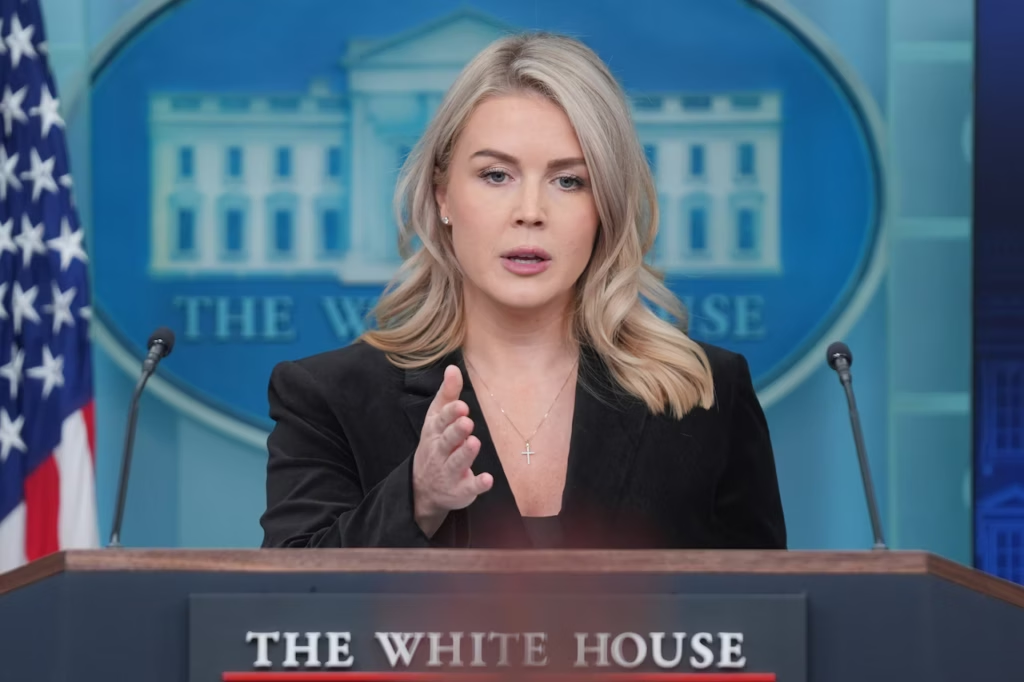
White House press secretary Karoline Leavitt gave an explanation Thursday for why President Donald Trump appeared to insult a female reporter’s appearance after he was asked a question about Jeffrey Epstein.
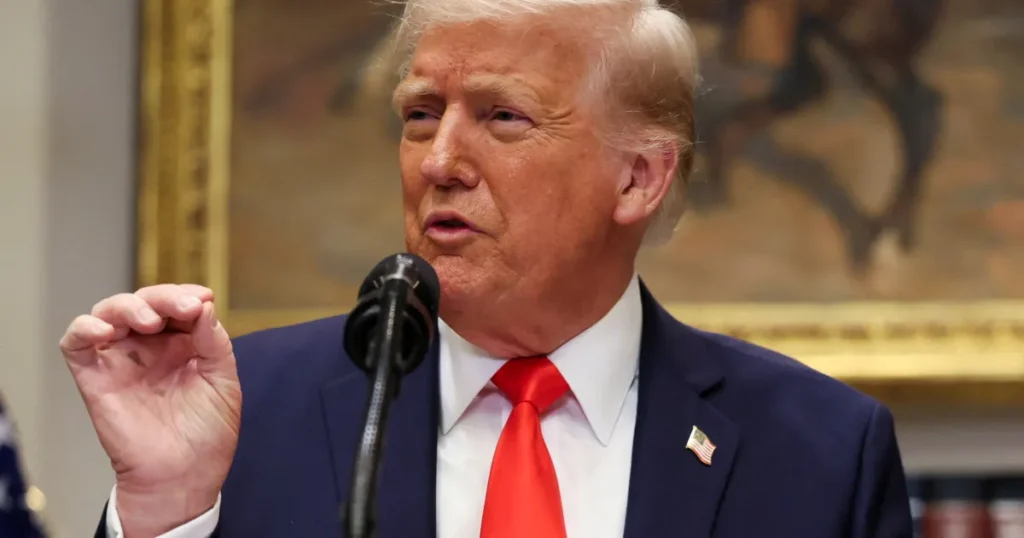
The president, on Air Force One, wagged a finger in a young female reporter’s face and said “quiet, piggy!” after being asked about the content of emails released by the Republican-controlled House Oversight Committee that showed Epstein, a child sex trafficker and convicted pedophile, accusing Trump of “knowing about the girls” involved in his criminal operations. Trump has denied this.
On Thursday, his press secretary characterized the incident as a show of the unprecedented access the press corps supposedly had to the president, even as the White House has sought to push established pillars of U.S. journalism like wire services out of similar gaggles.
“Look, the president is very frank, and honest with everyone in this room,” Leavitt said. “He gets frustrated with reporters when you lie about him, when you spread fake news about him and his administration. But he is also the most transparent president in history.”
“I think the president being frank and open and honest to your faces rather than hiding behind your backs is a lot more respectful than what you saw in the last administration,” she added.
The president has a long history of making sexist and rude remarks about the appearance of female members of the media, a trend that began during his first run for the presidency in 2016. That year, he said that then-Fox News anchor and debate moderator Megyn Kelly had “blood coming out of her eyes, blood coming out of her wherever” after she challenged him about a host of insulting and degrading names he had used to describe various women.
At the time, Trump brushed off those concerns by attributing them to his thoughts about one woman: Comedian Rosie O’Donnell, one of many with whom the president has nursed a grudge over the years.
The latest incident between Trump and the Bloomberg reporter he described as “piggy” came within days of another exchange in the Oval Office, this time over a question to Saudi Crown Prince Mohammed bin Salman about the killing of Jamal Khashoggi, which he was found to have ordered. During that exchange, Trump told ABC News reporter Mary Bruce, “You’re a terrible person and a terrible reporter.”
The president’s treatment of women has always been a divisive part of Trump’s record. In the summer ahead of the 2016 general election, a videotape of Trump’s appearance on the set of Access Hollywood became a defining issue of the race as the former businessman was heard on a hot mic describing how he believed that women “let” famous men “grab” them by their genitalia. The crude and sexualized way Trump spoke about women in the clip nearly caused a GOP revolt, but the party held firm behind its nominee.
Later, Trump would be found liable by a New York jury of sexual abuse in a case filed by writer E. Jean Carroll, who claimed that Trump sexually assaulted her in a New York department store in late 1995 or early 1996.
The president continues to be asked questions about Epstein. His administration has spent months on the topic, first as conservative influencers touted the White House’s supposed transparency. That dynamic shifted as further releases from the investigation of Epstein, who died in a Manhattan detention center in 2019 during Trump’s first term, were delayed. The Justice Department and FBI put out a joint statement claiming that a supposed list of Epstein’s clients and co-conspirators did not exist, and affirming that the administration would not publish any further documents from the probe.
That set off controversy online and in various political circles around the United States. Congressional Democrats and four Republican members rallied behind a discharge petition aimed at forcing the administration to release the files in full, which grew into a Republican rebellion once that resolution was successfully brought to the House floor.
The story dominated headlines for weeks, and renewed this past week with the publication of new emails from Jeffrey Epstein’s estate. The latest cache, released by a bipartisan committee, mention Trump multiple times in messages between Epstein and his closest confidantes. The emails indicate Epstein believed he had leverage over Trump due to alleged connections to his child sex network.
White House officials and the president himself have repeatedly denied this. The controversy has led to Trump addressing his own base of voters via Truth Social postings.
“Their new SCAM is what we will forever call the Jeffrey Epstein Hoax, and my PAST supporters have bought into this ‘bull****’ hook, line, and sinker,” he wrote in July on Truth Social.
Outlets including Fox News have reported that the president’s second-term approval rating is at its lowest point, with less than four in ten Americans supporting his record as president in some polling.
Leavitt’s defense of Trump’s “piggy” remark represents the White House’s official position on the incident that drew widespread media criticism. Her framing of the insult as evidence of transparency and frankness contrasts with critics who characterized the comment as sexist and inappropriate.
The press secretary’s claim that Trump is “the most transparent president in history” came amid ongoing disputes about access to information, including the Epstein files and the administration’s efforts to limit certain news organizations’ participation in press events.
The reference to the previous administration in Leavitt’s defense suggests an attempt to draw unfavorable comparisons between Trump’s direct, if crude, interactions with reporters and what the White House characterizes as less forthright communication styles of predecessors.
The pattern of Trump’s comments toward female journalists spans his political career. The 2016 Megyn Kelly incident, the Access Hollywood tape revelation, and the E. Jean Carroll case all provide context for understanding the “piggy” remark within a documented history of how Trump speaks about and to women.
The timing of the incident, occurring as new Epstein emails emerged mentioning Trump extensively, suggests the president’s frustration with continued questioning about his past association with the convicted sex offender. The emails released by the House Oversight Committee contain references to Trump that Epstein wrote to associates, including claims about Trump’s knowledge of “the girls.”
The discharge petition that forced a House vote on releasing Epstein files, despite initial White House opposition, demonstrated the political potency of the issue. The eventual passage with overwhelming bipartisan support, 427-1 in the House and unanimous consent in the Senate, showed Trump could not prevent the release through political pressure.
The Justice Department and FBI’s July statement that no client list existed and no further disclosures would be made represented the administration’s attempt to close the matter. The subsequent political backlash and congressional action to force disclosure undermined that strategy.
Trump’s characterization of Epstein scrutiny as a “hoax” and his criticism of “PAST supporters” for believing allegations reflects his frustration that the issue has resonated even among his political base. The capitalization and profanity in his Truth Social post convey the intensity of his reaction.
The Saudi Crown Prince meeting where Trump attacked ABC’s Mary Bruce demonstrated that the “piggy” incident was not isolated. The dual attacks on female reporters asking challenging questions within days of each other established a pattern during this particular news cycle.
Leavitt’s role as press secretary requires defending the president’s actions while maintaining working relationships with the White House press corps. Her Thursday defense attempted to reframe Trump’s insult as a positive attribute, transparency and frankness, rather than addressing concerns about sexist language and unprofessional conduct.





