

NORFOLK, Va. — Federal prosecutors suffered a significant setback Thursday when a grand jury declined to indict New York Attorney General Letitia James on revised mortgage fraud charges, marking the second failed attempt to secure criminal charges against the prominent Trump critic less than two weeks after a federal judge invalidated the original indictment obtained through an unlawfully appointed prosecutor.
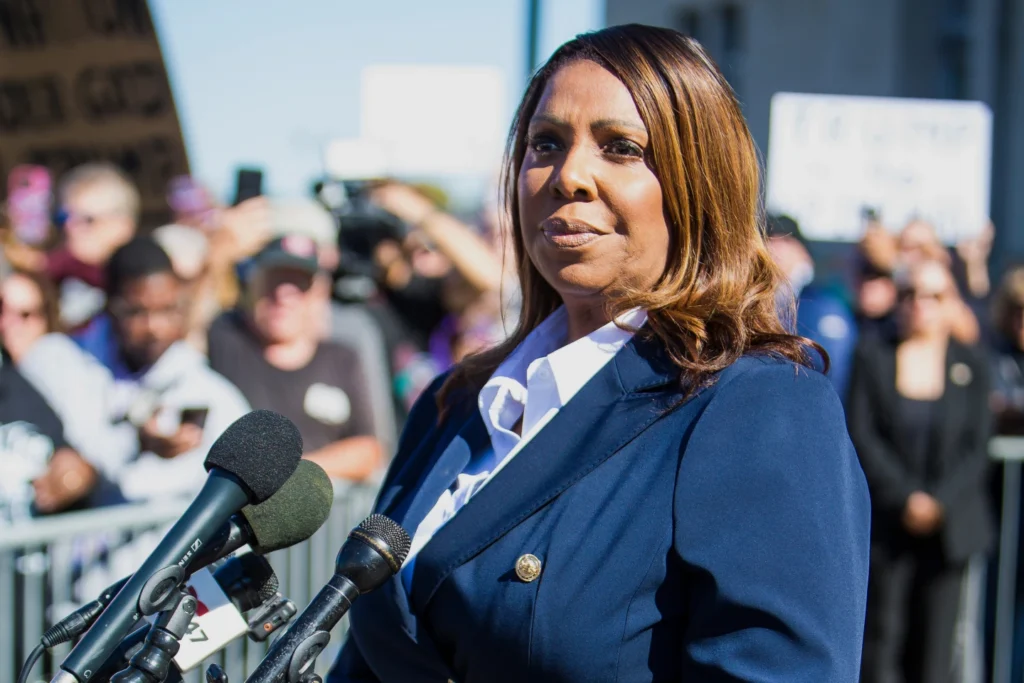
The Justice Department failed to secure the indictment against James, whom President Donald Trump has repeatedly targeted as a political adversary, according to a person familiar with the matter who spoke to NBC News. The grand jury presentation occurred just thirteen days after the initial criminal case collapsed when a judge determined the previous prosecution was conducted by a prosecutor lacking legal authority to bring charges.
The New York Post reported that a federal grand jury declined Thursday to indict New York Attorney General Letitia James, dealing a setback to prosecutors who filed a revised mortgage fraud criminal case, which The Post confirmed through its sources. James, who is 67 years old, had faced two counts brought by interim U.S. Attorney Lindsey Halligan in the Eastern District of Virginia for alleged bank fraud and making false statements to a financial institution related to a six-figure loan she obtained in 2020 to purchase a second home in Norfolk.
That original indictment was handed up by a grand jury in Alexandria, Virginia, federal court on October 9, but was thrown out by U.S. District Judge Cameron Currie on November 24, who ruled that Halligan was improperly appointed to her position and possessed “no lawful authority” to bring the charges. The judicial determination that Halligan’s appointment violated legal procedures effectively voided all prosecutions she initiated, creating constitutional questions about the cases she pursued.
The New York Post added that on Thursday, a jury was empaneled to review the case again, but rejected revised mortgage fraud charges brought by other federal prosecutors in Norfolk, according to a source familiar with the proceeding. The different prosecutors attempted to cure the defects that destroyed the original case by presenting evidence without relying on Halligan’s tainted involvement, yet the grand jury still declined to return an indictment.
The jurors’ decision will not bar prosecutors—who have a six-month grace period to refile charges following Currie’s ruling—from bringing another indictment. This means federal authorities retain the option to make a third attempt at securing charges against James before the deadline expires, though each failed prosecution attempt potentially weakens the case’s credibility and raises additional questions about its merits.
Representatives for the Department of Justice and the U.S. Attorney’s Office in the Eastern District of Virginia did not immediately respond to requests for comment regarding the grand jury’s decision or whether prosecutors intend to pursue additional attempts at indictment.
James, a frequent political target of President Donald Trump who had successfully brought a fraud lawsuit against him in New York, had previously been indicted by a grand jury on one charge of bank fraud and another of making false statements to a financial institution. The civil fraud case James prosecuted resulted in a judgment exceeding $450 million against Trump and his business organization, creating intense animosity between the president and the attorney general.
James has consistently denied any wrongdoing regarding the mortgage transaction that formed the basis of the federal charges, maintaining that she properly disclosed all relevant information during the loan application process and met all legal requirements for obtaining the property financing.
Lindsey Halligan, the acting U.S. attorney for the Eastern District of Virginia and a former personal attorney to Trump with no prior prosecutorial experience, presented the case to a grand jury on her own in the first attempt—and that case was declared void on November 24 when Judge Currie found Halligan’s appointment was unlawful. The judge’s ruling exposed serious procedural irregularities in how Trump administration officials installed Halligan in the prosecutorial position despite lacking traditional qualifications.
The Justice Department initially vowed to appeal the ruling by U.S. District Judge Cameron Currie, but ultimately decided to seek a new, untainted indictment against James rather than fighting the constitutional challenge to Halligan’s authority, a source familiar with the deliberations told NBC News earlier this week. This strategic pivot suggested department officials recognized the weakness of defending Halligan’s appointment while simultaneously believing they possessed evidence warranting prosecution.
The new case was presented to a grand jury in Norfolk, Virginia, by different prosecutors who were properly appointed and possessed legitimate authority to bring charges, attempting to eliminate the legal defect that destroyed the initial prosecution. However, despite correcting the procedural problems, the grand jury still declined to indict James, suggesting either insufficient evidence or juror skepticism about the case’s legitimacy.
The failure to secure an indictment on Thursday does not bar prosecutors from attempting to do so again in the future, as they retain several months within the grace period established by Judge Currie’s ruling. However, each successive failure to convince grand jurors to return charges potentially undermines prosecutorial credibility and strengthens arguments that the case lacks merit.
A separate source familiar with the matter cautioned there “should be no premature celebrations,” suggesting prosecutors remain committed to pursuing charges against James despite the setback and may attempt additional presentations to future grand juries with modified evidence or legal theories.
The Justice Department does not comment on grand jury matters as a matter of policy, maintaining strict confidentiality around deliberations and preventing official confirmation or denial of specific proceedings. This standard practice means official statements regarding Thursday’s outcome remain unlikely despite the significant public interest in the case.
Prosecutors have also been discussing trying to again bring a case against former FBI Director James Comey, who was indicted in October on charges of making a false statement to Congress and obstructing a congressional investigation related to his handling of investigations during the Trump presidency. Currie dismissed the case against him on the same day she tossed the case against James on identical grounds regarding Halligan’s unlawful appointment.
Trump named Halligan U.S. attorney for the Eastern District on September 20, the day after he forced out his initial pick, Erik Siebert, who resisted pressure to prosecute Comey and James despite directives from the president to pursue charges. Siebert’s removal and replacement with Halligan, who lacked prosecutorial experience but had personally represented Trump, raised immediate concerns about politicization of federal criminal prosecutions.
The Halligan appointment also came after Trump urged Attorney General Pam Bondi in a social media post to push ahead with prosecutions of Comey, James and another perceived political adversary, Democratic Senator Adam Schiff of California. The public pressure on the attorney general to prosecute specific individuals represented an extraordinary breach of traditional boundaries separating presidential influence from prosecutorial decision-making.
“Pam: I have reviewed over 30 statements and posts saying that, essentially, ‘same old story as last time, all talk, no action. Nothing is being done. What about Comey, Adam ‘Shifty’ Schiff, Leticia??? They’re all guilty as hell, but nothing is going to be done,'” Trump said in the post, which a source previously confirmed to NBC News the president had intended as a direct message to Bondi rather than a public statement, though it was posted publicly on social media.
“We can’t delay any longer, it’s killing our reputation and credibility,” Trump continued in his directive to the attorney general, while praising Halligan as “a really good lawyer” despite her lack of prosecutorial background. The message demonstrated Trump’s direct involvement in demanding criminal charges against political opponents who had investigated or prosecuted him.
The sequence of events surrounding the James prosecution has raised profound concerns among legal scholars, former prosecutors, and civil liberties organizations about the weaponization of federal criminal justice machinery for political retaliation. The pattern of Trump demanding prosecutions, removing prosecutors who resist, installing loyalists without relevant experience, and then seeing those cases collapse or fail suggests a justice system under unprecedented political pressure.
James’s successful civil fraud prosecution of Trump in New York state court established her as one of the president’s most effective legal adversaries, securing a massive judgment that threatened Trump Organization assets and exposed alleged patterns of fraudulent business practices spanning decades. The timing of federal charges emerging shortly after that civil verdict suggested possible retaliatory motivation rather than independent criminal investigation.
The mortgage transaction at the center of the federal charges involved James purchasing a second property using financing that prosecutors alleged contained false statements or omitted material information. However, the specific nature of the alleged misrepresentations has not been detailed in public filings, making it difficult to assess the strength of the government’s evidence or the seriousness of any alleged violations.
Grand juries typically return indictments in the overwhelming majority of cases presented by federal prosecutors, given the one-sided nature of proceedings where defense attorneys cannot participate and prosecutors control what evidence jurors hear. The fact that two separate grand juries have now declined to indict James despite prosecutorial presentations suggests either significant evidentiary problems or juror skepticism about the case’s legitimacy.
The six-month grace period granted by Judge Currie’s ruling creates a window during which prosecutors can regroup, potentially develop additional evidence, and make further attempts to secure charges. However, the political calendar and increasing scrutiny of these prosecutions may complicate any additional efforts, particularly as questions mount about whether the cases represent legitimate law enforcement or political persecution.
Former prosecutors and legal ethics experts have noted that the circumstances surrounding the James prosecution—including presidential demands for charges, removal of resisting prosecutors, appointment of Trump’s personal attorney to lead prosecutions, and multiple grand jury failures—present textbook examples of improper politicization of criminal justice processes that threaten rule of law principles.
The parallel case against James Comey faces similar credibility challenges, with critics arguing the charges represent retaliation for Comey’s role in investigations that examined Trump’s conduct and ultimately led to the first impeachment. The fact that both cases were dismissed due to prosecutorial improprieties before reaching the merits compounds concerns about their origins and motivations.
As the legal saga continues, James remains in office performing her duties as New York’s chief law enforcement officer while facing the prospect of potential future federal charges. The uncertainty surrounding whether prosecutors will make additional attempts to indict her creates ongoing complications for her work and personal life, even as the failed grand jury presentations suggest significant obstacles to any successful prosecution.
The broader implications of these cases extend beyond the specific individuals targeted to fundamental questions about presidential power over criminal prosecutions, the independence of federal prosecutors, and the protections available to state officials who enforce laws against presidents and their associates. The resolution of these issues may ultimately require judicial intervention at higher levels or congressional oversight to establish clear boundaries preventing abuse of prosecutorial authority for political purposes.





