

At least 15 Kenyan nationals have been identified among thousands of immigrants the U.S. Department of Homeland Security has classified as the “worst of the worst” criminal foreign nationals arrested across America and slated for deportation, according to a newly launched government database that exposes the identities of arrested immigrants nationwide.
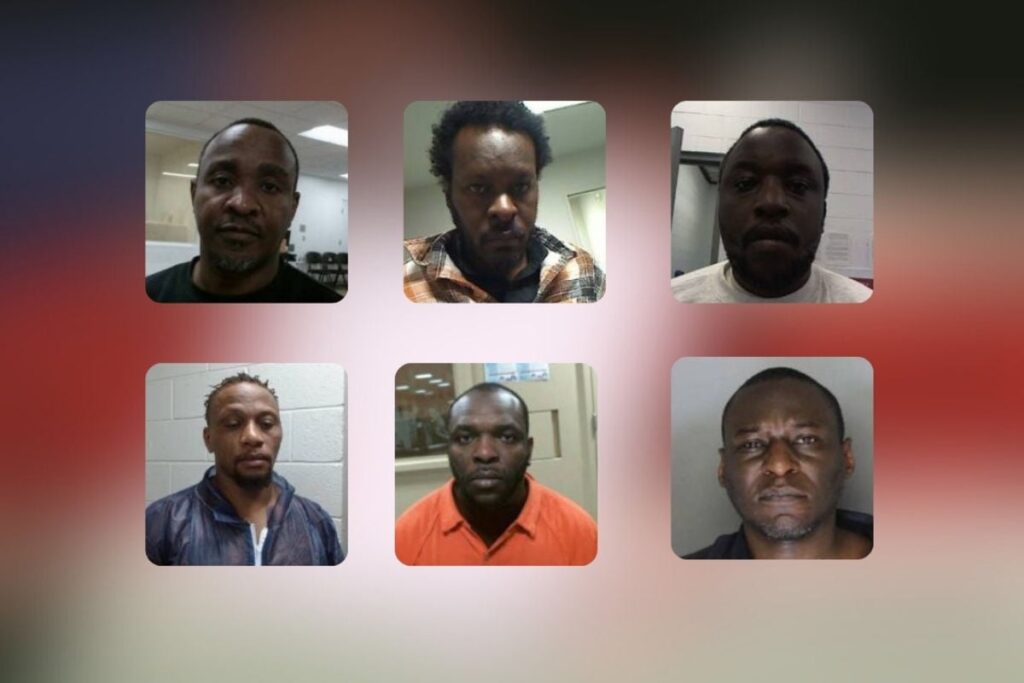
The term “worst of the worst” represents official terminology used by U.S. security agencies to describe individuals they characterize as criminal immigrants with serious convictions. The designation places the 15 Kenyans alongside nationals from countries worldwide who face deportation under the Trump administration’s intensified immigration crackdown.
The Department of Homeland Security launched the searchable webpage Monday, December 8, displaying photographs, names, nationalities and criminal histories of an initial 10,000 immigrants arrested since President Donald Trump assumed office. The database allows Americans to search for arrested individuals across all 50 states by name, country of origin, and location of arrest.
Several Kenyans feature prominently among those whose personal information was published on the platform, with the majority arrested on assault-related charges. The accusations against Kenyan nationals span a broader range of alleged offenses including aggravated assault with weapons, possession of stolen property, terroristic threats, money laundering, check forgery, driving under the influence, domestic violence, robbery, resisting arrest, fraud, kidnapping a minor, violating court orders, and receiving stolen property.
The database features immigrants accused of what authorities describe as the most serious criminal offenses, including homicide, rape, drug trafficking, child molestation, cruelty toward children, battery, and armed robbery. Many listed individuals face multiple charges or have alleged criminal histories involving several offenses.
“This new Worst of the Worst webpage allows every American to see for themselves the criminal illegal aliens that we are arresting, what crimes they committed, and what communities we removed them from. This is all about transparency and showing results,” DHS Assistant Secretary Tricia McLaughlin said, as CBS19 reported.
The inclusion of 15 Kenyans on the list comes amid unprecedented enforcement action by the Trump administration targeting undocumented residents. The Department of Homeland Security has pledged frequent updates to the database as arrests continue and additional cases are processed.
The latest development follows Trump’s broader immigration offensive that has significantly affected African nationals. On November 28, the president announced plans to implement what he characterized as a sweeping freeze on immigration from third-world countries, with particular focus on several African nations including Kenya’s neighbors.
To accelerate removal of undocumented immigrants, the administration introduced a self-deportation mobile application in March and dramatically increased Immigration and Customs Enforcement operational capacity. The enforcement budget saw a $9 trillion expansion to support the administration’s stated goal of conducting the largest deportation operation in American history.
During the first 10 months of the Trump administration, more than two million undocumented immigrants were removed from the United States, CBS19 stated, citing The Center Square. This figure includes 1.6 million who agreed to voluntary self-deportation and more than 527,000 who were apprehended and deported involuntarily.
For Kenya, the appearance of 15 nationals on a U.S. government list explicitly labeling them among the “worst of the worst” criminals carries diplomatic and reputational implications. While the individuals listed face serious criminal allegations, their prominence on a searchable public database affects perceptions of Kenyan immigrants broadly, potentially influencing how Americans view the Kenyan diaspora community.
The Kenyan community in the United States numbers in the tens of thousands, with significant populations in states including Texas, California, Massachusetts, Maryland, and Minnesota. Most Kenyan immigrants maintain lawful status and contribute positively to their communities through professional careers, small businesses, and civic engagement. The criminal allegations against 15 individuals represent a tiny fraction of Kenyan nationals residing in America.
Nevertheless, the public nature of the database and its framing as identifying the “worst of the worst” creates associations between Kenyan nationality and criminality that could affect how immigration authorities, employers, landlords, and the general public perceive Kenyan immigrants regardless of individual circumstances. The searchability by country of origin specifically enables users to view all arrested Kenyans collectively, reinforcing such associations.
Kenya’s government has not issued official comment on the inclusion of its nationals on the U.S. database. Historically, Kenyan diplomatic officials have maintained cooperative relationships with American counterparts on matters including security cooperation, trade relations, and consular services for Kenyan citizens abroad.
The database launch reflects the Trump administration’s broader strategy of publicizing immigration enforcement actions and emphasizing criminal behavior among undocumented populations. McLaughlin specifically criticized media coverage of immigration issues, stating that “malicious lies and hoaxes, driven by hateful rhetoric from the mainstream media, continue to distort the work of the brave men and women of ICE and CBP.”
She emphasized that the database eliminates American dependence on news outlets for immigration enforcement information. “Americans don’t have to rely on the press for this information – with this transparent tool, they can see for themselves what public safety threats were lurking in their neighborhoods and communities,” McLaughlin said.
The website emerged following escalating tensions between federal immigration authorities and state governments over cooperation in deportation efforts. ICE Acting Director Todd Lyons contacted attorneys general in California, Illinois and New York earlier this year about their states’ refusal to comply with ICE detainer requests, The Center Square reported.
Those states prohibit local law enforcement from honoring ICE requests to hold immigrants in custody pending federal pickup. More than 14,000 detainer requests went unheeded in New York alone, with over 7,000 individuals with criminal convictions released onto streets rather than transferred to immigration authorities, The Center Square confirmed.
The database launch also followed a dramatic increase in violence targeting immigration enforcement personnel. Assaults against ICE officers surged by 1,153 percent while death threats jumped by 8,000 percent over 11 months, The Center Square reported. Vehicular attacks against ICE officers increased by 1,300 percent during the same period.
For the 15 Kenyans named on the database, the public identification carries consequences extending beyond their immediate legal proceedings. The permanent online record of their arrests, regardless of whether convictions ultimately result, affects future employment prospects, housing applications, family relationships, and standing within Kenyan diaspora communities.
The fact that individuals appear on the list following arrests rather than convictions raises questions about fairness and due process. Under American law, accused individuals are presumed innocent until proven guilty in court. The database presents arrested immigrants alongside their alleged crimes in a format that suggests established guilt rather than pending allegations.
Immigration attorneys and civil liberties advocates have questioned whether government agencies should publicly identify arrested individuals who have not been convicted, particularly when the presentation implies criminality. The practice differs from traditional approaches where arrest records, while technically public, require specific requests rather than being compiled in searchable databases designed for mass public consumption.
For Kenya’s diplomatic corps and diaspora organizations, the database presents both a challenge and an opportunity. Consular officials may need to provide support to arrested nationals navigating the American legal system while also working to ensure the actions of 15 individuals do not define perceptions of tens of thousands of law-abiding Kenyan immigrants.
Community organizations serving Kenyan immigrants in the United States may face increased scrutiny or questions from members concerned about how the database affects their standing or safety. Leaders within these communities will likely emphasize the distinction between the small number of individuals facing serious charges and the broader population of Kenyan immigrants who contribute positively to American society.
As the database expands beyond its initial 10,000 entries and undergoes the frequent updates DHS has promised, the number of Kenyans listed may increase or decrease. Whether additional Kenyan nationals appear or whether some of the current 15 are removed following case resolutions will shape how this controversy evolves and what lasting impact it has on Kenya-U.S. relations and perceptions of Kenyan immigrants in America.
Sources: Kenyans.co/Nation.Africa





