

At least 34 people were killed and dozens more wounded when Myanmar’s military bombed a hospital in rebel-controlled territory Wednesday night, marking the latest attack on civilian infrastructure as the junta intensifies its campaign to reclaim areas lost to ethnic armies fighting the military regime.
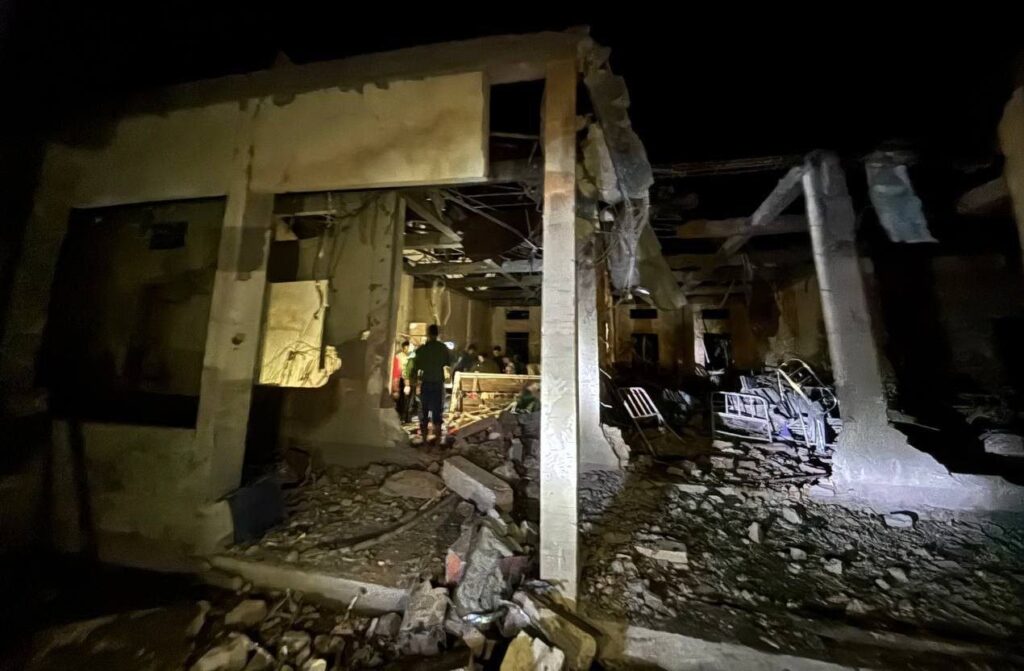
The air strike hit the hospital in Mrauk-U town in Rakhine state around 9 p.m. local time (14:30 GMT), according to ground sources who spoke with the BBC. The facility serves an area under control of the Arakan Army, one of the most powerful ethnic militias battling Myanmar’s military rulers since they seized power in a 2021 coup that triggered civil war.
Khaing Thukha, a spokesperson for the Arakan Army, told the BBC that most casualties were patients receiving treatment at the hospital. “This is the latest vicious attack by the terrorist military targeting civilian places,” he said, demanding the military “must take responsibility” for bombing civilians.
The Arakan Army health department said the strike killed 10 patients immediately and injured many others. By Thursday morning, the death toll had climbed to at least 34 as rescue workers searched through rubble and debris.
Photographs believed to be from the scene circulated on social media showing collapsed roofs across sections of the building complex, destroyed hospital beds and wreckage scattered across the grounds. Images shared by Wai Hun Aung, which he also posted online, showed the facility in complete ruins with shattered columns and beams, and victims’ bodies laid out on the ground. Reuters could not immediately verify the images.
“The remaining patients have been moved to a safe location,” Wai Hun Aung told Reuters.
A 23-year-old Mrauk-U resident who rushed to the site after hearing explosions described a scene of devastation. “When I arrived, the hospital was on fire,” he said, requesting anonymity due to security concerns. “I saw many bodies lying around and many injured people.”
The Myanmar military has not issued comment on the strikes. However, pro-military accounts on Telegram claimed attacks this week were not aimed at civilians.
The bombing comes as Myanmar prepares to hold its first election since the coup on December 28, a vote critics characterize as a sham designed to provide the junta with a veneer of legitimacy. Tom Andrews, the United Nations human rights expert on Myanmar, has denounced the planned election as a “sham.”
Thousands have died and millions have been displaced since military forces overthrew the elected government in 2021, plunging the Southeast Asian nation into civil conflict. In recent months, the junta has escalated air bombardment to retake territory seized by ethnic armies, deploying conventional aircraft and even motorized paragliders to drop bombs on opposition forces.
The junta, which maintains Myanmar’s only air force, has dramatically increased its use of air strikes against targets in rebel-held regions. From January through late November this year, military forces conducted 2,165 air strikes, compared to 1,716 such attacks during all of 2024, the Armed Conflict Location & Event Data Project documented.
Earlier this year, more than 20 people were killed when an army motorized paraglider dropped two bombs on protesters gathered at a religious festival, demonstrating the regime’s willingness to use aerial attacks against civilian gatherings.
The military has been locked in a years-long bloody struggle with ethnic militias, at one point losing control of more than half the country’s territory. However, recent influxes of military technology and equipment from China and Russia appear to have helped the junta reverse its losses. The regime has achieved significant territorial gains through sustained campaigns of air strikes and heavy artillery bombardment.
Resistance groups that formed following the coup have combined forces with major ethnic armies including the Arakan Army to challenge military rule across multiple frontlines. Since a ceasefire collapsed in 2023, the Arakan Army has expelled military forces from 14 of Rakhine state’s 17 townships, controlling territory larger than Belgium, analysis published by the ISEAS-Yusof Ishak Institute showed.
Mrauk-U township in northern Rakhine state has remained under Arakan Army control since last year with no recent fighting reported in the area, Khine Thu Kha said. The lack of active combat makes the hospital bombing particularly striking, as it occurred in territory the ethnic army has held securely rather than in contested zones where military operations might more plausibly claim collateral damage.
The attack on medical infrastructure violates international humanitarian law principles protecting hospitals and medical personnel during armed conflict. Deliberate strikes on medical facilities constitute war crimes under the Geneva Conventions, though Myanmar’s military regime faces no realistic prospect of accountability through international courts given the country’s isolation and the protection powerful allies provide.
Civil liberties have collapsed under junta rule, with rights groups estimating tens of thousands of political dissidents have been arrested. The military government has systematically targeted opposition voices, journalists, activists and ordinary citizens suspected of supporting resistance movements.
In recent weeks, authorities have arrested civilians accused of disrupting the planned election, including one man who allegedly sent anti-election messages on Facebook. The junta announced Monday it was seeking 10 activists involved in an anti-election protest. At least one election candidate in central Myanmar’s Magway Region was detained by an anti-junta group, the Associated Press reported.
Ethnic armies and other opposition groups have pledged to boycott the December 28 vote, which the junta portrays as a pathway to political stability. Critics argue the election will be neither free nor fair, noting that genuine opposition parties remain banned, thousands of political prisoners languish in detention, and vast swaths of territory remain outside government control.
The timing of the hospital attack, occurring just weeks before the scheduled election, underscores the disconnect between the junta’s narrative of returning normalcy and the reality of ongoing military operations against civilian populations. While the regime attempts to project an image of stability through electoral processes, its forces continue conducting air strikes that kill patients in hospitals and protesters at religious festivals.
For residents of Rakhine state and other areas under ethnic army control, the hospital bombing reinforces the impossibility of normal life under current conditions. Medical care represents a fundamental necessity, and attacks on healthcare facilities force populations to choose between seeking treatment and risking death from military strikes.
The international community has imposed sanctions on Myanmar’s military leaders and condemned human rights abuses, but these measures have failed to alter the junta’s behavior or compel it to negotiate with opposition forces. China and Russia continue providing diplomatic cover and military equipment that enables the regime’s ongoing operations.
As the December 28 election approaches, the hospital bombing illustrates the chasm between the junta’s rhetoric about restoring democracy and the lived reality of Myanmar’s population enduring air strikes, arbitrary detention, and suppression of fundamental freedoms. The 34 people who died seeking medical treatment become the latest victims of a conflict that shows no signs of resolution through either military victory or political compromise.
AP/BBC/Reuters





