

WASHINGTON — The Trump administration announced Tuesday it was adding Nigeria and 19 other countries to its travel restrictions list, doubling the number of nations whose citizens face limits on traveling to or emigrating to the United States in what critics characterize as collective punishment disguised as national security policy.
Nigeria joins 14 other countries facing new partial travel restrictions, while five additional nations and the Palestinian Authority now face full entry bans under the expanded policy. The announcement brings the total number of countries subject to Trump administration travel limitations to approximately 40.
The 15 countries added to the partial restrictions list are Nigeria, Angola, Antigua and Barbuda, Benin, Ivory Coast, Dominica, Gabon, Gambia, Malawi, Mauritania, Senegal, Tanzania, Tonga, Zambia and Zimbabwe. The administration imposed full travel bans on citizens of Burkina Faso, Mali, Niger, South Sudan and Syria, while also fully restricting travel for people holding Palestinian Authority-issued documents.
The move represents ongoing administration efforts to tighten U.S. entry standards for travel and immigration, expanding restrictions first announced in June when President Donald Trump resurrected a hallmark policy from his first term by banning citizens from 12 countries and imposing heightened restrictions on seven others.
People who already possess visas, hold lawful permanent resident status, or fall into certain categories such as diplomats or athletes, or whose entry serves U.S. interests remain exempt from the restrictions. Officials did not immediately clarify when the new limitations would take effect.
The administration justified its expansion by claiming many targeted countries have “widespread corruption, fraudulent or unreliable civil documents and criminal records” that complicate vetting citizens for U.S. travel. Officials also cited high visa overstay rates, countries’ refusal to accept deportees, and “general lack of stability and government control” as factors, along with immigration enforcement, foreign policy and national security concerns.
The expansion follows the arrest of an Afghan national accused in the Thanksgiving weekend shooting of two National Guard troops near the White House. That suspect has pleaded not guilty to murder and assault charges. Following the incident, the administration announced multiple immigration restrictions, including additional limits on people from the initial 19 countries already residing in the United States.
The June ban covered Afghanistan, Myanmar, Chad, Republic of Congo, Equatorial Guinea, Eritrea, Haiti, Iran, Libya, Somalia, Sudan and Yemen, with partial restrictions on Burundi, Cuba, Laos, Sierra Leone, Togo, Turkmenistan and Venezuela. South Sudan already faced significant travel restrictions before Tuesday’s announcement.
The administration upgraded restrictions on Laos and Sierra Leone, previously on the partially restricted list, while easing some limitations on Turkmenistan, which officials said had improved enough to warrant relaxed measures. All other June restrictions remain in force.
The new Palestinian Authority restrictions expand earlier limitations imposed months ago that made it nearly impossible for Palestinian Authority passport holders to receive U.S. travel documents for business, work, tourism or educational purposes. Tuesday’s announcement goes further, banning Palestinian Authority passport holders from emigrating to the United States.
The administration said “U.S.-designated terrorist groups operate actively in the West Bank or Gaza Strip and have murdered American citizens” when justifying the Palestinian decision. Officials also claimed recent conflict in those areas “likely resulted in compromised vetting and screening abilities.”
“This expanded ban is not about national security but instead is another shameful attempt to demonize people simply for where they are from,” said Laurie Ball Cooper, Vice President of U.S. Legal Programs at the International Refugee Assistance Project.
The restrictions apply to both visitors seeking temporary travel and those attempting to emigrate permanently to the United States.
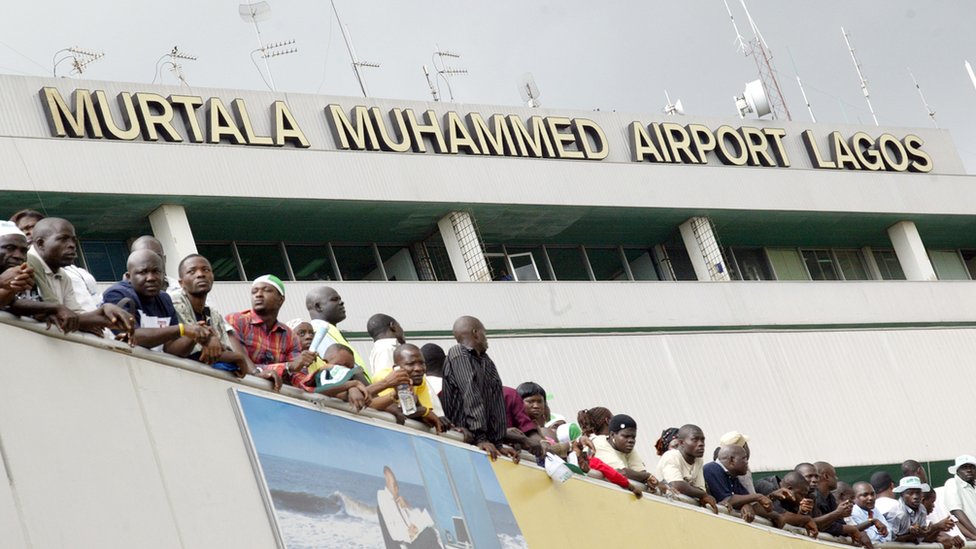
Nigeria’s inclusion on the partial restrictions list marks a significant development given the country’s status as Africa’s most populous nation and largest economy. The West African country maintains complex diplomatic and economic relationships with the United States, including cooperation on counterterrorism efforts against Boko Haram and other militant groups operating in the region.
The sweeping addition of 15 African nations to the restrictions list—including major economies like Nigeria, Tanzania, and Angola—suggests the administration is taking a continent-wide approach to immigration control rather than targeting specific security threats. This geographic concentration has prompted concerns about racial and regional bias underlying the policy.
For Nigeria specifically, the partial restrictions could affect thousands of citizens who travel to the United States annually for education, business, and family visits. Nigerian immigrants have established significant communities across American cities and contribute substantially to various professional sectors, particularly healthcare and technology.
The administration’s justification citing “fraudulent or unreliable civil documents” applies broadly to countries with varying levels of institutional capacity and governance challenges. Critics argue this reasoning provides cover for blanket restrictions that fail to account for individual circumstances or the reality that most travelers from these countries pose no security threat.
The doubling of countries facing restrictions, from approximately 20 to 40, represents one of the most aggressive expansions of travel limitations in modern American history. The scale suggests the administration views immigration control through a lens emphasizing exclusion over the traditional American narrative of welcoming immigrants.
The exemptions for diplomats, athletes, and those whose entry serves U.S. interests create a tiered system where elite travelers from restricted countries can still access America while ordinary citizens face barriers. This structure raises questions about whether security concerns genuinely drive the policy or whether it primarily targets working-class and middle-class travelers.
The timing of the expansion, following the National Guard shooting involving an Afghan suspect, illustrates how single incidents involving foreign nationals can trigger broad policy responses affecting millions of people from dozens of countries with no connection to specific security events.
For the 20 newly restricted countries, the announcement creates immediate uncertainty for citizens planning U.S. travel, students hoping to study at American universities, families separated across continents, and businesses relying on cross-border movement. The lack of clarity about implementation timelines compounds this uncertainty.
The Palestinian Authority restrictions carry particular political weight given ongoing Israeli-Palestinian conflict and the administration’s alignment with Israeli positions. The justification citing terrorist groups and compromised vetting reflects the administration’s framing of Palestinian governance as inherently security-threatening.
The upgraded restrictions on Laos and Sierra Leone, moving from partial to fuller limitations, suggest the administration views these countries as failing to meet its standards for cooperation or documentation reliability. Conversely, Turkmenistan’s improved status indicates some nations can escape restrictions through compliance with U.S. demands.
As the expanded restrictions take effect, they will likely face legal challenges from civil liberties organizations, affected individuals, and potentially some of the targeted countries themselves. Previous iterations of Trump travel bans generated extensive litigation before ultimately being upheld by the Supreme Court during his first term.
The announcement reinforces that immigration restriction remains a central pillar of Trump’s second-term agenda, with the administration willing to impose sweeping limitations affecting dozens of countries and millions of potential travelers in pursuit of what it characterizes as enhanced national security.
Source: AP





