

OKLAHOMA CITY — Joe Campbell, a Pentecostal preacher who ministered to thousands of children across four states over half a century, was arrested Wednesday on child sex abuse charges following an investigation that revealed decades of allegations and repeated failures by church leaders, police, and prosecutors to intervene.
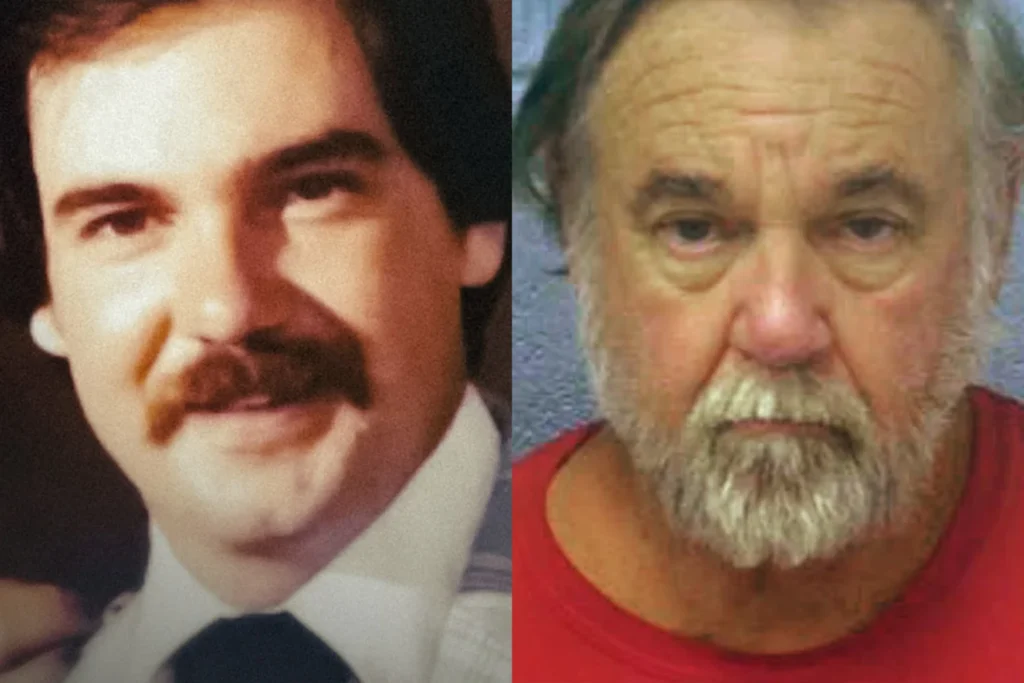
Campbell, 68, was charged with one count of first-degree rape and one count of lewd or indecent acts with a child under 16, the Oklahoma Attorney General’s Office said Wednesday. U.S. marshals arrested him Wednesday morning at Camp Bell, his children’s camp in Elkland, Missouri, and transported him to Greene County jail in Springfield, where he awaited transfer to Oklahoma. If convicted, he faces up to life in prison.
The charges come seven months after an NBC News investigation documented a pattern of child sex abuse allegations against Campbell and systematic failures to hold him accountable. Five women said he sexually abused them as children in the 1970s and 1980s when he served as an Assemblies of God minister. Nine others, including four men, said he showed them pornography, made lewd comments, or touched them inappropriately during the same period.
It was not clear whether Campbell had retained an attorney. He could not immediately be reached for comment. His arrest represents a long-delayed breakthrough in a 40-year effort by some alleged victims to seek justice.
The rape charge appears tied to alleged abuse of Kerri Jackson, now 53, who says Campbell molested her for years in Tulsa in the early 1980s, beginning when she was around 9. The attorney general’s office presented the case to a multicounty grand jury in Oklahoma City last week, and the panel returned the indictment—a milestone Jackson and other women had pursued for most of their lives.
“I don’t even know how to react right now,” Jackson told NBC News moments after learning of Campbell’s arrest. “After all these decades, it’s a miracle.”
Previous attempts to investigate Campbell in Oklahoma and Missouri failed after police and prosecutors said the statute of limitations had expired. However, the Oklahoma Attorney General’s Office maintains that clock stopped running when Campbell moved out of the state in the 1980s. To charge him in connection with decades-old allegations, prosecutors are applying a frontier-era statute that pauses the statute of limitations for suspects who flee or reside elsewhere.
Prosecutors recently employed the same legal theory to charge former megachurch pastor Robert Morris with sexually abusing a 12-year-old girl in Oklahoma in the 1980s. Morris, who founded the nondenominational Gateway Church in Texas, pleaded guilty in October to five felony counts of lewd or indecent acts with a child and received a 10-year sentence with all but six months suspended.
Oklahoma Attorney General Gentner Drummond called Campbell’s alleged crimes “horrific” in an interview and said he anticipates additional victims may come forward.
“I cannot even imagine, nor could I attempt to imagine, the weight on their hearts, their psyche all these years,” Drummond said, adding that the charges should warn faith leaders who exploit their authority to harm children. “If you commit that crime, we’re going to find you. We’re going to prosecute you.”
Campbell was taken into custody Wednesday morning by members of the U.S. Marshals Western District of Missouri’s Midwest Violent Fugitive Task Force Springfield Division. He did not resist or attempt to flee, Supervisory Deputy U.S. Marshal Felix Carrion said.
“He surrendered to us as soon as we surrounded his house in Camp Bell,” Carrion said.
Oklahoma authorities opened their investigation after NBC News published its report in May, tracing abuse allegations to Campbell’s earliest years in ministry. Accusers described a charismatic preacher who cultivated trust with children and their parents, only to exploit it behind closed doors.
Children viewed Campbell as an almost mythical figure, blessed by the Holy Spirit with abilities to speak in tongues, cast out demons, and heal the sick. He gravitated toward girls from broken homes. They later described being molested in a church nursery, in Campbell’s car, and at his home while his wife and children slept upstairs.

Beginning when some were still teenagers, the women reported Campbell’s behavior to pastors, law enforcement, and child welfare officials, only to watch him deny the allegations and continue preaching.
Jackson was among those who approached church leaders. In early 1988, at age 15, she traveled to Springfield, Missouri, to testify before a panel of Assemblies of God officials. Jackson said the men asked her to describe the abuse in graphic detail and invited Campbell and his wife into the room to challenge her account. Despite having received letters from other alleged victims collected to support Jackson’s testimony, the pastors allowed Campbell to remain in ministry in Missouri, enabling him to abuse another girl, interviews and police records show.
The Assemblies of God finally expelled Campbell the following year after Phaedra Creed, at age 14, reported that Campbell had abused her for months while she lived with him and his family.
Creed went to police in 1989, and Campbell was charged with forcible sex with a minor. However, after being harassed by church members, Creed said her mental health deteriorated, and she withdrew from testifying, leading to charges being dropped.
For decades, as she watched Campbell continue working with children, Creed said she carried guilt over her decision. She cried when learning of his arrest Wednesday.
“I was speaking the truth then, and I’m speaking the truth now, but I’m no longer going to be silenced,” Creed said. “I am so happy justice will finally be served.”
In a statement following Campbell’s arrest Wednesday, Assemblies of God leaders said the denomination’s national office first learned of allegations against him in 1988 and that “his reported actions were duly reported to the appropriate legal authorities.”
“The Assemblies of God is grateful for all who have bravely shared their stories,” the statement said. “We continue to pray that justice will be served.”
Campbell continued ministering to children after his expulsion. Around 1990, he founded a nondenominational church and opened Camp Bell, a Christian youth camp in the Missouri Ozarks, where he ministered to thousands of children over subsequent decades. Campbell’s new church became a refuge for several convicted sex offenders, the NBC News investigation found.
In 2016, he joined PTL Television Network, a Christian station founded by disgraced televangelist Jim Bakker, which broadcast Campbell’s teachings nationally until this year, when the network quietly removed years of his sermons from its website following NBC News inquiries. PTL did not immediately respond to a request for comment.
Campbell’s national influence and his decades of work with children sickened his accusers, who tracked his ascent from afar.
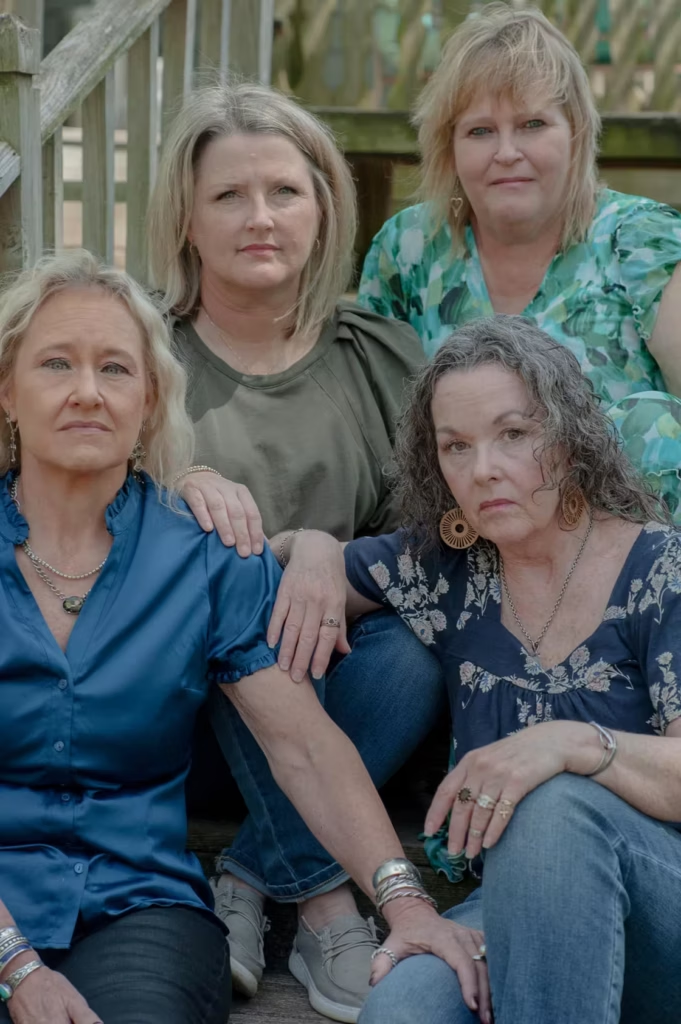
For the women, his arrest carried spiritual significance—the fulfillment of a mission they believe God entrusted to them decades ago. Jackson said she long bore the weight of that responsibility like a ball and chain. The burden began lifting when she saw his mugshot.
“Finally,” she said. “We just needed someone to believe us.”
The case exemplifies systemic failures that enable clergy sexual abuse to continue for decades despite repeated warnings. The 1988 Assemblies of God hearing where church officials allowed Campbell and his wife to confront Jackson, a 15-year-old accuser, demonstrates institutional processes designed more to protect the accused than investigate allegations properly. That officials had letters from other alleged victims yet permitted Campbell to continue ministering for another year reveals prioritization of organizational reputation over child safety.
Creed’s experience after reporting to police illustrates how pressure from religious communities can silence victims. The harassment she faced from church members for accusing a respected minister ultimately prevented prosecution, allowing Campbell to continue accessing children for three more decades. The guilt she carried, despite being a teenage victim who bravely reported abuse, reflects how institutions shift accountability from perpetrators and enablers onto survivors.
Campbell’s ability to found a new church and children’s camp after expulsion from the Assemblies of God highlights gaps in oversight between denominations and the lack of registry systems that might prevent credibly accused clergy from simply relocating to new religious contexts. That his new church became “a refuge for several convicted sex offenders” according to NBC News suggests deliberate creation of an environment where sexual predators could operate with reduced scrutiny.

The frontier-era statute prosecutors are invoking to circumvent statute of limitations represents a legal tool increasingly employed against clergy accused of historical abuse. The recent Robert Morris conviction using the same approach established precedent that may enable additional prosecutions of religious figures who committed abuse decades ago before relocating. This legal theory—that fleeing or residing elsewhere pauses limitations periods—provides pathways to accountability where traditional time limits would have barred prosecution.
The involvement of PTL Television Network, founded by Jim Bakker who served prison time for fraud and faced his own sexual misconduct allegations, in broadcasting Campbell’s teachings nationally illustrates how disgraced religious figures often find refuge with others operating on the margins of mainstream Christianity. The network’s quiet removal of Campbell’s sermons following media inquiries rather than proactive investigation suggests reactive reputation management over genuine child protection commitments.
For Jackson, Creed, and the other survivors, Campbell’s arrest after 40 years validates their persistence in seeking accountability despite repeated institutional failures. Their stories illustrate the immense courage required to challenge powerful religious figures, the personal costs of being disbelieved or silenced, and the decades-long trauma of watching abusers continue harming children while justice remains elusive.
As Campbell awaits trial, additional victims may indeed come forward as Attorney General Drummond anticipates, emboldened by the arrest to break silence about their own experiences. The case will test whether justice systems can adequately address historical clergy abuse and whether religious institutions will finally prioritize child safety over protecting their own.
NBC





