

WASHINGTON — The U.S. military killed four people Wednesday in a strike on a boat accused of smuggling drugs in the Eastern Pacific Ocean, bringing the total known casualties in the campaign to at least 99 as the House rejected Democratic efforts to limit President Donald Trump’s power to use military force against drug cartels.
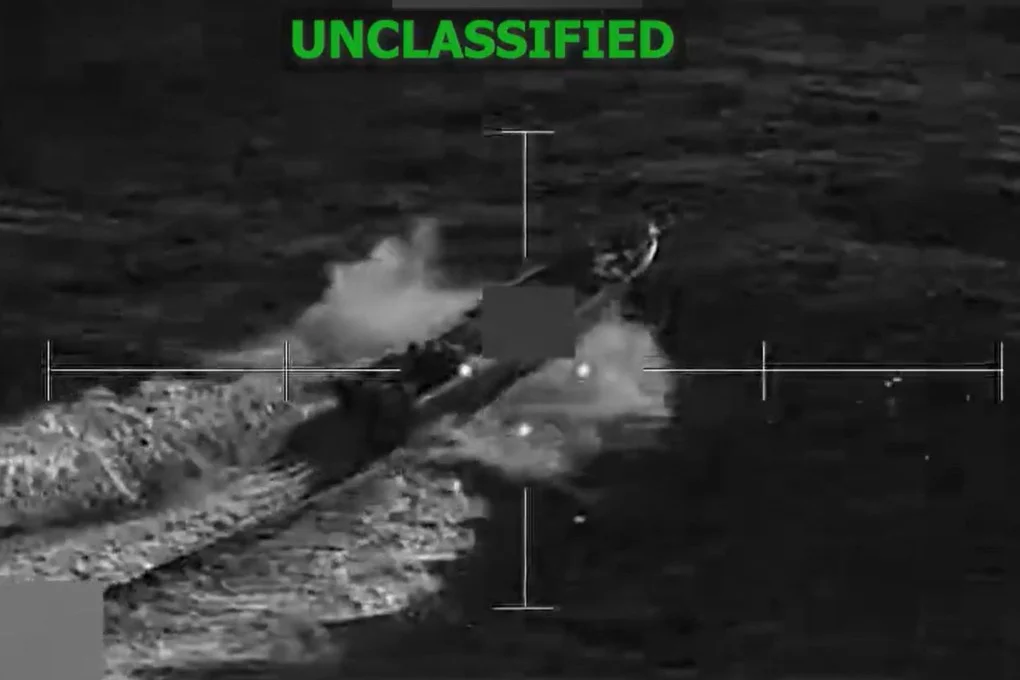
U.S. Southern Command stated on social media that the vessel was operated by narco-terrorists along a known trafficking route. The military did not provide evidence supporting the allegations but posted video showing a boat moving through water before an explosion occurred.
The attack represented the 26th boat strike since the campaign began in early September, the Pentagon said. Trump has justified the attacks as a necessary escalation to stem drug flows into the United States and asserted the nation is engaged in “armed conflict” with drug cartels.
Defense Secretary Pete Hegseth ordered the “lethal kinetic strike on a vessel operated by a Designated Terrorist Organizations in international waters,” Southern Command said in its social media post. The victims were described as “four male narco-terrorists.”
“Intelligence confirmed that the vessel was transiting along a known narco-trafficking route in the Eastern Pacific and was engaged in narco-trafficking operations,” Southern Command said, as CBS confirmed.
The administration faces increasing congressional scrutiny over the boat strike campaign. The first attack in early September involved a follow-up strike that killed two survivors clinging to wreckage after the initial hit, sources told CBS News.
House Republicans rejected a pair of Democratic-backed resolutions Wednesday that would have forced the Trump administration to seek congressional authorization before continuing attacks against cartels, the Associated Press reported.
The votes marked the first House action on Trump’s military campaign in Central and South America. A Senate majority of Republicans previously voted against similar resolutions, and Trump would almost certainly veto them if they passed Congress.
Recent weeks have brought renewed scrutiny to the strikes after the White House, following a Washington Post report, confirmed that in the September 2 attack, the same boat was struck twice in what has been described as a “double tap” or follow-on strike.
Two sources told CBS News that the follow-on strike killed two people who had survived the first strike and were waving overhead. A separate source familiar with the matter said the two survivors were attempting to climb back onto the boat. A total of 11 people died in both September 2 strikes, the U.S. military said.
Video of the September 2 strikes has been shown to some congressional lawmakers in classified briefings, but there has been pressure for the Pentagon to release the footage publicly. However, Hegseth told reporters Tuesday on Capitol Hill that he would not do so.
“Of course we’re not going to release a top-secret, full, unedited video of that to the general public,” Hegseth said.
Some lawmakers and legal experts have contended that the second strike could constitute a war crime.
The vessel strikes form part of a pressure campaign by the Trump administration targeting embattled Venezuelan leader Nicolás Maduro, whom it accuses of involvement in drug trafficking to the United States and collaboration with cartels. Venezuela has criticized the boat strikes, and Maduro denies working with drug cartels. The Venezuelan government has accused the Trump administration of seeking regime change.
The United States has significantly increased its military presence in the Caribbean and near Latin America, and Trump has said he will not rule out sending troops to Venezuela or conducting land strikes there.
The U.S. military seized a sanctioned oil tanker near Venezuela last week. On Tuesday, Trump announced he had ordered a “total and complete blockade” on all sanctioned oil tankers entering or departing Venezuela.
The Democratic effort Wednesday to force votes on two war powers resolutions that would limit presidential authority to strike Venezuela or continue conducting strikes on alleged drug-running boats failed in the House.
The mounting death toll from boat strikes—99 people killed across 26 attacks in just over three months—raises questions about the campaign’s legal basis, effectiveness, and human cost. The administration’s characterization of victims as “narco-terrorists” without providing supporting evidence creates concerns about due process and the possibility of targeting fishing vessels or migrants rather than actual drug traffickers.
The “double tap” strike revelation has drawn particular condemnation. Under international humanitarian law, follow-on strikes targeting wounded survivors attempting to escape destruction constitute potential war crimes. The administration’s classification of the video as top-secret prevents public assessment of whether the second September 2 strike intentionally targeted survivors, as sources suggest, or if operators believed the boat still posed a threat.
The refusal to release strike videos publicly, even in redacted form, limits congressional and public oversight of military operations the administration conducts without explicit authorization.
While the executive branch possesses broad authority over military operations, strikes resulting in nearly 100 deaths in international waters traditionally would prompt congressional debate about whether such campaigns require formal authorization under the War Powers Resolution.
House Republicans’ rejection of resolutions to limit Trump’s authority demonstrates partisan divides over executive military power. The same lawmakers who criticized previous administrations for military operations without congressional approval now support Trump’s boat strike campaign, suggesting positions on war powers depend more on which party controls the White House than consistent constitutional principles.
The vessel strikes targeting alleged drug trafficking present enforcement challenges distinct from traditional military operations. Unlike strikes against designated terrorist organizations where intelligence links targets to specific attacks, boat strikes rely on vessel location along trafficking routes and intelligence assessments about cargo and crew intentions. Without transparently established rules of engagement or oversight mechanisms, determining whether strikes comply with domestic and international law becomes impossible for outside observers.
The pressure campaign targeting Maduro through vessel strikes, oil tanker seizures, and blockade threats represents escalating U.S. confrontation with Venezuela.
While the administration frames these actions as counter-narcotics operations, Venezuelan accusations of regime change intentions gain credibility given Trump’s refusal to rule out military intervention. Historical U.S. involvement in Latin American regime changes creates regional suspicion about Washington’s true objectives regardless of stated justifications.
The lack of evidence provided for individual strikes compounds concerns about mistaken targeting. Commercial fishing operations, migrant vessels, and legitimate cargo ships all transit the same waters where the military conducts strikes. Without post-strike investigations determining whether destroyed vessels actually carried drugs or armed personnel, the 99 deaths may include fishermen, migrants, or others misidentified as narco-terrorists.
Legal experts’ contentions that some strikes could constitute war crimes highlight the need for transparent investigation. War crimes allegations require serious examination through proper channels, not dismissal through classification and secrecy.
The administration’s top-secret designation for strike videos appears designed more to prevent political embarrassment than protect legitimate intelligence sources or methods, given that Southern Command routinely posts unclassified strike footage.
As the campaign continues with Wednesday’s strike bringing the death toll to at least 99, fundamental questions about legal authority, effectiveness, and human cost remain unaddressed. Whether destroying boats in international waters significantly impacts drug trafficking or merely shifts routes while creating propaganda opportunities for U.S. adversaries requires honest assessment.
The human toll—nearly 100 dead in three months—demands greater transparency and oversight than the administration has provided, regardless of how many were actually involved in drug trafficking versus caught in strikes targeting vessels based on location and intelligence assessments of uncertain reliability.
CBS/AP





