

The Powerball jackpot swelled to $1.6 billion Sunday after Saturday night’s drawing failed to produce a winner, pushing the prize to the fourth-largest in the game’s three-decade history.
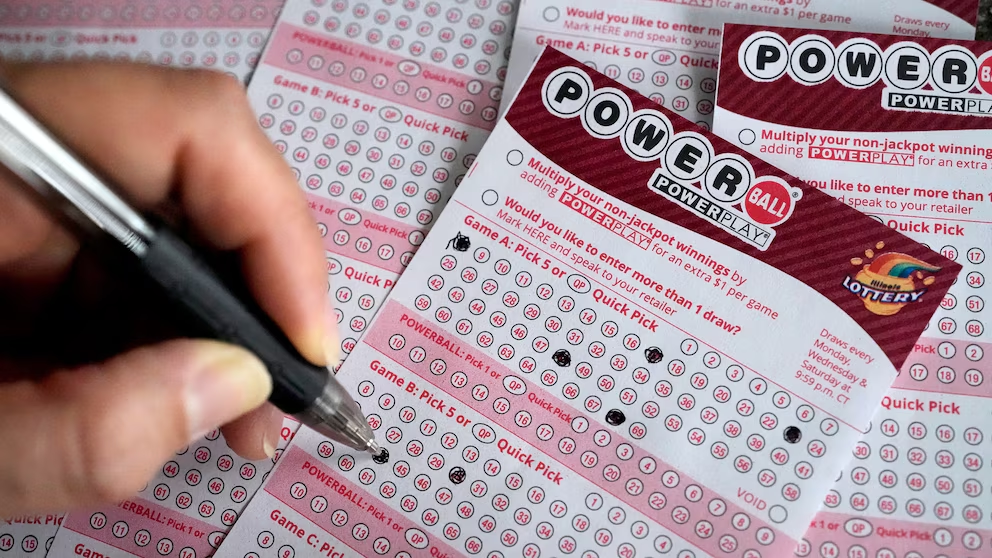
The grand prize carries an immediate cash value of $735.3 million before federal and state taxes, organizers at the Multi-State Lottery Association announced. The swelling jackpot now ranks as the seventh-largest among all U.S. lottery games.
Saturday’s drawing extended an unprecedented 45-consecutive-game losing streak, with no ticket holder matching all six numbers needed to claim the massive prize. The prolonged winless run reflects the astronomical odds players face: one in 292.2 million, according to lottery officials.
The mounting jackpot illustrates the deliberate design changes Powerball implemented over two decades to generate larger prizes and attract broader participation. The $2 game, available in 45 states plus the District of Columbia, Puerto Rico and the U.S. Virgin Islands, underwent multiple rule modifications specifically engineered to create eye-popping jackpots that drive ticket sales during extended losing streaks.
These structural changes dramatically lengthened the odds of winning the top prize while increasing the likelihood of smaller payouts, a strategy that keeps players engaged even as the jackpot grows. The approach has proven financially successful for participating states, which receive substantial revenue from lottery ticket sales, though critics argue the astronomical odds amount to a regressive tax on lower-income players who statistically purchase the most tickets.
Despite the daunting probability, someone defied the odds just three months ago. On September 6, ticket holders in Missouri and Texas split a $1.787 billion prize, the second-largest Powerball jackpot on record. That win came after a similarly lengthy losing streak that captured national attention and triggered a surge in ticket purchases.
The current $1.6 billion prize still falls short of Powerball’s all-time record. On November 7, 2022, a single ticket sold in California claimed a $2.04 billion jackpot, establishing a world record for national lottery games. That winner opted for the lump-sum cash payment rather than annual installments spread over 30 years, a choice most jackpot winners make despite receiving roughly half the advertised prize amount.
The next drawing is scheduled for Monday at 10:59 p.m. Eastern Time, when lottery officials will determine whether the winless streak continues or if someone finally matches all six numbers.
The escalating jackpot comes during the holiday season, historically a period of increased lottery participation as people purchase tickets as gifts or play while traveling to visit family. Lottery retailers typically report elevated sales as jackpots cross the $1 billion threshold, a psychological milestone that generates widespread media coverage and water-cooler conversations about what winners might do with sudden wealth.
Financial advisors caution that lottery winners who select the lump-sum payment face immediate tax obligations that significantly reduce the take-home amount. Federal taxes claim 24 percent immediately, with additional taxes potentially owed depending on the winner’s total income and tax bracket. State taxes vary widely, with some states exempting lottery winnings while others impose rates exceeding 8 percent.
The prolonged jackpot growth also benefits state governments and educational programs funded by lottery proceeds. Many states earmark lottery revenue for public schools, infrastructure projects or other designated purposes, meaning the frenzy surrounding massive jackpots translates into increased funding for these initiatives, regardless of whether local residents win.
Powerball’s ability to generate sustained public interest through incrementally growing jackpots represents a refined understanding of behavioral economics and gambling psychology. The game’s structure ensures that while individual odds remain infinitesimally small, the aggregate probability of someone eventually winning remains high enough to maintain the game’s credibility and appeal.
As the jackpot climbs, mathematicians note an interesting paradox: despite the massive prize, the expected value of a $2 ticket remains negative even at $1.6 billion, meaning players on average lose money. However, the entertainment value and the slim possibility of life-changing wealth continue driving participation across demographic groups.
The Monday drawing will determine whether this jackpot continues its historic ascent or joins the brief list of Powerball prizes exceeding $1 billion that eventually found winners. With holiday shopping season in full swing and year-end financial planning on many minds, lottery officials anticipate robust ticket sales leading up to the drawing.





