

ABUJA, Nigeria — The United States will implement partial visa restrictions targeting Nigerian nationals beginning January 1, 2026, suspending most tourist, student and immigrant visa issuances as part of an expanded border security initiative affecting 19 countries worldwide.
The US Mission in Nigeria announced Monday that the restrictions will take effect at 12:01 a.m. Eastern Standard Time under Presidential Proclamation 10998, titled “Restricting and Limiting the Entry of Foreign Nationals to Protect the Security of the United States.” Nigeria joins 18 other nations subject to the measures: Angola, Antigua and Barbuda, Benin, Burundi, Côte d’Ivoire, Cuba, Dominica, Gabon, The Gambia, Malawi, Mauritania, Senegal, Tanzania, Togo, Tonga, Venezuela, Zambia and Zimbabwe, according to Punchng.
The proclamation mandates partial suspension of nonimmigrant B-1/B-2 visitor visas—used for tourism and business travel—as well as F, M and J student and exchange visitor visas. The policy extends to all immigrant visas, including green card applications, though limited exceptions apply, Sahara Reporters stated.
US officials clarified that foreign nationals already holding valid visas issued before the January 1 effective date remain unaffected by the proclamation. “Foreign nationals, even those outside the United States, who hold valid visas as of the effective date are not subject to Presidential Proclamation 10998. No visas issued before January 1, 2026, at 12:01 a.m. EST, have been or will be revoked pursuant to the Proclamation,” the State Department emphasized.
The restrictions apply exclusively to foreign nationals physically outside the United States on the effective date who do not possess valid American visas as of January 1. Lawful permanent residents of the United States—commonly known as green card holders—remain exempt from the suspension regardless of their current location.
Additional exemptions include immigrant visas for ethnic and religious minorities facing persecution in Iran; dual nationals applying with passports from countries not subject to the suspension; Special Immigrant Visas for eligible US government employees under American immigration law; and participants in certain major international sporting events.
The proclamation eliminates several categorical exemptions previously available under Presidential Proclamation 10949. Immediate family immigrant visas—including spousal, child and parent categories—adoption-related visas, and Afghan Special Immigrant Visas no longer qualify as automatic exceptions for nationals subject to the suspension.
However, discretionary waivers remain possible on a case-by-case basis. The Secretary of State, coordinating with the Secretary of Homeland Security, may determine that an individual’s travel serves US national interests. Similar discretionary authority extends to the Department of Homeland Security, while the Attorney General may approve travel advancing a critical national interest involving the Department of Justice.
Visa applicants from affected countries may continue submitting applications and attending scheduled interviews, though US Mission officials cautioned that such applicants “may be ineligible for visa issuance or admission to the US” under the new regulations.
The announcement represents the latest in a series of policy decisions affecting Nigerian travelers, students and prospective immigrants. In October, the United States added Nigeria to its list of countries accused of violating religious freedom, citing persistent insecurity and attacks on Christian communities. This designation was followed by Nigeria’s inclusion on a revised travel restriction list imposing partial entry limitations.
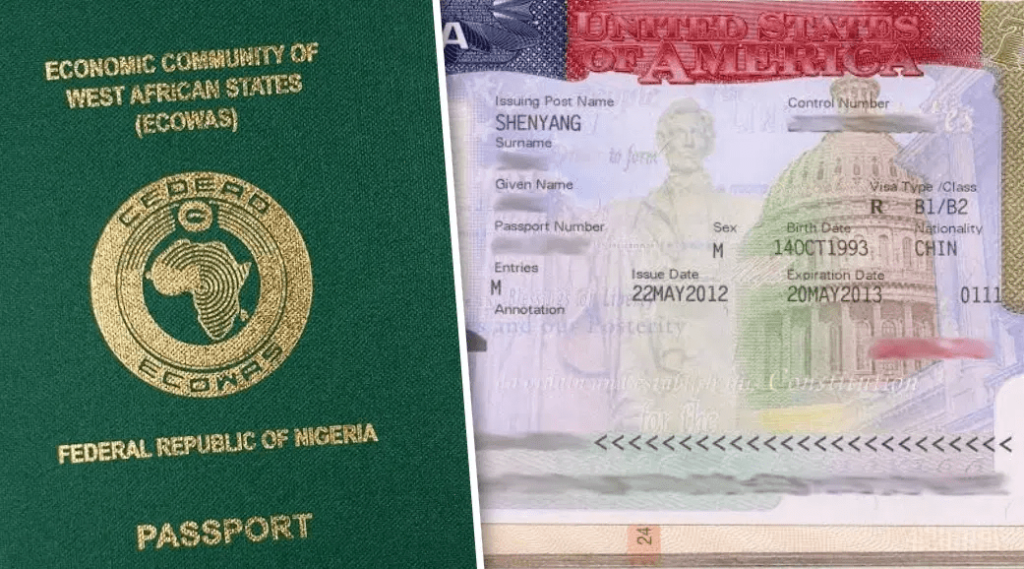
The US has progressively tightened immigration and visa policies affecting Nigerians throughout 2025. Earlier this year, the validity of most nonimmigrant visas issued to Nigerian nationals was reduced to single-entry visas with three-month durations, significantly curtailing the flexibility previously enjoyed by frequent travelers for business, family visits or tourism purposes.
The restrictions carry substantial implications for Nigeria, Africa’s most populous nation and largest economy, which maintains extensive diaspora connections to the United States. Hundreds of thousands of Nigerians reside in America, with significant concentrations in Texas, Maryland, Georgia, New York and California. These communities maintain strong familial, economic and cultural ties to their country of origin, making visa restrictions particularly disruptive.
Nigerian students represent one of the largest African contingents in American higher education institutions, contributing substantially to university revenues through international student tuition. The suspension of F, M and J visas threatens this educational pipeline, potentially redirecting Nigerian students toward alternative destinations including the United Kingdom, Canada, Australia and increasingly China, which has aggressively courted African students with scholarship programs and reduced barriers to entry.
The economic impact extends beyond education to include business travel, medical tourism and family reunification—sectors where Nigerian participation has historically been robust. Many Nigerian professionals maintain business relationships with American companies, attend conferences and training programs, or seek specialized medical treatment unavailable domestically. The visitor visa suspension complicates these activities, potentially redirecting economic activity to competing destinations.
The timing coincides with Nigeria’s ongoing economic reforms under President Bola Tinubu’s administration, which has sought to attract foreign investment, stabilize currency markets and rebuild investor confidence following years of economic stagnation. Perceived international isolation through visa restrictions could complicate these efforts by reinforcing negative perceptions about Nigeria’s security environment and governance challenges.
American officials have not publicly specified the criteria used to determine which countries face visa restrictions under the proclamation, though previous similar measures have cited concerns about document security, identity verification, information sharing between governments and security screening cooperation. Nigeria has faced longstanding criticism regarding passport security, with documented cases of fraudulent document production and insufficient biometric data integration.
The proclamation also extends partial visa suspension to nationals of Turkmenistan for all immigrant visas, with the same limited exceptions applying. This addition brings the total number of affected countries to 20, though Turkmenistan faces different restrictions than the 19 nations subject to both immigrant and nonimmigrant visa suspensions.
The policy shift reflects broader trends in American immigration enforcement under the current administration, which has emphasized border security, enhanced vetting procedures and reduced overall visa issuance as national security priorities. Similar restrictions have been implemented targeting various countries since the administration’s inauguration, though the scope and scale of the current proclamation exceeds previous measures.
For Nigerian applicants with pending visa applications or scheduled interviews, the announcement creates immediate uncertainty. While the State Department confirmed that application processing will continue, the practical effect appears to be that most applications from Nigerian nationals will face automatic denial under the proclamation’s terms unless specific exemptions apply or discretionary waivers are granted.
The waiver process remains undefined in publicly available documentation, leaving questions about application procedures, approval criteria, processing timelines and success rates. Historical precedent from previous travel restrictions suggests that discretionary waivers are granted sparingly and typically require compelling evidence of extraordinary circumstances or critical national interest justifications.
Nigerian government officials have not yet issued formal responses to the proclamation, though the restrictions are likely to generate diplomatic discussions between Abuja and Washington regarding the underlying security concerns prompting the visa suspension. Previous travel restrictions affecting Nigeria have prompted diplomatic engagement aimed at addressing American concerns and potentially securing removal from restricted country lists.
The restrictions’ effectiveness in achieving stated security objectives remains debatable. Critics of broad nationality-based visa restrictions argue they are blunt instruments that punish law-abiding travelers and students while doing little to address actual security threats, which typically require targeted intelligence-driven approaches rather than categorical exclusions based on country of origin.
Proponents contend that visa restrictions incentivize foreign governments to improve document security, enhance information sharing and cooperate more effectively on security screening—objectives that align with American interests regardless of the restrictions’ direct security benefits. By this logic, the temporary disruption to travel serves longer-term security enhancement goals.
For the Nigerian diaspora in America, the restrictions create immediate family reunification challenges. Many Nigerian-Americans hoping to bring spouses, children or parents to the United States through immigrant visa petitions will face indefinite delays unless they qualify for exemptions or successfully obtain discretionary waivers. The elimination of automatic exemptions for immediate family immigrant visas represents a significant departure from previous policy approaches that prioritized family unity.
Educational institutions across the United States that recruit Nigerian students may need to recalibrate enrollment projections and financial planning, as the F and M visa suspensions will directly impact their ability to admit Nigerian applicants for programs beginning in 2026 and beyond. Universities with established Nigerian student populations may face particular disruption as current students complete degrees but cannot be replaced by new cohorts.
As the January 1 effective date approaches, Nigerian nationals considering American travel, study or immigration face critical decisions about whether to proceed with applications, defer plans to alternative destinations, or await clarification about waiver procedures and potential policy modifications. The coming weeks will reveal whether diplomatic engagement between the two nations yields any adjustments to the proclamation’s implementation or whether the restrictions remain in full effect as currently announced.





