

KYIV, Ukraine — Russia unleashed more than 650 drones and three dozen missiles on Ukraine in a sweeping assault that began overnight and continued through daylight hours Tuesday, killing at least three people including a 4-year-old child just two days before Christmas, Ukrainian officials said.
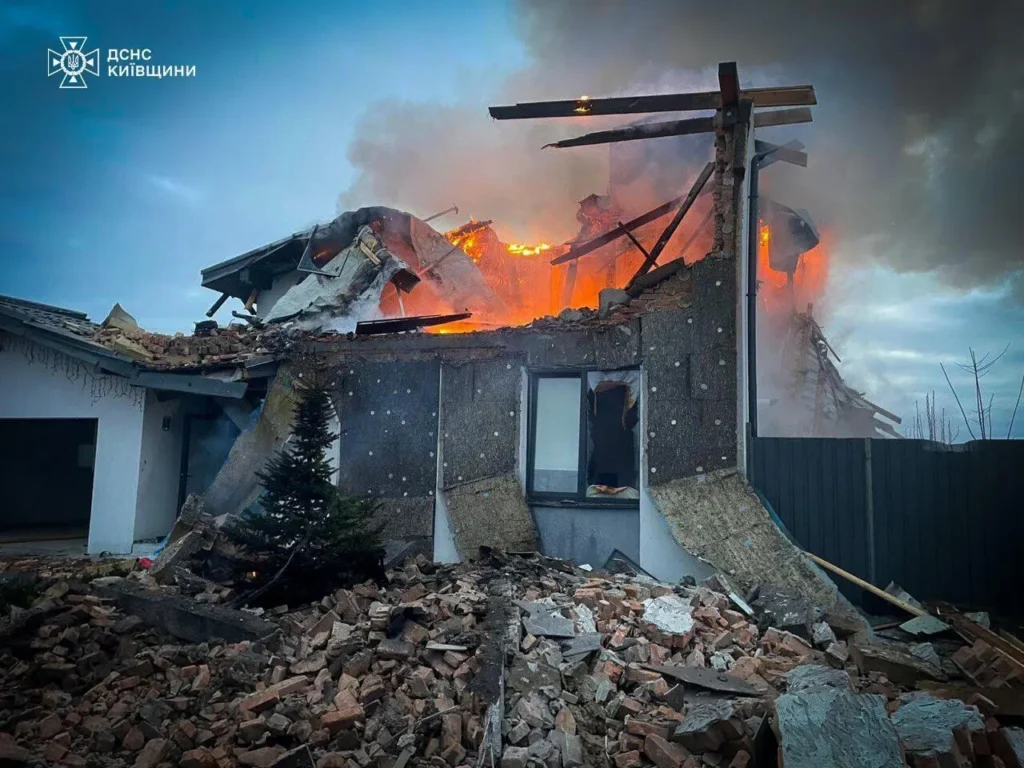
The bombardment struck residential areas and energy infrastructure across 13 regions, triggering widespread power outages amid bitter winter temperatures, Ukrainian President Volodymyr Zelenskyy said. The assault came one day after Zelenskyy characterized recent progress toward a negotiated settlement as “quite solid,” raising questions about Russian commitment to peace efforts.
“A strike before Christmas, when people want to be with their families, at home, in safety. A strike, in fact, in the midst of negotiations that are being conducted to end this war. Putin cannot accept the fact that we must stop killing,” Zelenskyy wrote on Telegram, directly blaming Russian President Vladimir Putin for the timing and scale of the offensive.
The attack represents “an extremely clear signal of Russian priorities,” Zelenskyy stated, suggesting the bombardment demonstrates Putin’s intention to continue the invasion despite ongoing diplomatic discussions. Ukrainian and European officials have repeatedly complained that Putin is not genuinely engaging with U.S.-led peace initiatives.
Russia launched 635 drones of various types and 38 missiles during the operation, Ukraine’s air force said. Ukrainian air defenses intercepted 587 drones and 34 missiles, officials reported, though the weapons that penetrated defenses caused significant casualties and infrastructure damage.
The child victim died in Ukraine’s northwestern Zhytomyr region, Ukrainian emergency services said. A drone strike killed a woman in the Kyiv region, while another civilian perished in the western Khmelnytskyi region, according to Zelenskyy. At least five additional people sustained injuries in strikes on Kyiv, Ukrainian officials said.
The assault marked the ninth large-scale Russian attack on Ukraine’s energy system this year alone, acting Energy Minister Artem Nekraso said. Multiple western regions lost power entirely, while emergency power outages were implemented across the country, the Associated Press reported. Nekraso said restoration efforts would commence once security conditions permitted.
Ukraine’s largest private energy supplier, DTEK, confirmed that the attack targeted thermal power stations in what the company described as the seventh major strike on its facilities since October. DTEK’s thermal power plants have sustained more than 220 hits since Russia’s full-scale invasion began in February 2022, killing four workers and wounding 59, the company stated.
Authorities in the western regions of Rivne, Ternopil and Lviv, along with the northern Sumy region, reported damage to energy infrastructure or power outages following the attack. In the southern Odesa region, Russia struck energy, port, transport, industrial and residential infrastructure, regional head Oleh Kiper said. A merchant ship and over 120 homes sustained damage in Odesa, he reported.
The timing of the assault—during the final preparations for Christmas celebrations—appears calculated to maximize psychological impact on Ukrainian civilians already enduring nearly three years of conflict. Zelenskyy’s statement suggested the attack was designed to undermine Ukrainian morale and demonstrate Russian military capability during a period when peace negotiations have generated international attention.
“Now is the time to respond,” Zelenskyy wrote on X, arguing that “the world is not putting enough pressure on Russia.” The Ukrainian leader’s comments reflect mounting frustration with what Kyiv perceives as insufficient Western support for compelling Moscow toward genuine negotiations, the New York Post reported.
President Donald Trump has pressed for months for a peace agreement between the warring parties, but negotiations have stalled over fundamentally divergent demands from Moscow and Kyiv. U.S. envoy Steve Witkoff said Sunday he conducted “productive and constructive” talks in Florida with Ukrainian and European representatives, though Trump offered a more measured assessment Monday, saying simply, “The talks are going along.”
The contrast between Witkoff’s optimism and Trump’s restraint may signal challenges in bridging the gap between Russian territorial demands and Ukrainian sovereignty concerns. Moscow has insisted on recognition of its annexation of Ukrainian territory, while Kyiv maintains that any settlement must respect Ukraine’s territorial integrity and provide security guarantees preventing future Russian aggression.
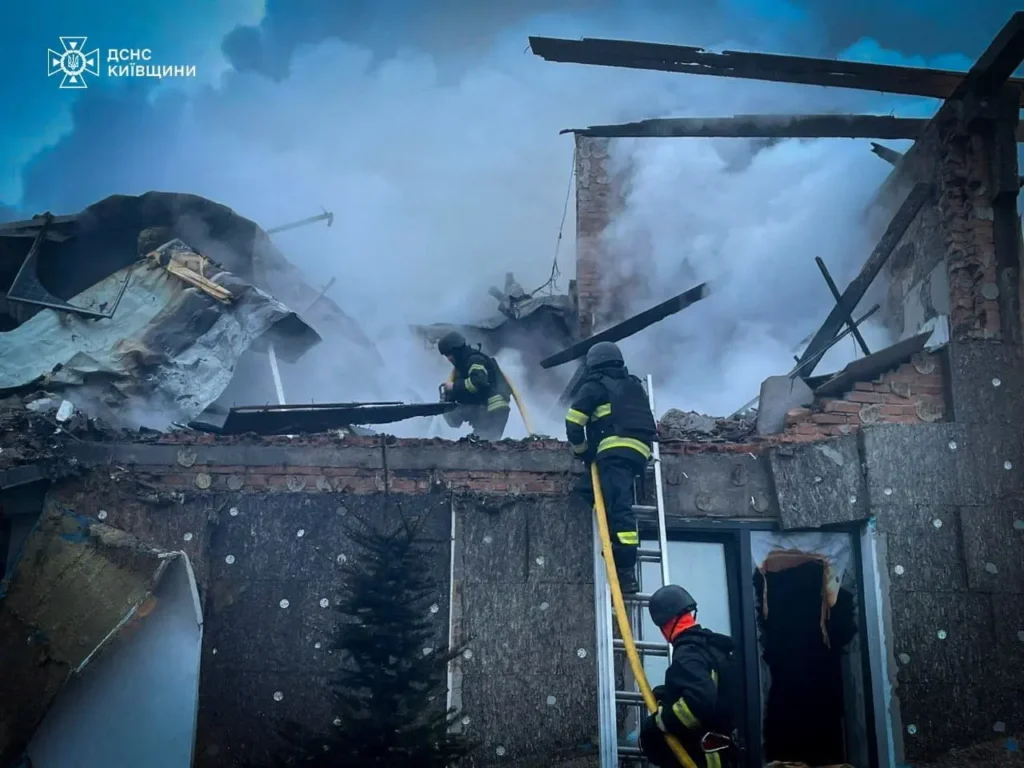
Russia, for its part, acknowledged attacking Ukrainian energy and military facilities while claiming to have captured two villages along the front line. The Russian Ministry of Defense has consistently characterized its strikes on energy infrastructure as legitimate targeting of military-supporting facilities, though international humanitarian law questions the legality of attacks that primarily affect civilian populations.
Meanwhile, a Ukrainian overnight drone attack ignited a fire at an industrial facility in Russia’s southern Stavropol region, Russian officials said. The Ukrainian strike represents part of Kyiv’s strategy of conducting long-range attacks on Russian territory to demonstrate its military reach and complicate Moscow’s prosecution of the war.
The pattern of escalating attacks during periods of diplomatic activity has characterized the conflict throughout 2024. Both sides appear to be positioning for maximum military advantage before any potential settlement, leading to intensified operations that paradoxically increase civilian suffering even as peace talks progress.
The Christmas-timed assault raises profound questions about the viability of current negotiation efforts. If Russia conducts massive civilian-affecting attacks during supposedly serious peace discussions, as Zelenskyy argues, it suggests Moscow views negotiations as a tactical pause rather than a genuine path toward ending hostilities. Alternatively, the strikes may represent hardliners within the Russian military and political establishment seeking to undermine any diplomatic opening.
Energy infrastructure attacks have become a defining feature of Russia’s military strategy, particularly as conventional ground offensives have yielded limited territorial gains. By systematically degrading Ukraine’s electrical generation and distribution capacity, Russia aims to make the country ungovernable and unsustainable, forcing either capitulation or massive Western financial commitments to rebuild infrastructure that Russia can strike again.
The human cost of this infrastructure warfare extends beyond immediate casualties. Millions of Ukrainians face recurring power outages during winter months, when heating becomes essential for survival. Hospitals struggle to maintain operations, water systems fail intermittently, and economic activity contracts as businesses cannot operate reliably. The cumulative effect represents a form of siege warfare applied to an entire nation.
International responses to Tuesday’s attack will test Western resolve in supporting Ukraine through what may be a prolonged endgame phase. European governments face domestic political pressure over energy costs and migration while attempting to maintain military and financial assistance to Kyiv. The United States under Trump has signaled interest in reducing its Ukraine commitment, creating uncertainty about long-term support sustainability.
As Christmas approaches, the bombardment serves as a stark reminder that peace negotiations alone do not end violence. Until Russia and Ukraine reach a mutually acceptable settlement—or until one side achieves decisive military advantage—Ukrainian civilians will continue bearing the burden of attacks designed to break national will and force political concessions through suffering rather than diplomacy.
NewYorkPost/AP





