

BAMAKO, Mali — Military leaders from Mali, Niger and Burkina Faso convened an emergency summit in Bamako this week as jihadist groups linked to al-Qaeda and the Islamic State intensify operations across the Sahel region, with attacks increasingly threatening national capitals and armed militants consolidating control over vast rural territories.
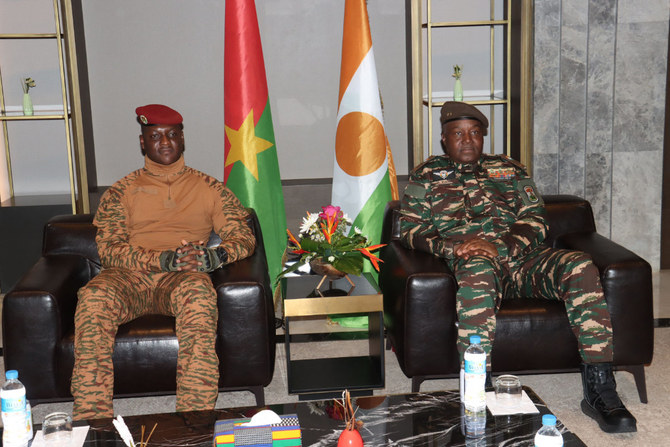
The second session of the Alliance of Sahel States’ leadership council brings together Mali’s President Assimi Goïta, Niger’s President Abdourahamane Tchiani and Burkina Faso’s President Ibrahim Traoré, who arrived Tuesday morning after an unexpected delay. The December 22-23 gathering aims to strengthen cooperation within the alliance and reduce dependence on the West African regional bloc ECOWAS, from which all three countries withdrew last year, Africanews reported.
Goïta and Tchiani met Monday on the tarmac of Bamako’s airport before proceeding to the presidential palace for preliminary discussions. The summit focuses on defense and security coordination, economic development, communications strategy and counterterrorism efforts across the three states.
Ahead of the gathering, the three nations officially announced creation of a joint military force to combat terrorism throughout the region. On Tuesday, the leaders also launched the Alliance of Sahel States TV broadcaster, described as a mechanism to counter disinformation and promote the bloc’s interests.
Following Goïta’s appointment as alliance president at last year’s inaugural summit, a new head of the organization is expected to be designated in Bamako this week.
The meeting unfolds against a backdrop of rapidly deteriorating regional security conditions. Armed groups affiliated with al-Qaeda and the Islamic State have conducted a wave of attacks that are increasingly edging closer to national capitals while consolidating territorial control over large rural areas, according to Africanperceptions.
This marks the second session of what officials call the “College of Heads of State of the Sahel Alliance.” The three countries, all governed by military authorities who seized power through coups, are attempting to project themselves as a regional force capable of confronting security challenges without external oversight, particularly following the withdrawal of French military forces and the scaling back of United States presence in the region, Africanperceptions stated.
The summit is expected to prioritize strengthening joint military coordination and outlining an urgent response plan to counter growing security threats, despite persistent challenges related to limited financial and military resources among the alliance’s member states, the organization reported.
Mali, Niger and Burkina Faso formed their alliance in 2023 and formally withdrew from the Economic Community of West African States last year. The moves followed deteriorating relations between all three countries and most of their Western partners after military coups toppled civilian governments, Africanews reported.
The junta-led countries have taken deliberate steps to assert autonomy, including introducing their own travel documents for citizens. However, the three nations remain members of the West African Economic and Monetary Union, which guarantees continued trade and free movement of goods among its eight members, including Senegal, Ivory Coast, Guinea-Bissau, Togo and Benin.
ECOWAS has indicated openness to allowing Mali, Niger and Burkina Faso to continue benefiting from certain bloc privileges, including trade arrangements, despite their formal withdrawal. This pragmatic approach reflects regional recognition that complete economic separation would harm all parties while potentially destabilizing an already fragile region.
The Alliance of Sahel States represents a fundamental restructuring of regional security architecture that dominated West Africa for decades. The French military presence, which once numbered thousands of troops across the Sahel conducting counterterrorism operations, has been systematically expelled from all three countries amid accusations of neocolonialism and ineffectiveness at stemming jihadist violence.
The withdrawal of French forces and reduction of American military footprint creates both opportunities and risks for the military governments. On one hand, it allows them to pursue security strategies without external constraints or political conditions. On the other, it removes significant intelligence capabilities, air support, training programs and financial resources that Western partners provided for counterterrorism operations.
The alliance’s announcement of a joint military force raises immediate questions about operational capacity and sustainability. All three countries face severe resource constraints, aging equipment, training deficiencies and morale challenges within their armed forces. Previous efforts at multinational military cooperation in the Sahel, including the G5 Sahel force, struggled with coordination problems, inadequate funding and limited effectiveness against mobile jihadist networks.
The jihadist threat has evolved significantly since France first intervened in Mali in 2013. What began as localized insurgencies has metastasized into sophisticated networks capable of governing territory, collecting taxes, administering justice and providing basic services in areas where state authority has collapsed. Groups affiliated with al-Qaeda’s Jama’at Nusrat al-Islam wal-Muslimin and Islamic State in the Greater Sahara have demonstrated adaptability, exploiting ethnic tensions, economic grievances and governance failures to expand their influence.
The expansion of jihadist operations toward national capitals represents a strategic shift from rural insurgency to potential urban warfare. Attacks in areas closer to Bamako, Niamey and Ouagadougou demonstrate that armed groups are testing government defensive perimeters and potentially preparing for more ambitious operations. Urban attacks would fundamentally change the conflict’s dynamics, potentially triggering humanitarian crises, mass displacement and economic collapse.
The launch of the Alliance of Sahel States TV broadcaster reflects awareness that the conflict extends beyond military dimensions. All three governments face legitimacy challenges after seizing power through force and repeatedly postponing promised returns to civilian rule. A dedicated media platform allows them to shape narratives about security operations, economic development and regional cooperation without relying on international media they view as hostile.
However, the effectiveness of state media in countering what the alliance characterizes as “disinformation” remains questionable. Social media platforms and international news organizations operating in the region provide alternative information sources that governments cannot fully control. Moreover, credibility depends not on messaging sophistication but on tangible improvements in security and living conditions for populations enduring years of violence and instability.
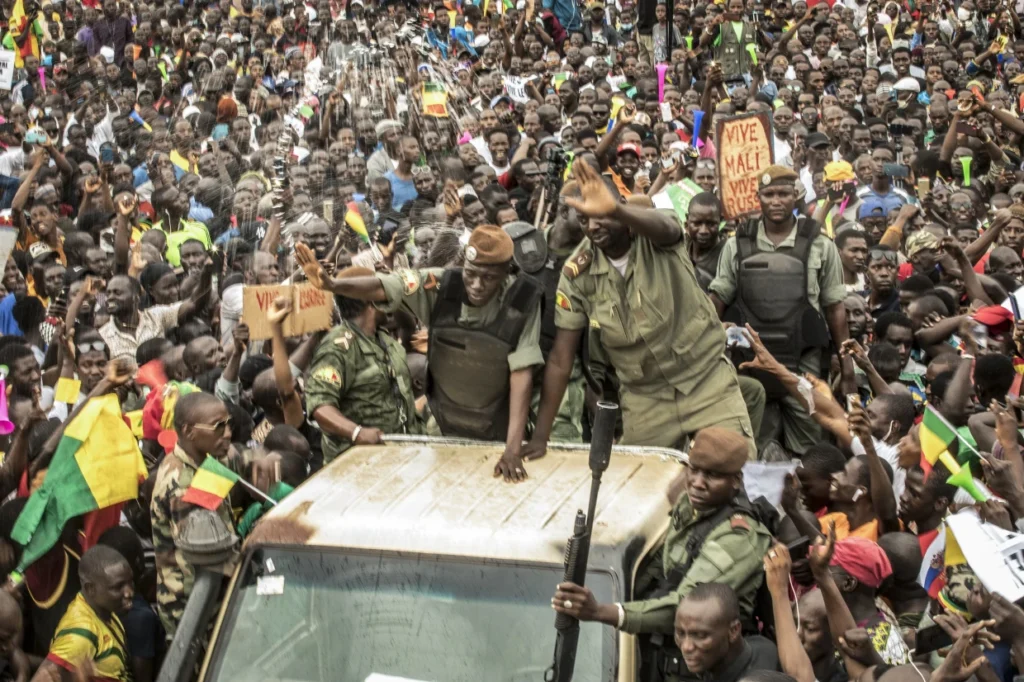
The summit also highlights complex diplomatic positioning. While asserting independence from Western influence, all three countries have deepened relationships with Russia, which has deployed Wagner Group mercenaries—now reorganized under different structures following Yevgeny Prigozhin’s death—to support military operations. These forces have been accused of human rights abuses and failing to significantly improve security outcomes despite their presence.
China has expanded economic engagement throughout the region, pursuing infrastructure projects and resource extraction while avoiding the political conditions Western partners typically impose. Turkey has emerged as another alternative partner, providing military equipment and training while seeking to expand its influence in francophone Africa.
The alliance’s viability ultimately depends on whether it can deliver improved security for populations bearing the primary burden of jihadist violence. Communities across the Sahel face daily threats from armed groups, displacement from their homes, disruption of agriculture and trade, closure of schools and health facilities, and erosion of social cohesion. Military operations that fail to protect civilians or that generate additional grievances through heavy-handed tactics will only compound the crisis.
As the Bamako summit concludes, the three military leaders face a fundamental challenge: translating rhetoric about regional solidarity and autonomous security into effective action against jihadist networks that have proven remarkably resilient. Without significant improvements in intelligence capabilities, logistics, troop training and civil-military coordination—areas where Western partners previously provided crucial support—the Alliance of Sahel States risks becoming another institutional framework that cannot match operational realities on the ground.
The international community watches with concern as the Sahel’s security crisis deepens and regional responses shift away from Western partnerships toward uncertain alternatives. The stakes extend beyond the three alliance countries to the broader West African region, where jihadist expansion could destabilize coastal states, generate massive refugee flows and create ungoverned spaces that terrorist networks exploit for global operations.
Africanperceptions/Africanews





