

Gunmen intercepted a vehicle carrying Muslim worshippers to a religious celebration in central Nigeria and abducted 28 people, including women and children, underscoring the deepening security crisis that continues to grip Africa’s most populous nation.
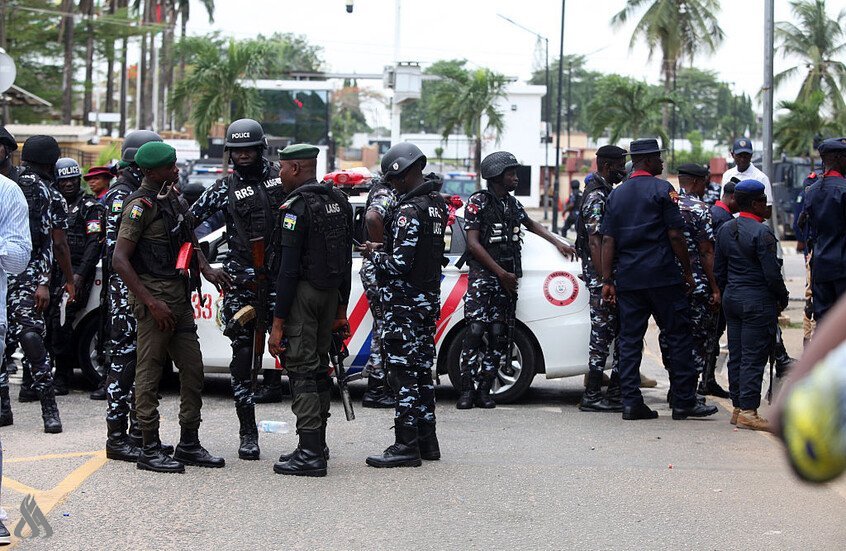
The attack occurred on the evening of Dec. 21 near Zak village in the Bashar district of Plateau state as the group traveled to a Maulud gathering marking the birth of the Prophet Muhammad. A security brief prepared for the United Nations and reviewed by Agence France-Presse said the assailants stopped the vehicle and forced the passengers into captivity. Nigerian police have opened an investigation, the document said, though no immediate arrests were announced.
Plateau state police did not respond to requests for comment, a silence that reflects growing frustration among residents and observers who say security forces remain overstretched and reactive amid escalating violence across the region.
The abduction adds to a wave of mass kidnappings that has renewed international attention on Nigeria’s fragile security environment. The same day as the Plateau state attack, authorities announced the release of 130 schoolchildren in neighboring Niger state, completing the monthlong effort to free more than 250 students taken from a Catholic boarding school. The United Nations has since warned of a sharp rise in large-scale abductions, particularly targeting schools and places of worship.
While attacks have affected both Muslim and Christian communities, the Nigerian government and independent analysts reject characterizations that frame the violence solely along religious lines. Multiple conflicts overlap across the country, fueled by armed criminal gangs, extremist insurgencies, communal tensions and weak local governance. Those dynamics have turned kidnapping into a lucrative enterprise rather than an ideological campaign, security experts say.
A recent report by SBM Intelligence, a Lagos-based consultancy, Nigeria, described kidnappings for ransom as a “structured, profit-seeking industry,” estimating that criminal groups generated about $1.66 million between July 2024 and June 2025. Analysts warn that such figures likely understate the scale of the problem, as many payments go unreported.
The growing insecurity has drawn sharp criticism from the United States, which has threatened intervention over what it describes as mass killings of Christians. Nigerian officials dispute that framing, arguing it oversimplifies a complex national crisis that cuts across ethnic, economic and religious boundaries.
For communities in central Nigeria, the latest abduction reinforces a grim reality: travel to routine religious and social events now carries life-altering risk, while confidence in the state’s ability to deter or swiftly resolve such attacks continues to erode.
France24





