

MAIDUGURI, Nigeria — At least seven people died Wednesday when an explosion tore through a crowded mosque in the northeastern Nigerian city of Maiduguri during evening prayers, witnesses and security sources told AFP, raising concerns about a potential resurgence of jihadist violence in a city that has experienced relative tranquility in recent years.
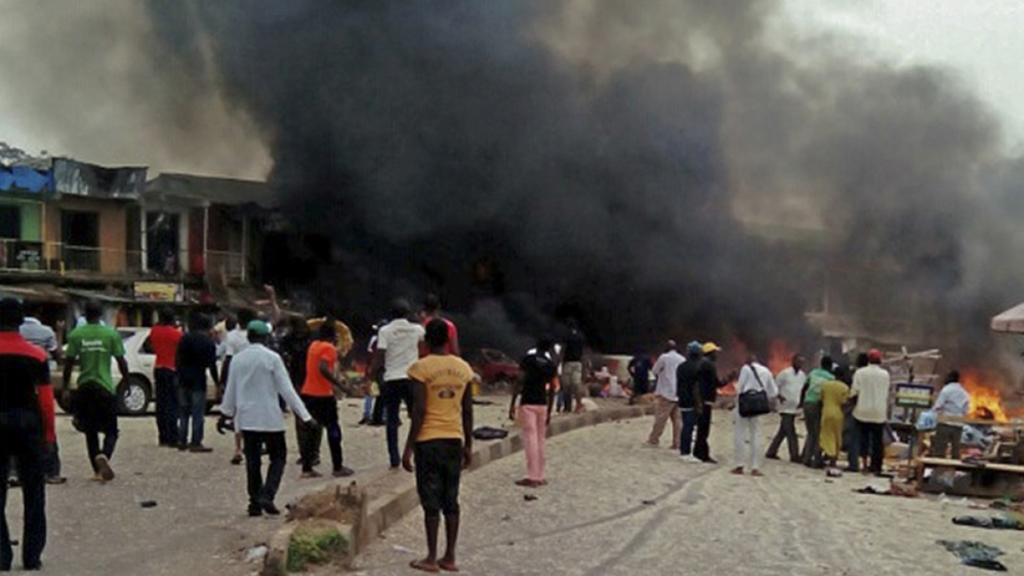
The blast occurred inside a packed mosque in the city’s Gamboru market as Muslim worshippers gathered for evening prayers around 6:00 p.m. local time (1700 GMT), according to witnesses. No armed groups immediately claimed responsibility for what anti-jihadist militia leader Babakura Kolo characterized as a suspected bombing.
Malam Abuna Yusuf, one of the mosque’s leaders, placed the death toll at eight, though officials have not yet released an official casualty count. Kolo stated that seven were killed.
“We can confirm there has been an explosion,” police spokesman Nahum Daso told AFP, adding that an explosive ordnance disposal team was already deployed to the site.
Kolo indicated the bomb was suspected to have been placed inside the mosque and detonated midway through prayers, though some witnesses described the incident as a suicide bombing. The conflicting accounts reflect the chaos and confusion typical in the immediate aftermath of such attacks.
The number of wounded remained unclear Wednesday evening, though witness Isa Musa Yusha’u told AFP: “I saw many victims being taken away for medical treatment.”
Video footage captured in the aftermath and viewed by AFP showed a person covered in blood writhing on the ground, and what appeared to be bodies covered by sheets. A security alert sent by an international NGO to its staff in Maiduguri, seen by AFP, advised workers to avoid the Gamboru market area.
Maiduguri serves as the capital of Borno state, epicenter of a years-long insurgency by jihadist groups Boko Haram and its offshoot, Islamic State West Africa Province, France24 reported.
However, the city itself has not experienced a major attack in years, making Wednesday’s explosion particularly significant for regional security assessments.
No group has claimed responsibility, though militants have previously targeted mosques and crowded places in Maiduguri through suicide bombings and improvised explosive device attacks during the insurgency’s height.
Boko Haram launched its uprising in Borno state in 2009, seeking to establish an Islamic caliphate, Reuters reported. Despite military offensives and regional cooperation among affected nations, sporadic attacks continue threatening civilians throughout Nigeria’s northeast.
Nigeria has battled the jihadist insurgency since 2009 in a conflict that has killed at least 40,000 people and displaced approximately two million from their homes in the northeast, according to the United Nations. While violence has diminished since its peak a decade ago, the conflict has spread into neighboring Niger, Chad and Cameroon.
Maiduguri itself—once characterized by nightly gun battles and bombings—has remained calm in recent years, with the last major attack recorded in 2021. The relative peace represented a significant achievement for Nigerian security forces and provided residents a respite from years of relentless violence that had transformed the city into a combat zone.
Wednesday’s explosion shatters that calm and raises troubling questions about whether jihadist groups are regaining operational capacity within the city or whether this represents an isolated incident by militants who managed to penetrate security measures.
The attack’s timing during evening prayers maximizes casualties by targeting worshippers when mosques are most crowded, a tactic frequently employed by extremist groups to generate maximum psychological impact.
Reminders of the ongoing conflict remain omnipresent in the state capital, where major military operations are headquartered. Military vehicles traverse the city daily, their beds filled with soldiers whose helmets shield them from afternoon heat.
Evening checkpoints continue operating even as markets that once closed in early afternoon now remain active into the night, reflecting the delicate balance between security measures and efforts to restore normalcy.
Meanwhile, in Borno state’s rural areas, the insurgency continues with undiminished intensity. Analysts warn of an uptick in jihadist violence this year, suggesting that while urban centers like Maiduguri have achieved relative stability, the underlying insurgency remains far from defeated.
The attack exposes persistent vulnerabilities despite years of counterinsurgency operations. Maiduguri’s apparent security has depended partly on extensive military presence, checkpoints and intelligence operations designed to detect and prevent attacks before they occur. Wednesday’s bombing suggests gaps in these defenses or successful adaptation by insurgent groups to evade security measures.
The choice of target carries symbolic significance. Mosques should represent sanctuaries from violence, and attacks on houses of worship during prayer services constitute particularly heinous acts even by the standards of armed conflict.
For Boko Haram and ISWAP, which claim religious motivation for their insurgency, attacking fellow Muslims in mosques creates theological contradictions that the groups typically justify through accusations that victims practice insufficiently pure Islam or collaborate with government forces.
The Gamboru market location increases the attack’s economic impact beyond immediate casualties. Markets serve as economic lifelines for communities, and attacks on marketplaces aim to disrupt commerce, generate fear that discourages economic activity, and demonstrate insurgent capability to strike soft targets.
Previous attacks on markets in northeastern Nigeria have triggered prolonged economic disruptions as traders and customers avoid areas perceived as dangerous.
International humanitarian organizations operating in Maiduguri face renewed security challenges following Wednesday’s attack. The NGO security alert advising staff to avoid the Gamboru market area reflects standard precautionary measures, but sustained insecurity could force organizations to curtail operations precisely when civilian needs for humanitarian assistance may increase.
The absence of immediate responsibility claims creates analytical challenges. While Boko Haram and ISWAP have historically claimed major attacks to gain publicity and demonstrate operational capacity, delayed or absent claims sometimes occur. Groups may withhold claims to avoid backlash when attacks kill fellow Muslims, particularly in mosques, or when operational security concerns outweigh propaganda value of publicity.
Nigeria’s government faces mounting pressure to explain how an attack of this magnitude occurred in Maiduguri after years of relative calm. President Bola Tinubu’s administration has emphasized security improvements in the northeast, and Wednesday’s bombing undermines these narratives while potentially signaling broader deterioration in regional security conditions.
The attack occurs against a backdrop of evolving jihadist strategies in the Sahel and West Africa. As military pressure has increased in some areas, groups have demonstrated adaptability by shifting operations, changing tactics and exploiting governance gaps in remote regions.
The question facing Nigerian security officials is whether Wednesday’s attack represents isolated opportunism or signals a more systematic return to urban terrorism.
For Maiduguri’s residents, Wednesday’s explosion revives traumatic memories of years when the city endured regular attacks. The psychological impact of renewed violence in a city that had begun recovering from years of conflict cannot be overstated. Families who had slowly rebuilt lives and businesses after years of displacement and violence now face renewed uncertainty about their security and futures.
As investigators examine the blast site and authorities attempt to identify perpetrators, Nigerian security forces must reassess their assumptions about insurgent capabilities and intentions.
The relative calm Maiduguri has enjoyed may have bred complacency or allowed insurgent networks to quietly reconstitute presence within the city. Alternatively, the attack may represent a desperate attempt by weakened groups to demonstrate continued relevance through spectacular violence.
The coming days and weeks will prove critical for determining whether Wednesday’s mosque bombing represents an isolated incident or the opening salvo in a renewed campaign of urban terrorism that could undermine years of hard-won security gains in northeastern Nigeria.
France24/Reuters





