

Five people died when a helicopter crashed on Mount Kilimanjaro during a medical rescue mission, Tanzanian authorities said Thursday, marking a rare aviation tragedy on Africa’s highest peak.
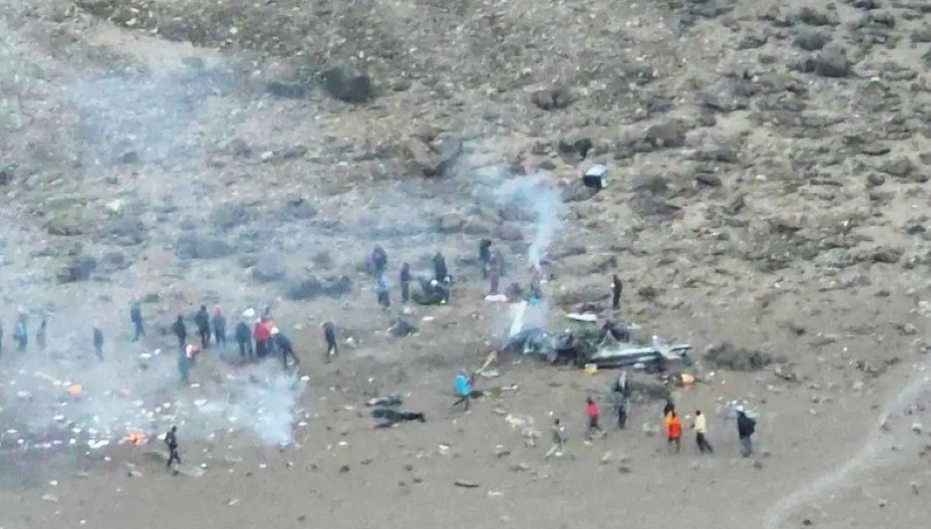
The victims were identified as two Czech tourists, a Zimbabwean pilot, a Tanzanian doctor, and a Tanzanian guide, Tanzania National Parks said in a statement, as Reuters reported.
The helicopter crashed near the mountain’s Barafu Camp on Wednesday evening, the Tanzania Civil Aviation Authority said. The accident occurred at an altitude between 4,670 and 4,700 meters (15,322 to 15,420 feet), according to the Mwananchi newspaper.
Kilimanjaro Regional Police Commander Simon Maigwa told journalists the aircraft belonged to Kilimanjaro Aviation company, which has not yet commented on the accident. The Mwananchi newspaper and East Africa TV, citing the region’s head of police, reported the helicopter was conducting a medical rescue mission, Al Jazeera stated.
Two foreigners who police said had been picked up in a medical evacuation were among those killed in the crash between Barafu Camp and Kibo Summit, authorities said.
The Tanzania Civil Aviation Authority said Thursday that investigations had commenced in line with international safety regulations “to determine the circumstances and probable cause” of the accident.
Mount Kilimanjaro, Africa’s highest peak, rises nearly 6,000 meters (20,000 feet) above sea level. Around 50,000 tourists climb Kilimanjaro annually, making it one of the continent’s most popular mountaineering destinations.
Aircraft accidents on Mount Kilimanjaro are rare. The last recorded incident occurred in November 2008 when four people died.
While the ascent of Kilimanjaro is not technically difficult compared to other major peaks, altitude sickness remains a significant problem for many climbers attempting the summit.
The crash highlights dangers inherent in high-altitude rescue operations where thin air, unpredictable weather, and challenging terrain create hazardous conditions for aviation. Helicopters operating at extreme altitudes face reduced engine performance due to lower air density, making flights more demanding and leaving less margin for error.
Medical evacuations from Kilimanjaro’s upper reaches typically occur when climbers suffer severe altitude sickness, injuries from falls, or sudden medical emergencies that cannot be adequately treated at mountain camps. The speed helicopters provide in transporting critically ill patients to lower altitudes or medical facilities can mean the difference between life and death, making such rescue missions essential despite risks.
Barafu Camp, where the helicopter crashed, sits at approximately 4,673 meters and serves as the final staging point for climbers attempting Kilimanjaro’s Uhuru Peak via the popular Machame and Umbwe routes. The camp’s high altitude and exposure to weather make it a challenging environment even under normal circumstances.
The accident’s location between Barafu Camp and Kibo Summit places it in one of Kilimanjaro’s most demanding zones, where oxygen levels are roughly 50 percent of those at sea level. Pilots operating in such conditions must contend with decreased helicopter performance, potential disorientation, and rapidly changing weather that can obscure visibility within minutes.
The involvement of two Czech tourists being evacuated suggests they may have experienced medical emergencies requiring urgent descent—a common occurrence on Kilimanjaro where altitude-related illnesses affect climbers regardless of fitness level. That they died in the crash attempting to save their lives adds tragic irony to an incident that began as a rescue mission.
The Zimbabwean pilot’s death represents the loss of specialized expertise, as pilots qualified and experienced in high-altitude mountain rescue operations are relatively rare. Such pilots require specific training to handle the unique challenges of operating helicopters in thin air near mountain peaks where downdrafts, turbulence, and limited landing zones create constant hazards.
The Tanzanian doctor and guide who perished were likely accompanying the evacuation to provide medical care during transport and assist with patient handling. Their deaths underscore how mountain rescue operations put first responders at risk while attempting to save others.
Kilimanjaro Aviation’s silence following the accident is not unusual in the immediate aftermath of aviation incidents, as companies typically await investigation findings before making public statements. However, the company will face scrutiny about aircraft maintenance, pilot qualifications, weather assessment procedures, and decision-making protocols for conducting high-altitude rescue missions.
The Tanzania Civil Aviation Authority’s investigation will examine multiple factors including mechanical failure, weather conditions, pilot error, and operational procedures. Investigators will analyze flight data if available, inspect wreckage, interview witnesses, and review the company’s safety records and maintenance logs.
The rarity of Kilimanjaro aviation accidents—with the previous incident occurring 17 years ago—suggests generally strong safety standards for mountain operations in Tanzania. However, this crash may prompt reviews of rescue mission protocols, altitude operation limits, and equipment requirements for helicopters conducting medical evacuations.
For the families of the five victims, the tragedy transforms what should have been either professional duties (for the crew) or adventure travel experiences (for the tourists) into fatal outcomes. The Czech tourists’ families face the devastating reality that their relatives died not from climbing dangers but in the rescue helicopter meant to save them.
The accident may also affect insurance considerations and rescue operation policies for Kilimanjaro climbs. Tour operators and aviation companies may reassess risk factors, weather thresholds for launching rescues, and whether certain conditions warrant attempting evacuations versus treating patients at altitude until conditions improve.
As investigators work to determine what caused the helicopter to crash in one of Africa’s most challenging aviation environments, the incident serves as sobering reminder that mountain rescue operations involve extraordinary risks for both those being rescued and those conducting rescues. The 50,000 annual Kilimanjaro climbers rely on such rescue capabilities, making helicopter evacuation services essential despite inherent dangers of high-altitude flight operations.





