

NAIROBI/MINNEAPOLIS — Federal authorities are mounting an aggressive campaign to seize high-end properties scattered across Kenya’s capital and coastline, tracing their origins to one of America’s largest pandemic-era fraud schemes that siphoned hundreds of millions of dollars meant to feed vulnerable children.
The investigation centers on approximately KSh 32.3 billion diverted from Minnesota’s child nutrition and housing assistance programs during the COVID-19 crisis, with prosecutors establishing a direct pipeline from fraudulent claims processed in Minneapolis to luxury apartments, beachfront plots, and even aircraft purchases in East Africa.
Kenyan blogger Sirat Musa disclosed the impending enforcement action through social media channels, describing what she characterized as a “major shake-up” threatening Kenya’s premium real estate sector. The scope of the alleged fraud has expanded far beyond initial estimates, with U.S. federal prosecutors now suggesting that as much as half of the roughly $18 billion disbursed through 14 Minnesota state programs since 2018 may have been compromised.
The scale of the theft has stunned investigators accustomed to healthcare and benefits fraud. More than $250 million vanished from federal programs designed to provide meals to children during pandemic lockdowns, but that figure represents merely the documented losses from a single scheme. Court filings paint a picture of industrial-scale exploitation of emergency programs rushed into existence with minimal oversight.
According to Fox 9, a Minnesota television station that has extensively documented the scandal, suspects channeled stolen taxpayer funds into Kenya’s property market with particular focus on Nairobi’s upscale neighborhoods. Luxury apartments in Eastleigh, South C, Parklands, and Donholm attracted significant investment, along with prime beach parcels in Diani and properties in the coastal city of Nyali. The sophistication of the money laundering operation became apparent when investigators discovered fraud proceeds had financed an aircraft purchase in Nairobi.
The human cost of the scheme contrasts sharply with the luxury it financed. Minnesota’s Feeding Our Future program, established to ensure children from low-income families received adequate nutrition during school closures, became instead a vehicle for systematic theft. Prosecutors detailed how operators submitted claims for meals never prepared, programs never operated, and children never served.
Abdiaziz Shafii Farah received a 28-year prison sentence in August 2025 after federal courts convicted him of orchestrating the scheme’s core operations. Prosecutors presented evidence that Farah systematically funneled millions of dollars to Kenya, converting American taxpayer funds into tangible assets including luxury apartments and vehicles that would be difficult for U.S. authorities to trace or recover.
The international dimensions of the case expanded in September 2025 when prosecutors indicted Ahmednaji Maalim Aftin Sheikh, a Kenyan national, on charges of laundering more than $40 million through a Kenyan real estate company. The indictment marked a significant escalation, demonstrating that the fraud network extended beyond expatriate communities to include sophisticated money laundering infrastructure within Kenya itself.
Asha Farhan Hassan faced separate charges later in 2025 connected to a $14 million fraud targeting autism-related services, with investigators linking portions of those stolen funds to Kenyan property acquisitions. The autism program case revealed how fraudsters had systematically exploited multiple vulnerable populations, using the cover of disability services to process fraudulent claims.
The Housing Stabilization Services program, created in 2020 to help vulnerable adults find housing during the pandemic, proved equally susceptible to exploitation. Fox 9 detailed how the program, initially projected to cost approximately $12 million over five years, instead consumed $302 million in taxpayer funds. Federal investigators characterized the program as “extremely vulnerable to fraud,” with court documents revealing that providers billed Medicaid for millions of dollars in services never rendered.
Eight suspects faced charges in September 2025 for their roles in the housing fraud operation: Moktar Hassan Aden, 30; Mustafa Dayib Ali, 29; Khalid Ahmed Dayib, 26; Abdifitah Mohamud Mohamed, 27; Christopher Adesoji Falade, 62; Emmanuel Oluwademilade Falade, 32; Asad Ahmed Adow, 26; and Anwar Ahmed Adow, 25. According to Fox 9, prosecutors alleged the group stole more than $8 million through shell companies including Brilliant Minds Services LLC, Leo Human Services LLC, Faladcare Inc., and Liberty Plus LLC.
The charging documents detailed a pattern of conspicuous consumption. Four suspects allegedly pocketed as much as $400,000 each, sharing an American Express credit card that accumulated nearly $500,000 in charges. Another defendant used stolen funds to invest in Kenyan real estate while simultaneously leasing a luxury apartment in Roseville, Minnesota, and driving a BMW. A third suspect leased a Mercedes while channeling money into investment accounts.
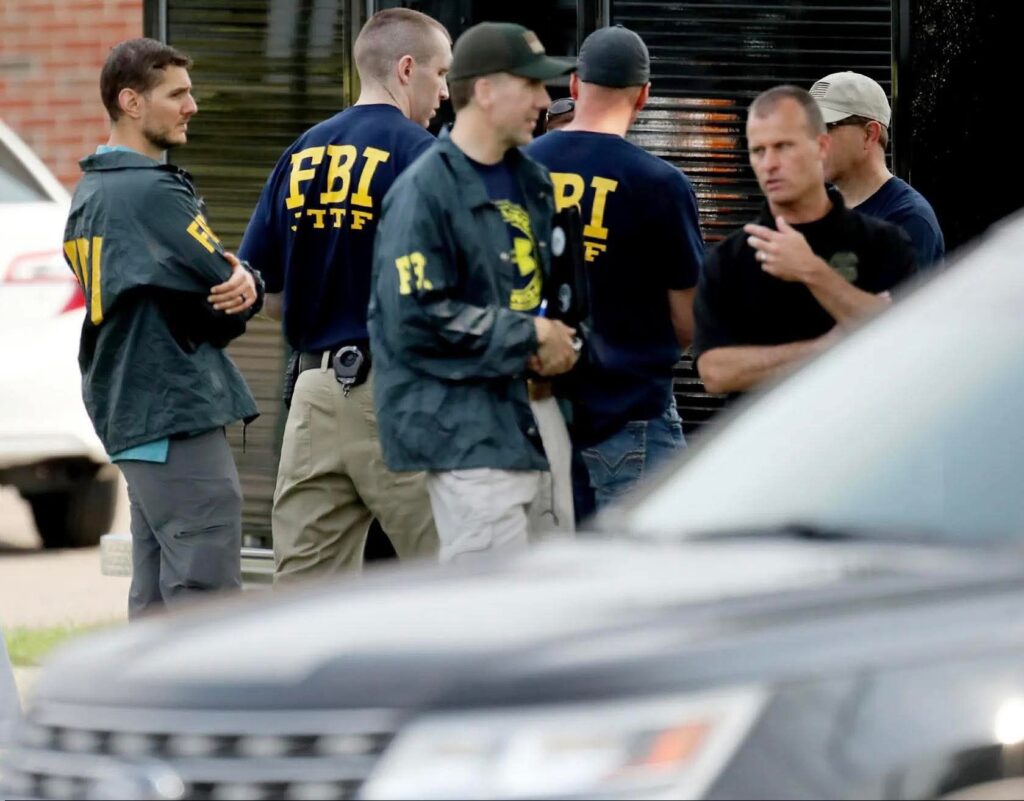
The investigation gained momentum following coordinated FBI raids across the Minneapolis metropolitan area on July 16, 2025. Agents descended on more than half a dozen homes and businesses, executing search warrants that revealed the breadth of the fraudulent operation. Court documents showed that 14 providers collected $22 million from the housing program over just 16 months, with prosecutors asserting that most claims were fabricated.
Minnesota authorities shut down the Housing Stabilization Services program in August 2025, shortly after the raids. Federal prosecutors indicated the investigation remains active with additional indictments anticipated.
The political fallout has been severe. A coalition of Minnesota Republican legislators called for Governor Tim Walz to resign, citing what they described as persistent fraud occurring under his administration’s watch. State Senators Bill Lieske and Nathan Wesenberg, along with State Representatives Marj Fogelman, Drew Roach, and Mike Wiener, invoked Article 8, Section 6 of the Minnesota Constitution, which addresses official malfeasance.
First Assistant U.S. Attorney Joe Thompson’s suggestion that up to half of $18 billion paid through 14 Medicaid waiver programs could be fraudulent ignited intense political controversy. Fox 9 documented how a YouTube influencer visiting child care centers in Minnesota reportedly uncovered more than $100 million in additional fraud, prompting FBI Director Kash Patel to characterize the findings as “just the tip of the iceberg.”
House Speaker Lisa Demuth, speaking for Minnesota Republicans, outlined six specific actions she demanded from the Walz administration: release documents related to fraud investigations requested by media and legislative committees, publish records of inspections at suspect facilities, redirect resources toward unannounced site visits, conduct comprehensive reviews of payments to non-governmental organizations, consider suspending payments for 13 other high-risk programs, and request that Attorney General Keith Ellison withdraw litigation against federal officials seeking to halt redetermination processes.
Governor Walz’s office responded defensively, asserting he had “worked for years to crack down on fraud” and requested additional authority from the legislature. The administration pointed to specific actions including investigations into facilities identified in viral videos, hiring an outside audit firm to examine high-risk programs, creating a new statewide program integrity director position, and supporting criminal prosecutions.
The implications for Kenya’s real estate sector remain uncertain but potentially severe. The U.S. Department of Justice has confirmed active pursuit of asset seizure and forfeiture for properties located in Kenya purchased with stolen funds. However, Kenyan authorities face mounting criticism for failing to move aggressively to identify, freeze, or prosecute properties allegedly acquired through money laundering.
Kenya’s real estate market has historically attracted significant cash investment, particularly in Nairobi’s expanding middle and upper-class neighborhoods. The sector’s relative opacity regarding funding sources has made it attractive for money laundering operations. International enforcement actions targeting Kenyan properties could trigger increased scrutiny of cash transactions and foreign investment throughout the market.
Legal experts suggest the cross-border nature of the asset seizures will prove complex. International asset forfeiture requires cooperation between U.S. and Kenyan law enforcement, judicial approval in both jurisdictions, and resolution of competing claims from legitimate creditors or subsequent purchasers who may have acquired properties without knowledge of their fraudulent origins.
The reputational damage to Kenya’s property sector could extend beyond the specific properties identified in federal indictments. International investors and financial institutions may demand enhanced due diligence for Kenyan real estate transactions, potentially slowing capital flows into what has been one of East Africa’s most dynamic markets.
The fraud’s revelation raises fundamental questions about program oversight during emergency conditions. The pandemic created enormous pressure to distribute aid rapidly, but the Minnesota cases demonstrate how speed and scale can overwhelm fraud detection mechanisms. Analysts note that similar vulnerabilities likely existed in emergency programs nationwide, suggesting the Minnesota cases may represent a broader pattern yet to be fully documented.
Federal prosecutors have indicated the investigation continues with additional charges anticipated. The international dimensions of the money laundering operation suggest investigators are tracing funds beyond Kenya to other jurisdictions where suspects may have purchased assets or established financial infrastructure designed to obscure the origins of stolen funds.





