

Dozens of people are feared dead and about 100 others injured after a fire tore through a crowded bar in a Swiss Alps resort town during New Year’s celebrations, authorities said Thursday, calling the community “devastated” by one of the country’s deadliest holiday tragedies in decades.
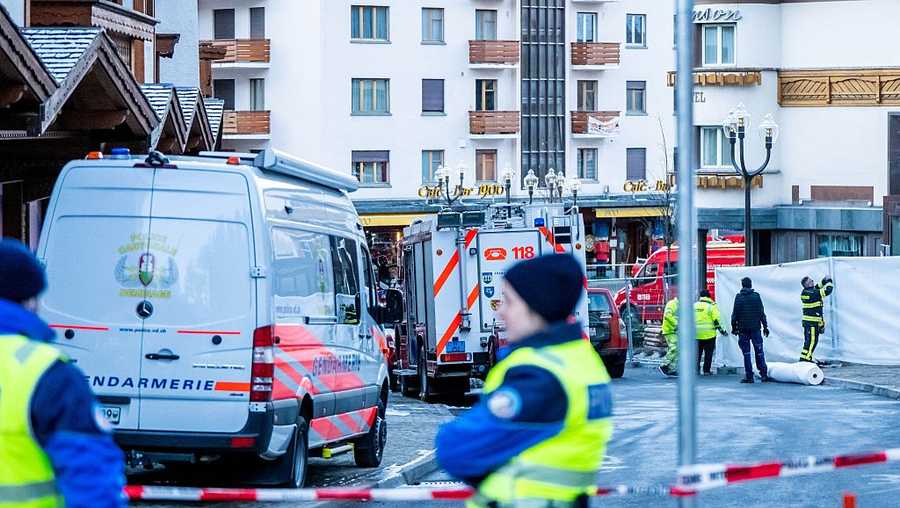
Valais Canton police commander Frédéric Gisler confirmed during a Thursday news conference that “several tens of people” perished at Le Constellation, though he cautioned that victim identification efforts remain ongoing and precise casualty figures remain premature. The acknowledgment that dozens died suggests one of Switzerland’s deadliest peacetime disasters in recent decades, though officials have not released specific numbers pending family notifications.
“That will take time and for the time being it is premature to give you a more precise figure,” Gisler stated, describing the mountain community as “devastated” by losses that have shattered what should have been joyous New Year’s festivities. The careful language around casualty counts reflects both the challenges of identifying victims in fire scenes and the sensitivity of informing families before public disclosure.
Beatrice Pilloud, Valais Canton attorney general, emphasized that determining the fire’s cause requires extensive investigation that has barely begun. Forensic experts have not yet accessed the building’s interior due to structural instability and ongoing safety concerns in the wreckage. “At no moment is there a question of any kind of attack,” Pilloud declared, preemptively addressing speculation about whether the incident might involve terrorism or deliberate violence rather than accidental causes.
Emergency responders deployed helicopters and ambulances to evacuate victims, including injured patrons from multiple countries reflecting Crans-Montana’s status as an international ski destination. The resort town’s location high in the Swiss Alps complicated emergency response, though Switzerland’s well-developed mountain rescue infrastructure enabled rapid mobilization despite challenging terrain and weather conditions.
Two women who escaped the inferno provided French broadcaster BFMTV with harrowing accounts of how celebration transformed into catastrophe. According to their testimony, they observed a bartender carrying a female colleague on his shoulders in what appeared to be festive revelry. The woman being carried held a lit candle in a bottle that made contact with the venue’s wooden ceiling, immediately igniting the structure. Flames spread with terrifying speed across the ceiling, which then collapsed onto the crowd below.
The witnesses described desperate attempts to flee from the basement nightclub area through a single narrow staircase leading to an equally constricted doorway. The architectural configuration created deadly bottlenecks as panicked patrons surged toward the sole escape route, crushing against each other in darkness and smoke as the fire rapidly consumed available oxygen and filled the space with toxic gases.
Another witness speaking to BFMTV recounted observing approximately 20 people smashing windows to create alternative escape routes as traditional exits became impassable. Some who escaped through broken windows sustained severe lacerations and other injuries in addition to smoke inhalation and burns. The witness described seeing gravely wounded victims staggering from the building while frantic parents arrived in cars, desperately seeking information about whether their children remained trapped inside the burning structure.
The young man characterized what he observed from across the street as resembling “a horror movie,” with smoke and flames visible through windows as people fought to escape. His testimony captured the surreal quality of witnessing mass casualties in a peaceful Alpine resort town where visitors come seeking relaxation and winter sports rather than life-threatening emergencies.
Fire officials characterized the blaze as an “embrasement généralisé,” a technical firefighting term describing a phenomenon where intense heat causes combustible materials to release gases that then ignite explosively. English-speaking firefighters typically refer to such events as flashovers or backdrafts, both representing among the most dangerous fire dynamics that can trap and kill even experienced firefighters. For civilians in a crowded entertainment venue, such rapid fire progression leaves virtually no time for orderly evacuation.
Flashovers occur when accumulated heat in an enclosed space causes all combustible materials to simultaneously reach ignition temperature, creating a rolling flame front that consumes everything in seconds. The wooden ceiling construction that witnesses reported would have provided abundant fuel for such progression, with older Alpine structures often featuring extensive timber framing and decorative woodwork that meets modern fire safety standards inadequately or not at all.
“This evening should have been a moment of celebration and coming together, but it turned into a nightmare,” declared Mathias Rénard, head of the regional government. His statement reflected the profound tragedy of a disaster occurring during New Year’s festivities, when people gathered expecting joy and instead encountered death. The timing intensifies grief for survivors and victims’ families, forever associating what should be celebratory occasions with devastating loss.
The sheer number of casualties overwhelmed regional medical infrastructure designed for a mountain resort’s typical emergency needs. Rénard confirmed that the intensive care unit and operating theaters at the regional hospital reached full capacity rapidly, forcing medical personnel to make agonizing triage decisions about which critically injured patients could receive immediate surgical intervention. Overflow patients required transfer to facilities throughout the region, straining Switzerland’s typically robust healthcare system.
Crans-Montana sits in the heart of the Swiss Alps with ski runs reaching approximately 3,000 meters elevation, positioning it among Switzerland’s premier winter sports destinations. The resort ranks alongside famous Valais region venues including Zermatt and Verbier, drawing skiing enthusiasts from across the globe to its snowy peaks and pine forests. The area’s tourism economy depends heavily on its reputation as a safe, well-managed destination where visitors can enjoy Alpine experiences without significant risk.
The resort maintains particular prominence in international Alpine skiing competition, serving as a World Cup circuit venue and scheduled to host the world championships during two weeks in February 2027. In just four weeks, Crans-Montana was scheduled to host elite men’s and women’s downhill racers for their final competitions before the Milan Cortina Olympics opening February 6. Whether the tragedy affects these scheduled events remains uncertain, though organizers will face difficult decisions about proceeding with celebrations while the community grieves.
Beyond winter sports, Crans-Montana has established itself as a premium golf destination. The Crans-sur-Sierre club stages the European Masters each August on a picturesque course offering stunning mountain vistas. Le Constellation bar sits approximately 250 meters down the street from the golf club, positioning it in the resort’s commercial center where tourists and locals congregate for dining and entertainment.
The tragedy occurred less than 5 kilometers from Sierre, Switzerland, site of a 2012 disaster when a bus carrying Belgian schoolchildren crashed inside a Swiss tunnel, killing 28 people including many children. The proximity of two major disasters within a small geographic area brings renewed trauma to a region that had barely processed the earlier tragedy.
Thursday’s Swiss blaze arrived exactly 25 years after a comparable New Year’s Eve inferno in the Dutch fishing town of Volendam that killed 14 people and injured more than 200 celebrating in a café. The parallel tragedies underscore persistent risks associated with crowded entertainment venues during holiday celebrations, when elevated alcohol consumption, decorative materials including candles, and packed conditions create dangerous combinations.
Swiss President Guy Parmelin expressed condolences through social media, stating that the government’s “thoughts go to the victims, to the injured and their relatives, to whom it addresses its sincere condolences.” The message carried particular significance as Thursday marked Parmelin’s first day holding Switzerland’s rotating presidency, with cabinet members taking turns serving one-year terms as head of state.
Out of respect for victims’ families, Parmelin postponed a traditional New Year’s address to the nation that Swiss broadcasters SRF and RTS had scheduled to air Thursday afternoon. The cancellation reflected recognition that celebratory presidential rhetoric would strike an inappropriate tone as the country absorbed news of the disaster and families learned whether loved ones had survived.
Authorities issued public appeals asking Crans-Montana area residents to exercise extreme caution during coming days to avoid accidents requiring medical resources already overwhelmed by fire casualties. The request acknowledged that the region’s popular ski slopes present inherent injury risks even under normal circumstances, with broken bones, head trauma, and other skiing accidents routinely filling emergency rooms during peak winter tourism season.
The disaster raises inevitable questions about fire safety enforcement in Swiss Alpine resort towns, where many historic buildings predate modern safety codes. Balancing preservation of traditional Alpine architecture with contemporary fire prevention standards presents ongoing challenges for resort municipalities dependent on maintaining authentic mountain village atmospheres that attract tourists seeking traditional experiences.
Investigators will examine whether Le Constellation maintained adequate emergency exits, fire suppression systems, occupancy limits, and staff training in emergency procedures. Witness accounts describing a single narrow staircase as the primary escape route from a basement nightclub suggest potential code violations, though definitive assessments await completion of forensic examinations and official inquiries.
The use of open flames for ambiance in crowded venues with wooden construction appears central to the tragedy, raising questions about whether such practices should face stricter regulation even when they contribute to the cozy Alpine atmosphere tourists expect. Many traditional mountain establishments feature exposed timber beams, wooden paneling, and candlelight that create authentic environments while simultaneously presenting fire hazards that modern materials and lighting would eliminate.
Switzerland’s reputation for precision engineering, strict regulation, and orderly management makes such a catastrophic failure particularly shocking for Swiss citizens and international observers who view the country as exemplifying safety consciousness. The disaster challenges assumptions about developed nations having mastered fire prevention through building codes and enforcement mechanisms that supposedly prevent such tragedies.
The international dimension of casualties reflects Crans-Montana’s status as a global destination during peak winter season. Families across Europe and beyond now await confirmation about whether their relatives celebrating New Year’s in the Swiss Alps survived or perished, with victim identification complicated by fire damage and the presence of tourists whose identities may not be immediately known to local authorities.
The psychological impact on survivors who escaped will likely manifest for years, with many potentially developing post-traumatic stress disorder from witnessing deaths and experiencing terror during evacuation attempts. Crans-Montana’s small community will struggle to process collective trauma as residents recognize victims and confront how celebration became catastrophe in their familiar gathering places.
Source: AP





