

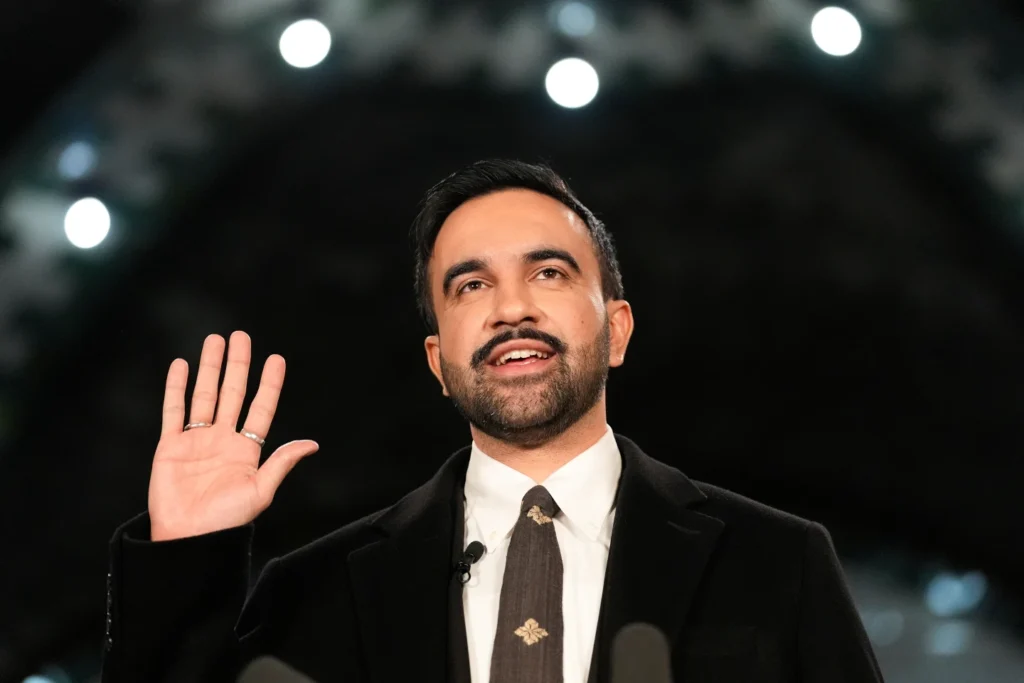
Zohran Mamdani was sworn in as mayor of New York City shortly after midnight Thursday, taking the oath of office inside a long-closed subway station beneath Manhattan in a symbolic ceremony that underscored his political rise and the themes that defined his campaign.
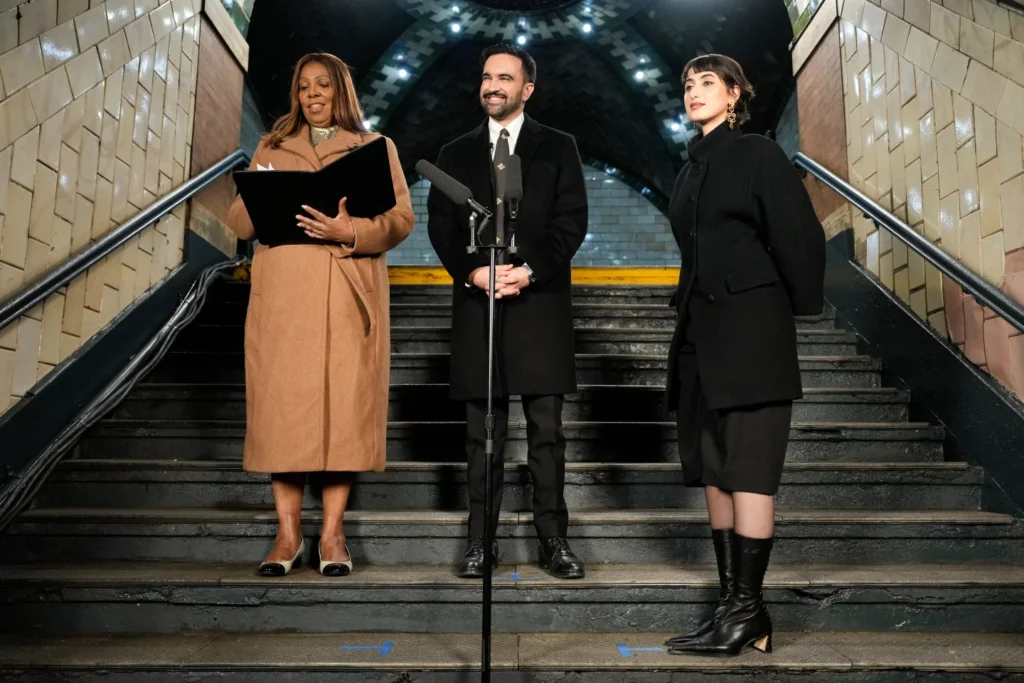
Mamdani, a Democrat, placed his hand on a Quran as he became the first Muslim mayor in the history of the nation’s largest city. At 34, he is also New York’s youngest mayor in generations, as well as its first mayor of South Asian descent and the first born in Africa.
“This is truly the honor and the privilege of a lifetime,” Mamdani said after being sworn in.
The private ceremony was administered by New York Attorney General Letitia James, a longtime political ally, at the decommissioned City Hall subway station — one of the system’s original stops, famed for its vaulted ceilings and architectural detail. Though no longer in use, the station has long been regarded as a symbol of the city’s early transit ambitions.
In his first remarks as mayor, Mamdani pointed to the setting as a reminder of the role public transportation plays in the city’s future and legacy. He used the moment to announce his first major appointment, naming Mike Flynn as commissioner of the Department of Transportation.
Calling the station a “testament to the importance of public transit to the vitality, the health and the legacy of our city,” Mamdani ended the brief event with a smile, thanking those in attendance before climbing the stairs back to street level.
A second, public swearing-in ceremony is scheduled for 1 p.m. at City Hall, where U.S. Sen. Bernie Sanders — a political mentor and ideological ally — is set to administer the oath. City officials say the ceremony will be followed by a public celebration on Broadway’s “Canyon of Heroes,” a stretch historically associated with ticker-tape parades.
Mamdani now assumes one of the most demanding and closely watched jobs in American politics, inheriting a city that has largely rebounded from the COVID-19 pandemic but remains strained by high costs and deep inequality.
His campaign elevated affordability to the center of the city’s political debate. A democratic socialist, Mamdani ran on promises aimed at easing the cost of living in one of the world’s most expensive cities, including proposals for free child care, free bus service, a rent freeze affecting roughly 1 million households, and a pilot program for city-run grocery stores.
Those ambitions now collide with the everyday realities of governing New York, from managing sanitation, snow removal and aging infrastructure to overseeing a vast transit system that frequently draws public frustration.
Mamdani was born in Kampala, Uganda, to filmmaker Mira Nair and academic Mahmood Mamdani. His family moved to New York City when he was 7, and he came of age in the years after the Sept. 11 attacks, a period he has said shaped his understanding of identity and belonging. He became a U.S. citizen in 2018.
After working on several Democratic campaigns, Mamdani won election in 2020 to the state Assembly, representing a district in Queens. He and his wife, Rama Duwaji, will move from their one-bedroom, rent-stabilized apartment to Gracie Mansion, the mayor’s official residence on Manhattan’s Upper East Side.
The new mayor takes office as New York shows signs of renewed momentum. Violent crime has dropped to pre-pandemic levels, tourism has rebounded, and unemployment has returned to rates seen before COVID-19 upended the city’s economy. Still, persistent concerns over rising rents, inflation and affordability continue to dominate public anxiety.
Mamdani will also have to navigate a complex relationship with President Donald Trump. During the mayoral campaign, Trump threatened to withhold federal funding if Mamdani won and suggested the possibility of deploying National Guard troops to the city. Yet after the election, Trump invited Mamdani to the White House for what both sides described as a cordial meeting.
“I want him to do a great job and will help him do a great job,” Trump said at the time.
Despite that tone, tensions are widely expected, particularly over immigration and federal enforcement policies. Mamdani has also faced criticism from some members of New York’s Jewish community over his outspoken criticism of Israel’s government, an issue likely to remain politically sensitive.
In preparation for taking office, Mamdani spent weeks assembling an experienced transition team, signaling a more pragmatic approach to governance than some critics feared. That included persuading Police Commissioner Jessica Tisch to remain in her post, a decision welcomed by business leaders concerned about stability in policing policy.
As Mamdani begins his tenure, allies say the unconventional midnight swearing-in captured his broader message: blending symbolism with policy ambition in a city where history, politics and daily life are never far apart.
AP





