

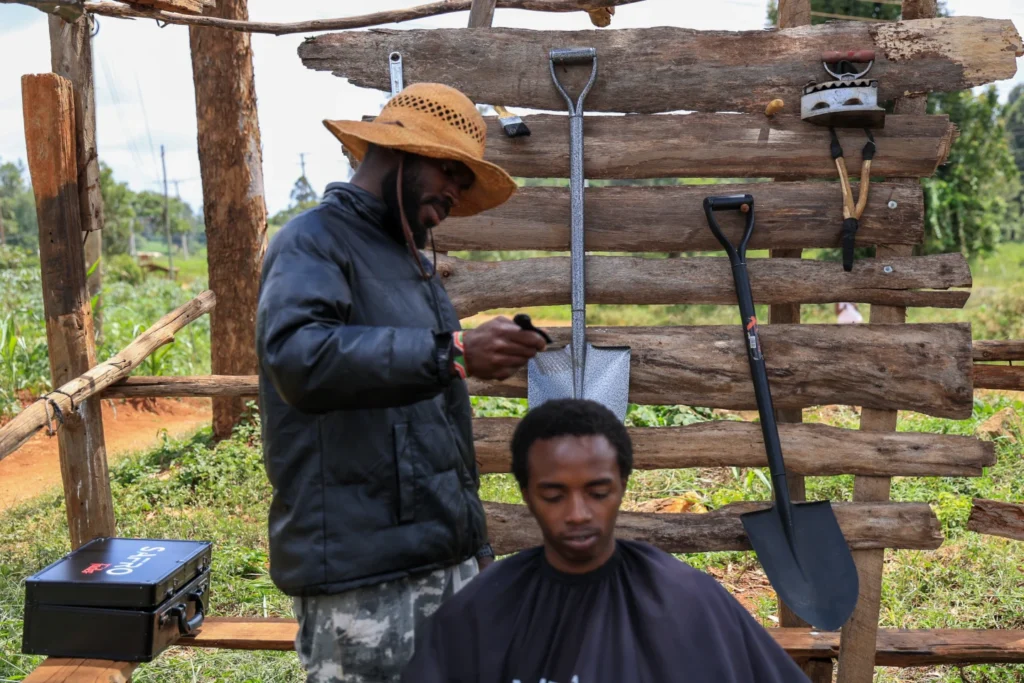
On a dusty roadside at the edge of metropolitan Nairobi, Safari Martins ushers a customer into a bare wooden shack where farming tools hang from the walls. The shovel, iron and agricultural shears are not for sale. They are the instruments of a haircut that has helped turn Martins into one of Kenya’s most recognizable barbers — and an unlikely internet sensation.
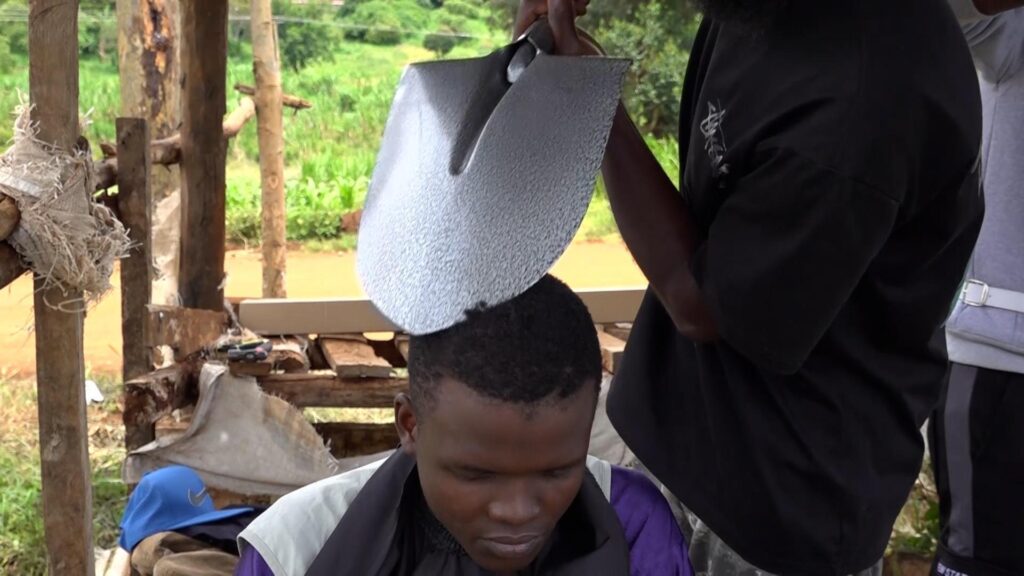
Moments after greeting his client, Ian Njenga, Martins lifts a sharpened shovel and glides its edge across Njenga’s head, slicing away hair with the precision of a conventional razor. The cut is deliberate, clean and carefully choreographed for the camera.
“I just use unconventional tools,” Martins said with a grin as a helper filmed the scene from multiple angles for social media.
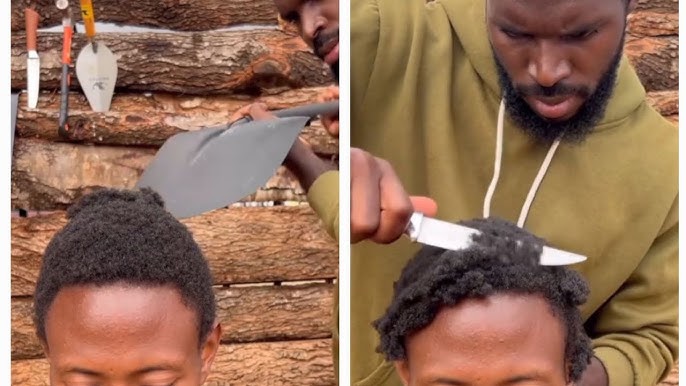
Known online as Chief Safro, Martins has built a following of about one million users on both Instagram and TikTok, where his videos feature haircuts performed with everything from shovels to modified household irons. The clips have become emblematic of a broader trend in Kenya, where influencer barbers are leveraging viral content to stand out in a crowded informal economy.
Social media usage in Kenya has surged in recent years, transforming platforms such as TikTok from entertainment outlets into income-generating tools. Martins’ rise mirrors that shift. Born in Rwanda and now based in Nairobi, he began cutting hair in 2018 while still in high school, offering trims outside classrooms and in cramped dormitories using borrowed clippers.
Five years later, he added a camera, abandoned traditional trimmers and leaned fully into spectacle — a decision that changed his career trajectory.
What first drew online attention were the novelty tools. More recently, Martins has layered cultural storytelling into his videos, narrating traditional African folk tales over footage of his haircuts.
“I’m motivated by African culture, by African stories,” he said, noting that one of his tools — a sharpened iron box — was blessed by village elders.

Despite the theatrics, customers say the appeal goes beyond the performance. Njenga, who began visiting Martins last year, said the barber’s technical skill matches the viral hype.
“If I compare him with other barbers his talent is next level,” Njenga said. “When I get shaved here I get very comfortable. When I walk in the streets, I feel confident.”
That confidence — and the chance to appear in a viral video — comes at a price. Martins charges up to 1,500 Kenyan shillings, nearly $12, for a haircut. In Nairobi, where many men pay a fraction of that amount, the fee represents a significant premium. Yet demand remains strong.
The popularity of Martins and other content-creating barbers coincides with explosive growth in Kenya’s digital audience. Data from market research firm DataReportal show that social media users in the country rose from 10.6 million in January 2023 to 15.1 million by January 2025, an increase of nearly 50%.
That expansion has created new economic pathways. About 15% of Kenyans involved in online content creation rely on it as their primary source of income, according to a June 2025 brief by the Kenya Institute for Public Policy Research and Analysis.
Still, Martins says barbers have struggled to translate viral visibility into consistent earnings. Advertising rates and brand partnerships are often pegged to Western benchmarks, and industries such as gaming, education and lifestyle content tend to attract more lucrative sponsorships, according to Fundmates, a company that finances influencers.
“Barbers get viral on social media, but I feel like they are not respected,” Martins said. “You’re not paid as a content creator, even though you have the views and the engagement.”
His complaint highlights a growing tension within Kenya’s creator economy: while digital platforms offer unprecedented exposure, financial rewards remain uneven, particularly for workers rooted in traditional trades.
Even so, Martins continues to refine his craft — and his performances — betting that creativity and cultural storytelling will keep audiences watching. In a country where informal labor employs the majority of workers, his sharpened shovel has become more than a gimmick. It is a symbol of how digital attention can briefly tilt the balance of opportunity, even if it does not yet guarantee long-term security.
On a dusty roadside at the edge of metropolitan Nairobi, Safari Martins ushers a customer into a bare wooden shack where farming tools hang from the walls. The shovel, iron and agricultural shears are not for sale. They are the instruments of a haircut that has helped turn Martins into one of Kenya’s most recognizable barbers — and an unlikely internet sensation.
Moments after greeting his client, Ian Njenga, Martins lifts a sharpened shovel and glides its edge across Njenga’s head, slicing away hair with the precision of a conventional razor. The cut is deliberate, clean and carefully choreographed for the camera.
“I just use unconventional tools,” Martins said with a grin as a helper filmed the scene from multiple angles for social media.
Known online as Chief Safro, Martins has built a following of about one million users on both Instagram and TikTok, where his videos feature haircuts performed with everything from shovels to modified household irons. The clips have become emblematic of a broader trend in Kenya, where influencer barbers are leveraging viral content to stand out in a crowded informal economy.
Social media usage in Kenya has surged in recent years, transforming platforms such as TikTok from entertainment outlets into income-generating tools. Martins’ rise mirrors that shift. Born in Rwanda and now based in Nairobi, he began cutting hair in 2018 while still in high school, offering trims outside classrooms and in cramped dormitories using borrowed clippers.
Five years later, he added a camera, abandoned traditional trimmers and leaned fully into spectacle — a decision that changed his career trajectory.
What first drew online attention were the novelty tools. More recently, Martins has layered cultural storytelling into his videos, narrating traditional African folk tales over footage of his haircuts.
“I’m motivated by African culture, by African stories,” he said, noting that one of his tools — a sharpened iron box — was blessed by village elders.
Despite the theatrics, customers say the appeal goes beyond the performance. Njenga, who began visiting Martins last year, said the barber’s technical skill matches the viral hype.
“If I compare him with other barbers his talent is next level,” Njenga said. “When I get shaved here I get very comfortable. When I walk in the streets, I feel confident.”
That confidence — and the chance to appear in a viral video — comes at a price. Martins charges up to 1,500 Kenyan shillings, nearly $12, for a haircut. In Nairobi, where many men pay a fraction of that amount, the fee represents a significant premium. Yet demand remains strong.
The popularity of Martins and other content-creating barbers coincides with explosive growth in Kenya’s digital audience. Data from market research firm DataReportal show that social media users in the country rose from 10.6 million in January 2023 to 15.1 million by January 2025, an increase of nearly 50%.
That expansion has created new economic pathways. About 15% of Kenyans involved in online content creation rely on it as their primary source of income, according to a June 2025 brief by the Kenya Institute for Public Policy Research and Analysis.
Still, Martins says barbers have struggled to translate viral visibility into consistent earnings. Advertising rates and brand partnerships are often pegged to Western benchmarks, and industries such as gaming, education and lifestyle content tend to attract more lucrative sponsorships, according to Fundmates, a company that finances influencers.
“Barbers get viral on social media, but I feel like they are not respected,” Martins said. “You’re not paid as a content creator, even though you have the views and the engagement.”
His complaint highlights a growing tension within Kenya’s creator economy: while digital platforms offer unprecedented exposure, financial rewards remain uneven, particularly for workers rooted in traditional trades.
Even so, Martins continues to refine his craft — and his performances — betting that creativity and cultural storytelling will keep audiences watching. In a country where informal labor employs the majority of workers, his sharpened shovel has become more than a gimmick. It is a symbol of how digital attention can briefly tilt the balance of opportunity, even if it does not yet guarantee long-term security.
An AP story





