

Foreign tourists from multiple countries are among at least 47 people confirmed dead following a devastating New Year’s fire that engulfed a crowded nightclub in this elite Swiss Alpine ski resort, authorities confirmed Thursday, as nations across Europe mobilized diplomatic resources to identify citizens who perished in what Switzerland’s president called “one of the worst tragedies our country has experienced.”
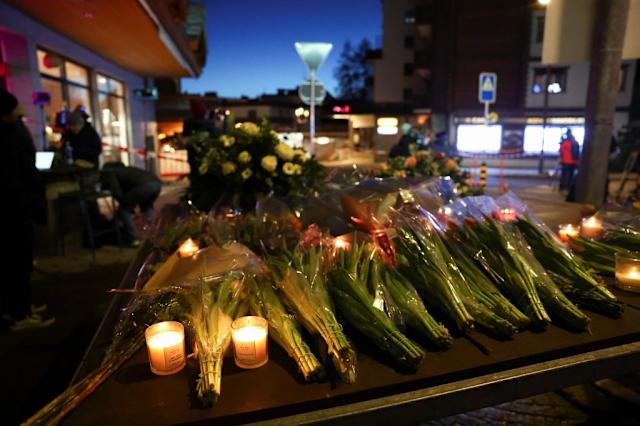
“We can expect victims of foreign nationalities,” local police chief Frederic Gisler stated during a Thursday press conference, confirming what had become increasingly apparent as the scope of the disaster emerged: the international character of Crans-Montana as a premier winter destination meant the death toll would span multiple countries, triggering a complex multinational response to identify victims and notify grieving families scattered across Europe and potentially beyond.
Italian Foreign Minister Antonio Tajani provided the first specific death toll of 47 after maintaining regular contact with Swiss authorities throughout the day, though he did not specify how many Italian nationals were among the deceased. The confirmation launched urgent efforts by foreign ministries across Europe to determine which of their citizens celebrating New Year’s at the exclusive resort had survived the inferno that consumed Le Constellation bar shortly after 1:30 a.m. local time.
The presence of numerous foreign tourists among the casualties reflects Crans-Montana’s status as an international playground for wealthy Europeans and global travelers drawn to its high-altitude ski runs, luxury accommodations, and vibrant après-ski scene. The resort attracts visitors from France, Italy, Germany, the United Kingdom, and beyond, creating a cosmopolitan atmosphere where multiple languages fill the streets and establishments cater to international clientele with sophisticated tastes and substantial disposable incomes.
Among the 115 injured, many critically, hospital officials confirmed that treatment centers across Switzerland and neighboring countries were receiving patients from multiple nationalities. French outlet RTS reported that the youngest survivor currently receiving treatment is just 16 years old, underscoring that many victims were teenagers or young adults celebrating New Year’s far from their home countries, having traveled to the Swiss Alps expecting a glamorous and safe holiday experience.
The international dimension has complicated what would already be a challenging victim identification process. Police are analyzing cell phones left behind at the scene, but many foreign tourists may have had their primary identification documents destroyed in the fire or may not have been carrying passports while out for New Year’s celebrations. Swiss authorities must coordinate with multiple foreign governments to cross-reference missing persons reports with casualty lists, a painstaking process that could take days or weeks to complete definitively.
“This was one of the worst tragedies our country has experienced,” Swiss President Guy Parmelin declared during Thursday’s press conference, his statement carrying particular weight for a nation that prides itself on safety, precision, and orderly management. For Switzerland, a country that has largely avoided major peacetime disasters in recent decades, the death of 47 people—many of them foreign guests—in a single preventable incident represents both a humanitarian catastrophe and a profound challenge to the nation’s international reputation as a secure destination.
Parmelin ordered flags throughout Switzerland to fly at half-staff for five days, a designation rarely invoked except for events of exceptional national significance. The president had delayed his scheduled New Year’s Day address to the nation, recognizing that celebratory rhetoric would strike an inappropriate tone as Swiss citizens and international families absorbed news of the tragedy.
The massive emergency response that deployed three disaster trucks, 13 helicopters, 42 ambulances, and 150 emergency responders reflected the scale of the disaster and the international implications. Medical teams airlifted critically injured patients not only to hospitals across Switzerland but also to facilities in neighboring France, Italy, and potentially other countries, with some victims being transferred to medical centers in their home nations where families could more easily maintain vigils and provide support.
European consular officials descended on Crans-Montana and surrounding hospitals throughout Thursday, working to identify their nationals among the dead and injured. The diplomatic response highlighted the multinational character of the tragedy, with embassy staff providing translation services, contacting families, and coordinating repatriation of remains for victims whose families would want burials in home countries rather than Switzerland.
French authorities have been particularly active given France’s geographic proximity to the Swiss Alps and the large number of French tourists who visit Swiss ski resorts during winter holidays. The French Foreign Ministry established a crisis cell to field inquiries from families seeking information about relatives who had traveled to Crans-Montana for New Year’s celebrations and had not been heard from since the fire.
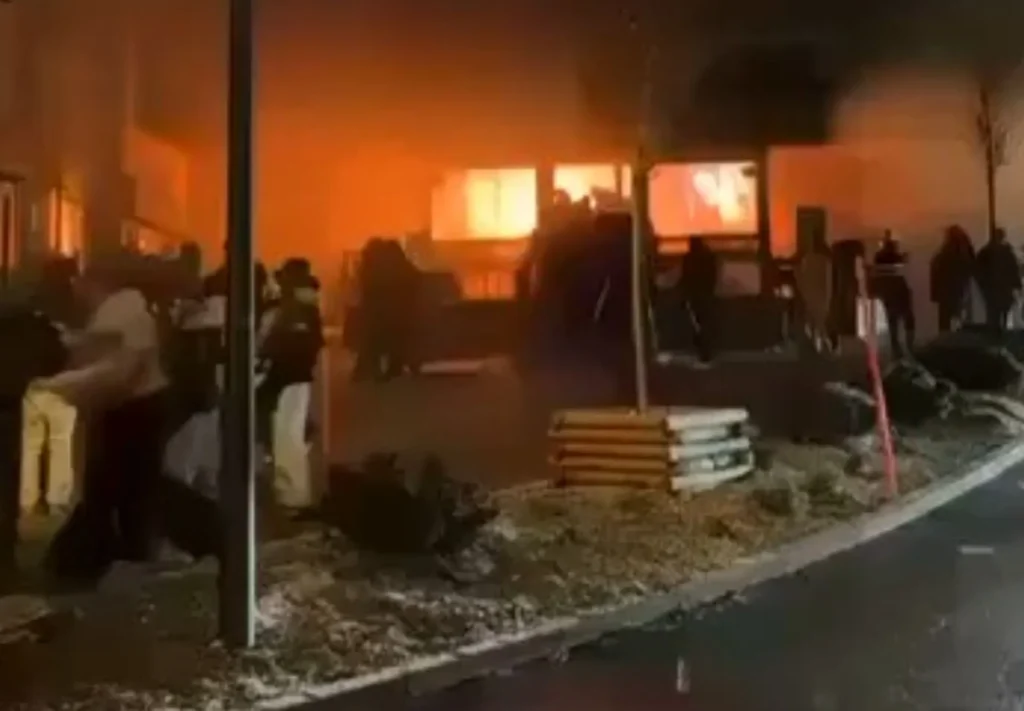
Italian Foreign Minister Tajani’s direct involvement in confirming the death toll and maintaining contact with Swiss authorities throughout the day reflected Italy’s concern that Italian nationals may be among the casualties. The geographic proximity of northern Italy to the Swiss Alps makes Crans-Montana a popular destination for wealthy Italians seeking weekend ski trips or extended holiday stays, increasing the likelihood that Italians were present during New Year’s celebrations at Le Constellation.
German officials have similarly mobilized, with the German Embassy in Bern coordinating with Swiss authorities to determine whether German citizens were among the victims. Germany’s large population and strong economy mean that German tourists represent a significant portion of visitors to premium Swiss ski resorts, making it statistically probable that Germans were present at the venue when the fire erupted.
British consular services have been fielding inquiries from UK families, though the distance between Britain and the Swiss Alps means that British tourists may represent a smaller percentage of New Year’s revelers compared to continental European visitors. However, Crans-Montana’s reputation as an exclusive destination attracts wealthy British visitors, and the timing during school holidays means that British families could have been among those celebrating at the resort.
The investigation into the fire’s cause has focused on champagne sparklers—pyrotechnic devices attached to bottles being carried by staff through the crowded venue. Video footage from Le Constellation in May 2024 shows glamorous waitresses carrying champagne bottles adorned with sparklers through the bar, a practice designed to create dramatic visual effects that appeal to international clientele seeking premium nightlife experiences and social media-worthy moments.
“Dozens of pyrotechnic devices in bottles” lined tables in the basement bar, which had a capacity of approximately 300 people, according to a local police spokesperson. The widespread use of sparklers created multiple potential ignition sources in an environment that investigators now recognize was catastrophically dangerous, particularly given the presence of foreign tourists who may not have been familiar with emergency exit locations or evacuation procedures.
“The current leading theory is that a widespread fire caused an explosion,” regional prosecutor Beatrice Pilloud told the news conference, describing how the sparklers ignited a flashover—a phenomenon where accumulated heat causes all combustible materials to simultaneously reach ignition temperature, creating an explosive conflagration. For foreign tourists unfamiliar with the venue’s layout and potentially impaired by alcohol consumption, the rapid fire progression left virtually no time to identify escape routes.
The fire triggered a panicked stampede as attendees rushed toward what appears to have been a single exit staircase. Authorities are investigating whether the staircase met safety standards requiring adequate width for emergency evacuations, with particular concern about whether international building codes that foreign tourists might reasonably expect were properly implemented in this Swiss establishment.
Witnesses described people crushing against each other in darkness and smoke as they struggled toward the narrow staircase, with some foreign tourists potentially unable to understand shouted instructions in German, French, or Italian during the chaos. The language barriers that make Crans-Montana cosmopolitan during normal circumstances may have contributed to confusion and panic during the emergency evacuation, though investigators have not yet determined whether communication difficulties increased casualty rates.
The international character of the tragedy has profound implications for Crans-Montana’s tourism economy, which depends heavily on its reputation as a safe destination for wealthy international visitors. Foreign tourists pay premium prices for Swiss ski resort experiences precisely because they expect exceptional safety standards and well-managed environments where they can vacation without significant risk. The death of 47 people, many of them foreign nationals, fundamentally challenges those expectations.
Insurance companies representing victims’ families are likely to pursue aggressive litigation against Le Constellation’s owners and potentially Swiss regulatory authorities if investigations reveal that the venue violated international fire safety standards or that Swiss enforcement mechanisms failed to identify dangerous conditions. Cross-border liability claims present complex jurisdictional questions, though Swiss courts will likely serve as the primary venue for litigation given that the incident occurred on Swiss soil.
Foreign governments may pressure Switzerland to implement stricter fire safety regulations for entertainment venues that cater to international tourists, arguing that visitors from abroad deserve protection equivalent to what they would receive in their home countries. The European Union, though Switzerland is not a member, could potentially leverage economic relationships to encourage Swiss adoption of EU safety standards for public venues.
The tragedy occurred less than 5 kilometers from Sierre, site of a 2012 disaster when a bus carrying Belgian schoolchildren crashed inside a Swiss tunnel, killing 28 people including many minors. That earlier tragedy similarly involved foreign nationals and generated sustained international attention, creating unfortunate precedent for how Swiss authorities and resort communities manage multinational disasters and coordinate with multiple foreign governments simultaneously.
The 25th anniversary of a comparable New Year’s Eve inferno in the Dutch fishing town of Volendam that killed 14 people and injured more than 200 adds historical context, demonstrating that crowded entertainment venues across Europe continue experiencing preventable fire disasters despite decades of supposedly improved safety regulations. The recurrence of such tragedies suggests that enforcement gaps or economic pressures to maximize venue capacity and create dramatic ambiance with pyrotechnics continue overriding safety considerations.
For families across Europe now awaiting confirmation about whether their relatives survived, the waiting period represents agonizing uncertainty. Many may have last heard from loved ones via text messages or social media posts documenting New Year’s celebrations at the glamorous Swiss resort, never imagining those would be final communications before disaster struck. The time difference between when the fire occurred and when news spread means some families may have spent hours unaware that their relatives were in danger.
The psychological impact extends beyond immediate families to broader expatriate and tourist communities who regularly visit Swiss ski resorts. The realization that a New Year’s celebration at an upscale venue in one of the world’s safest countries could result in mass casualties challenges fundamental assumptions about where international travelers face genuine risks versus where they can reasonably expect high safety standards.
Crans-Montana’s scheduled hosting of elite Alpine skiing competitions in coming weeks, including World Cup events and eventual world championships, now occurs under shadow of tragedy. International skiing federations and Olympic officials will monitor how the resort and Swiss authorities respond to the disaster, with decisions about whether to relocate events potentially hinging on perceptions about whether the tragedy reflects isolated failures or systemic problems with Swiss safety enforcement.
The economic impact on Switzerland’s broader tourism industry could extend well beyond Crans-Montana if international travelers develop concerns about fire safety at Swiss entertainment venues. Switzerland’s tourism economy depends heavily on foreign visitors, particularly wealthy Europeans and global elites who choose Swiss resorts over competing destinations in France, Austria, and Italy. Any sustained damage to Switzerland’s safety reputation could redirect substantial tourism spending to competing destinations.
Foreign ministries will ultimately issue travel advisories addressing whether their citizens should exercise special caution when visiting Swiss entertainment venues, with language potentially suggesting that travelers verify emergency exit locations and avoid establishments using pyrotechnic presentations. Such advisories, even if carefully worded to avoid alarming travelers unnecessarily, could generate lasting reputational damage for Swiss hospitality industry.
None of the deceased have been publicly identified as authorities work to notify families before releasing names. For foreign nationals, this notification process requires coordinating with embassies and consulates to ensure proper protocols are followed and that families receive information through appropriate diplomatic channels rather than through media reports or social media rumors.
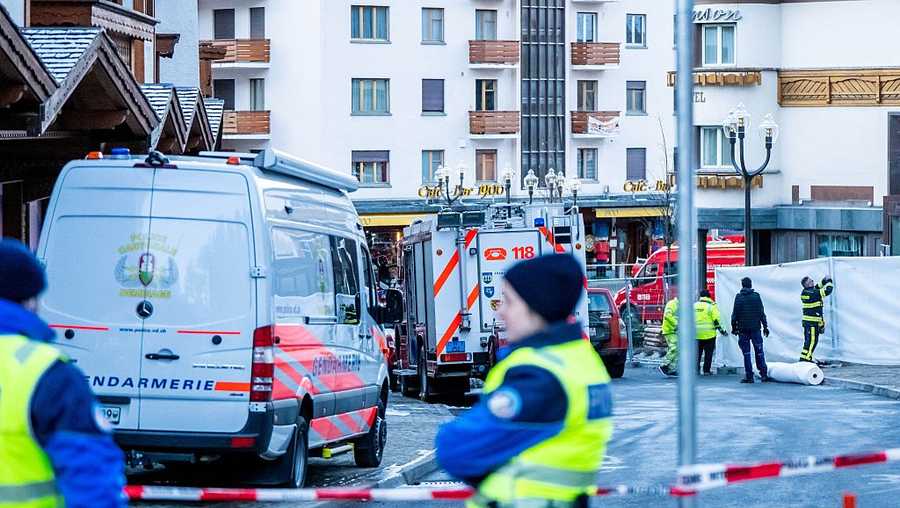
The area surrounding Le Constellation will remain closed during the investigation, though this closure affects not just the immediate crime scene but the resort’s commercial center where international tourists congregate. The visible police presence and cordoned-off area will serve as constant reminder of the tragedy for foreign visitors currently staying at the resort, potentially prompting some to cut vacations short and return home rather than continue skiing under circumstances now associated with death rather than recreation.
NYPost





