

Professional violinist Brian King Joseph has filed a lawsuit against actor-musician Will Smith and his management company alleging sexual harassment, wrongful termination, and retaliation following disturbing incidents during Smith’s 2025 world tour that left the musician fearing for his safety.
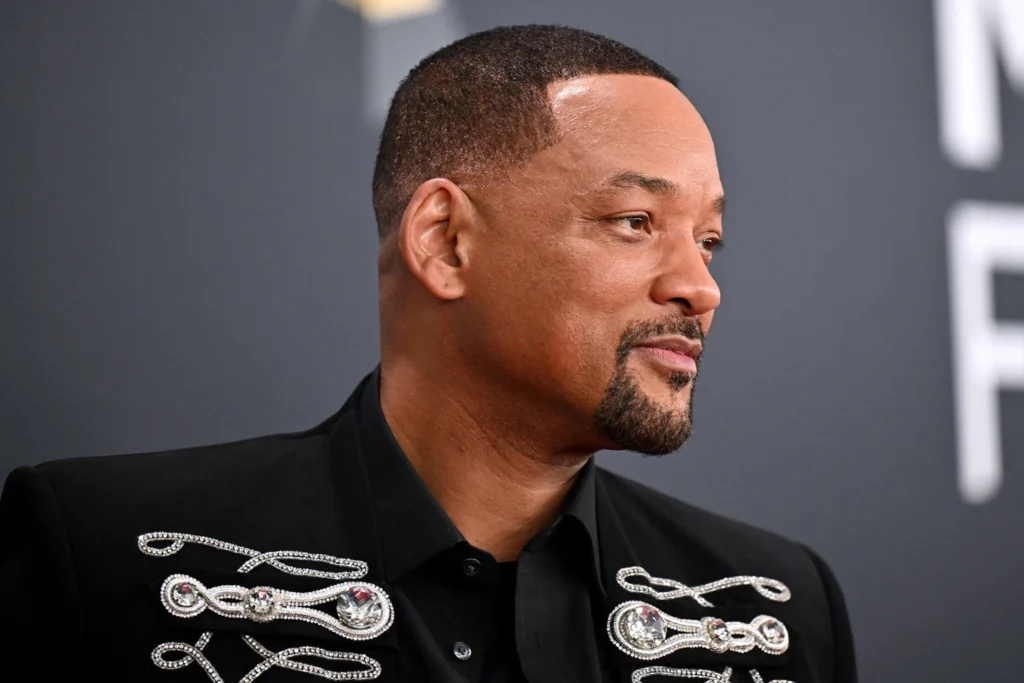
Joseph filed the complaint Tuesday, December 30, at the Superior Court of California in Los Angeles County, naming both the Bad Boys star, 57, and Treyball Studios Management, Inc. as defendants in a case that alleges Smith “was deliberately grooming and priming Mr. Joseph for further sexual exploitation” after inviting the violinist to join his Based on a True Story: 2025 global tour in November 2024.
The lawsuit details what Joseph characterizes as a “traumatic series of events” that unfolded in March 2025 during the tour when the musician discovered that someone had entered his Las Vegas hotel room without forced entry. According to the complaint, Joseph found disturbing evidence suggesting “a sexual threat of violence,” including a handwritten note reading “Brian, I’ll be back…just us,” accompanied by a drawn heart and signed “Stone F.”
Additional items allegedly discovered in the room included wipes, a beer bottle, a red backpack, a bottle of HIV medication bearing another individual’s name, an earring, and hospital discharge paperwork belonging to someone Joseph did not know. The presence of HIV medication and the threatening note’s intimate tone allegedly led Joseph to fear “that an unknown individual would soon return to his room to engage in sexual acts” with him without his consent, according to the complaint.
PEOPLE has reached out to representatives for Will Smith for comment on the allegations but had not received a response at the time of publication.
Joseph reported the hotel room intrusion to multiple parties including hotel staff, a local non-emergency police line, and Smith’s management team, according to the lawsuit. Rather than receiving support or enhanced security measures following his report, the complaint alleges that a member of the tour management team later “shamed” Joseph for reporting the incident and informed him he was being terminated from the tour.
The lawsuit claims that another violinist was subsequently hired to assume Joseph’s position on the tour, suggesting the termination was retaliatory rather than based on performance concerns. The abrupt dismissal following Joseph’s safety complaints forms the basis for the wrongful termination allegations against Smith’s company.
The incidents and subsequent termination caused Joseph “severe emotional distress, economic loss, reputational harm, and other damages,” according to the complaint. The lawsuit specifically references “PTSD and other mental illness as a result of the termination,” indicating that Joseph has experienced ongoing psychological consequences from what he alleges was a pattern of harassment culminating in retaliation for reporting safety concerns.
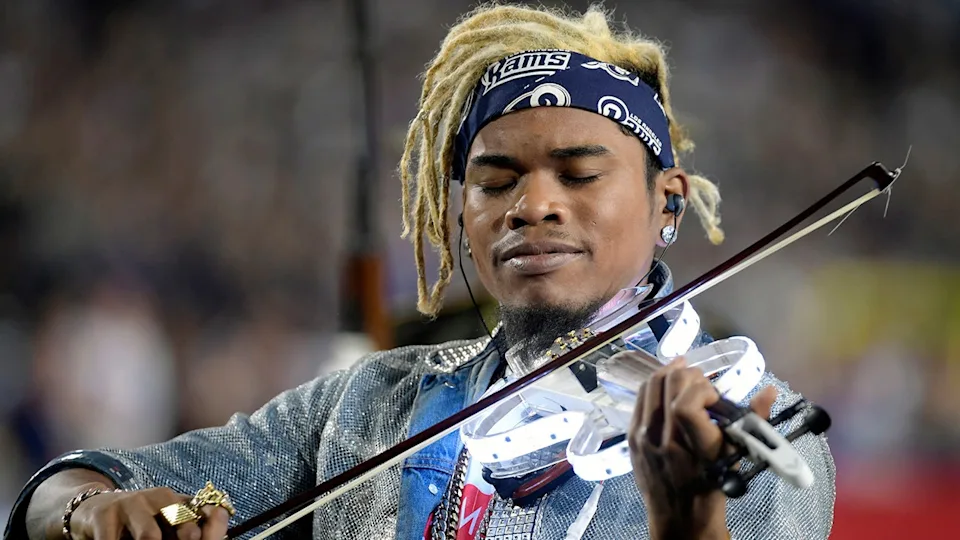
Joseph, a Washington, D.C. native, gained national recognition competing on America’s Got Talent season 13 in 2018, where he placed as a top-three finalist. His classical violin performances showcased technical virtuosity that attracted a substantial following and established him as a rising talent in the crossover classical music scene that blends traditional technique with contemporary popular music.
In December 2024, Joseph posted an Instagram video showing him performing violin onstage, indicating in his caption that it was the first night of touring with Will Smith. The post suggested enthusiasm about the professional opportunity to perform with one of entertainment’s biggest stars on a global tour that would expose Joseph’s artistry to massive international audiences.
The tour, titled Based on a True Story, ran from June through September 2025 following the March release of Smith’s album of the same name. The extensive tour schedule took Smith and his supporting musicians through multiple continents, performing in major venues before audiences drawn by Smith’s crossover appeal as both actor and musician.
The lawsuit against Smith arrives amid a broader pattern of legal challenges facing the actor and his family. A $3 million lawsuit filed December 1 from former associate Bilaal Salaam, also known as Brother Bilaal, targets Smith’s wife Jada Pinkett Smith, claiming she verbally threatened him. An entertainment source characterized the couple’s response to PEOPLE, stating they “are really mad and say it’s a lot of crap,” and describing Salaam as “an opportunistic person out to exploit them.”
The timing and nature of multiple legal actions against the Smith family has generated speculation about whether the complaints reflect genuine grievances or opportunistic litigation aimed at wealthy celebrities whose public profiles make them attractive targets for monetary settlements. Defense attorneys for high-profile defendants often characterize such lawsuits as attempts to leverage celebrity status and settlement pressure rather than pursue legitimate legal remedies for actual harm.
Joseph’s allegations join a growing category of entertainment industry lawsuits where touring musicians, crew members, and other personnel claim workplace harassment, unsafe conditions, or retaliatory termination. The power dynamics inherent in entertainment industry employment—where career opportunities often depend on maintaining positive relationships with powerful stars and their management teams—can create environments where reporting misconduct carries professional risks that victims must weigh against personal safety concerns.
The lawsuit’s allegations about hotel room security raise questions about tour management protocols for protecting supporting performers. Professional tours typically maintain security measures including restricted floor access, security personnel monitoring hallways, and protocols for ensuring that only authorized individuals access performers’ rooms. The alleged breach of Joseph’s room security, if substantiated, would suggest failures in tour management’s duty to provide safe accommodations for touring personnel.
The presence of HIV medication belonging to another individual among items allegedly left in Joseph’s room adds a particularly concerning dimension to the claimed threat. Beyond the immediate fear of sexual assault, the medication’s presence could reasonably suggest to the victim that any assault might involve HIV transmission risk, intensifying psychological trauma even if no physical assault occurred.
Legal experts note that sexual harassment litigation in entertainment contexts often hinges on establishing patterns of behavior, documentation of complaints, and evidence of retaliation following reports. Joseph’s lawsuit will need to demonstrate connections between the hotel room incident, his reporting of that incident, and the subsequent termination to establish wrongful termination and retaliation claims under California employment law.
The complaint’s characterization of Smith as “deliberately grooming and priming” Joseph for exploitation represents a serious allegation suggesting premeditated predatory behavior rather than isolated incidents or misunderstandings. Grooming typically describes systematic efforts to build trust and lower boundaries with intended victims before escalating to more explicit exploitation, a pattern that prosecutors and plaintiff attorneys in sexual misconduct cases work to establish through documentary evidence and witness testimony.
Smith’s representatives will likely challenge both the factual allegations and the legal theories connecting Smith personally to the alleged hotel room intrusion and management team’s termination decision. Celebrity defendants typically argue that they cannot be held personally liable for actions by unknown third parties or employment decisions made by management companies, particularly when no evidence directly links the celebrity to the challenged conduct.
The entertainment industry has experienced heightened scrutiny of workplace conduct and power dynamics following the #MeToo movement that exposed systematic sexual harassment and assault across film, television, music, and theater sectors. That cultural shift has encouraged victims to report misconduct they might previously have tolerated to preserve career opportunities, while simultaneously making defendants more vulnerable to allegations that might not have generated lawsuits in earlier eras.
Joseph’s decision to file litigation rather than pursue confidential settlement negotiations or complaints through internal channels suggests either that settlement discussions failed or that Joseph and his attorneys believe public litigation serves interests beyond monetary compensation. Public lawsuits can vindicate victims, establish accountability, and potentially encourage other victims to come forward, though they also subject plaintiffs to intense scrutiny and require willingness to have allegations examined in detail through discovery and potential trial.
The lawsuit arrives just weeks after Tyler Perry faced another sexual assault lawsuit that his attorneys characterized as a “money grab.” Mario Rodriguez, who appeared in Perry’s 2016 film Boo! A Madea Halloween, is seeking $77 million in damages for alleged sexual assault and unwanted advances while Perry promised him roles, according to PEOPLE reports.
Rodriguez’s attorney Jonathan J. Delshad also represents Derek Dixon, another actor who made similar allegations against Perry, 56, earlier in the year. Perry’s attorney Alex Spiro responded December 26, stating “Having recently failed in another matter against Mr. Perry, the very same lawyer has now made yet another demand from more than a decade ago which will also be a failed money grab.” However, Delshad counters that Dixon’s claims “are alive and well, and none of them have failed; they were just moved to a different court,” with the case relocating from California to Georgia.
Rodriguez’s lawsuit obtained by PEOPLE claims he was approached at a Los Angeles gym in 2015 by a trainer who said Perry wanted to meet him. Perry allegedly offered Rodriguez a small role in Madea Halloween over the phone, with Rodriguez ultimately playing “Frat Guy #10” in the film.
The complaint alleges multiple instances where Perry invited Rodriguez to his home under the guise of discussing future projects, only to make sexual advances while drinking. In November 2018, Perry allegedly “grabbed [Rodriguez’s] penis” and Rodriguez “repeatedly told Mr. Perry to stop,” having to “physically struggle to get away,” according to the lawsuit.
Perry allegedly told Rodriguez to “let it happen” and “If you were to just be with me, I would take care of you….” The lawsuit claims that after two incidents Perry apologized and handed Rodriguez $5,000 “and sent him away.” A final alleged encounter in April 2019 saw behavior that made it “clear that Mr. Perry would do whatever he wanted, whenever he wanted, to whomever he wanted no matter how many times he was rejected,” according to the complaint.
Rodriguez’s lawsuit claims Perry “randomly reach out to” him through 2024, and when Perry learned Rodriguez planned to file the lawsuit, Perry allegedly texted him saying he “did so much to help Rodriguez” and felt “betrayed.” In a December 13 Instagram video, Rodriguez spoke about feeling “scared and ashamed,” explaining why he hadn’t previously come forward, without naming Perry specifically but referencing a “powerful” director “that everybody knows.”
“I stayed quiet for much too long. And I just want to say I’m really sorry, man. Because if I would’ve spoken up sooner I could’ve saved somebody that this probably happened to after me,” Rodriguez tells his nearly 1 million Instagram followers in the clip. “I just wanna say sorry for that, whoever that may be. It could’ve stopped with me if I would’ve said something. … But I’m speaking up now.”
Dixon, who starred on Perry’s TV series The Oval, filed a $260 million lawsuit against Perry in June alleging sexual harassment, assault and retaliation, which the filmmaker denies. In September, Perry’s attorney Matthew Boyd characterized Dixon as “an individual who got close to Tyler Perry for what now appears to be nothing more than setting up a scam,” adding “Tyler will not be shaken down and we are confident these fabricated claims of harassment will fail.”
The parallel lawsuits against major entertainment figures like Smith and Perry reflect broader questions about power dynamics, accountability, and legal recourse in industries where career advancement often depends on relationships with influential stars and producers. Whether these cases represent legitimate grievances exposing systematic problems or opportunistic litigation exploiting celebrity wealth and settlement pressure will ultimately be determined through judicial processes that scrutinize evidence, assess credibility, and apply legal standards to contested facts.
People.com





