

President Donald Trump on Friday warned that the United States could intervene if Iranian security forces violently suppress protesters, as days of unrest driven by economic hardship posed the most serious internal challenge to Iran’s leadership in years.
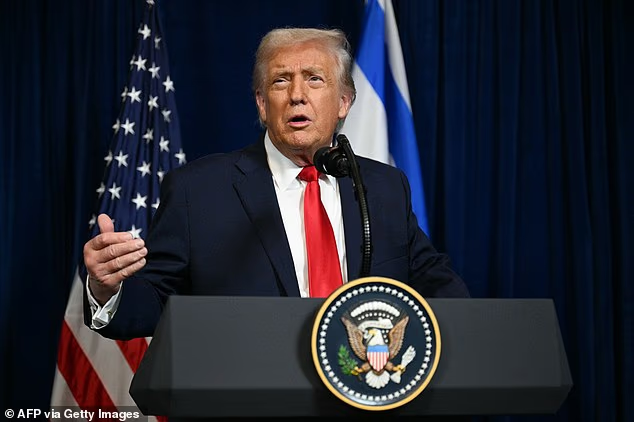
“We are locked and loaded and ready to go,” Trump wrote on social media, issuing his strongest signal yet of potential U.S. involvement as demonstrations over soaring inflation spread across the country. The remarks came months after the United States struck Iranian nuclear facilities in June, joining an Israeli air campaign that targeted Tehran’s atomic program and senior military figures, Reuters reported.
Iranian officials swiftly condemned Trump’s comments. Ali Larijani, a senior figure who heads Iran’s Supreme National Security Council and advises Supreme Leader Ayatollah Ali Khamenei, warned that U.S. interference in Iran’s domestic affairs would destabilize the entire region. Iran backs armed groups across Lebanon, Iraq and Yemen.
State media in Iran cited a local official in the country’s west, where several deaths have been reported, as saying that any unrest or illegal gatherings would be met “decisively and without leniency,” signaling a possible escalation as protests enter their sixth day.
Largest unrest in years
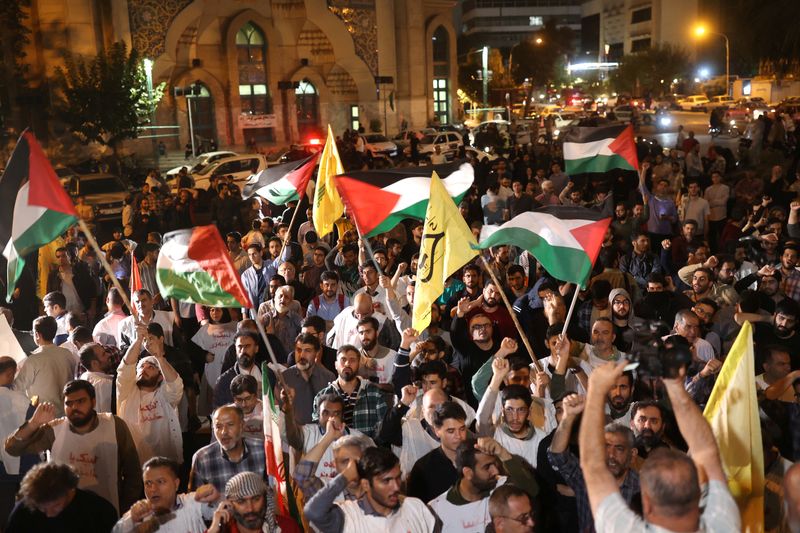
Demonstrations sparked by the collapse of Iran’s rial and rising living costs have spread across multiple provinces, with clashes between protesters and security forces concentrated in western regions. State-linked outlets and rights groups have confirmed at least six deaths since Wednesday, including one man authorities identified as a member of the Basij paramilitary force affiliated with the Revolutionary Guards, according to Reuters.
Iran has faced repeated waves of unrest over recent decades, often responding with mass arrests and heavy security deployments. Analysts say the current economic strain may have left authorities more exposed than during previous crises.
Reuters reported that verified video footage showed crowds gathered outside a burning police station overnight, with gunfire audible and protesters shouting “shameless, shameless” at security forces. In Zahedan, a southern city with a large Baluch minority population, the rights group Hengaw said demonstrators chanted “Death to the dictator.”
Hengaw has documented at least 29 arrests so far, most of them in western Iran and including members of the Kurdish minority. State television separately announced arrests in Kermanshah, where authorities accused suspects of producing petrol bombs and homemade firearms.
Deaths acknowledged by official or semi-official Iranian media have occurred in the western towns of Lordegan and Kuhdasht, Reuters said. Hengaw also reported a fatality in central Fars province, though state outlets denied that account.
The unrest marks Iran’s largest protests since 2022, when the death of 22-year-old Mahsa Amini in police custody triggered nationwide demonstrations that paralyzed the country for weeks and left hundreds dead, according to rights groups.
President strikes conciliatory tone
Amid the turmoil, Iran’s elected President Masoud Pezeshkian has adopted a more conciliatory approach, pledging dialogue with protest leaders even as rights organizations accuse security forces of firing on demonstrators.
Speaking Thursday, before Trump’s warning, Pezeshkian acknowledged government failures as a root cause of the crisis. “We are to blame,” he said, urging officials not to shift responsibility elsewhere and calling for solutions that address public grievances, according to Iran’s state news agency IRNA.
Pezeshkian’s administration has pursued economic liberalization, including easing currency controls, a move that has accelerated the rial’s fall on the unofficial market. Inflation has remained above 36% since March, even by official estimates, in an economy battered by years of Western sanctions.
Pressure has also mounted following Israeli and U.S. strikes last year, the fall of Syrian President Bashar al-Assad, a key Iranian ally, and Israeli attacks on Hezbollah in Lebanon.
Regional tensions and U.S. warning
Larijani accused Washington and Israel of encouraging unrest and warned that intervention would threaten U.S. interests across the Middle East. “The American people should know that Trump started the adventurism. They should take care of their own soldiers,” he said, according to Reuters.
The Daily Mail separately reported that Trump’s warning came just hours after he met with Israeli Prime Minister Benjamin Netanyahu, describing the statement as a threat of war if Tehran violently crushes peaceful protests. Trump reiterated on Truth Social that the United States would “come to their rescue” if protesters were killed.
Iranian officials have repeatedly blamed Western countries for fueling anti-regime demonstrations, while advisers to Khamenei, including Ali Shamkhani, warned that “any interventionist hand that gets too close to the security of Iran will be cut,” invoking past U.S. interventions in the region, the Daily Mail said.
While demonstrations have not yet reached the nationwide scale seen after Amini’s death, analysts say the depth of economic anger and the sharp exchange of threats between Washington and Tehran risk further inflaming tensions in an already volatile region.
Dailymail/Reuters





