

TUMU, Ghana — Ghanaian security forces have arrested and briefly detained 17 heavily armed soldiers from Burkina Faso discovered establishing a combat position inside Ghanaian territory near the border community of Wuru in the Upper West Region, officials confirmed, raising fresh concerns about cross-border security in a region increasingly affected by militant activity.
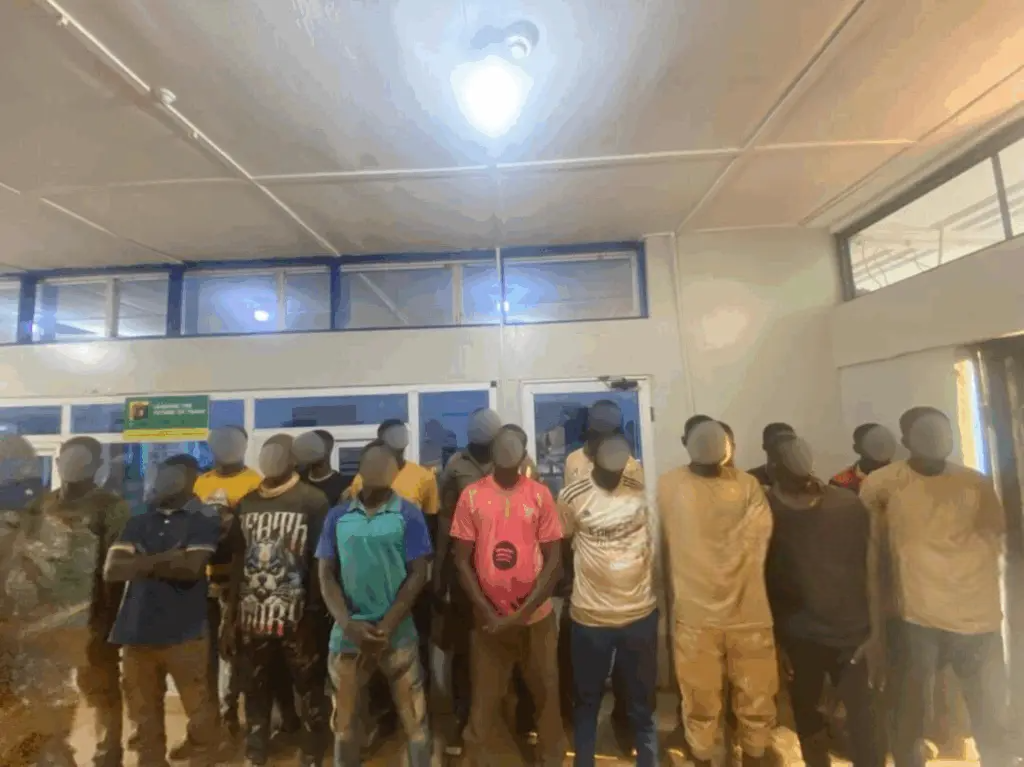
The soldiers, aged between 20 and 30 years old, were found in possession of dozens of military items including firearms and explosive devices when community residents discovered them constructing fortified positions using sandbags approximately one hour’s drive east of Tumu, the capital of Sissala East District. The incident represents a significant breach of Ghanaian sovereignty and highlights the complex security dynamics along West Africa’s increasingly porous borders.
Officials from the Ghana Immigration Service confirmed that the armed men were actively establishing a combat position when local residents spotted them and immediately raised alarms with authorities.
The discovery of foreign military personnel conducting what appeared to be tactical operations on Ghanaian soil without authorization triggered swift response from security services concerned about both the immediate threat and broader implications for border integrity.
“We received a distress call from community members about armed elements establishing a combat position,” a Ghana Immigration Service official stated. “We responded swiftly, successfully ambushed them, and transported them together with their weapons to our office.”
The language describing security forces “ambushing” the soldiers suggests a tactical operation where Ghanaian personnel approached covertly to prevent the armed group from fleeing or initiating hostilities.
The successful detention of 17 armed soldiers without reported casualties indicates professional execution by Ghanaian forces who managed to secure surrender or capture without triggering violent confrontation that could have escalated into cross-border military incident.
During interrogation at immigration facilities, the detained men identified themselves as soldiers of the Burkinabè army conducting routine border patrol operations who had become disoriented and inadvertently crossed into Ghanaian territory.
Their explanation suggested navigational error rather than deliberate incursion, though the discovery of combat position construction equipment including sandbags raised questions about whether lost patrol units typically carry materials for establishing fortified positions.
Despite their claims of accidental border crossing, Ghanaian authorities detained the soldiers and confiscated their weapons for several hours while senior officials determined appropriate response.
The detention continued until approximately 9:00 p.m. when national authorities issued directives ordering the soldiers’ release, suggesting high-level diplomatic consultations occurred between Ghanaian and Burkinabè governments to resolve the incident without escalating tensions.
The soldiers’ weapons remained in Ghanaian custody overnight, with authorities releasing the armaments the following day after a diplomatic delegation led by staff from the Ghanaian Embassy in Burkina Faso visited to formally coordinate the return of military equipment. The embassy’s involvement indicates both governments treated the matter as requiring diplomatic resolution rather than purely security or law enforcement response.
The Wuru community where the incident occurred lies within the Nazinga Forest range, a region that has experienced increasing security concerns in recent years. Between 2022 and 2023, residents reported frequent sightings and movements of armed men suspected to be terrorists or militants operating within farmlands inside the forest, creating persistent anxiety about security conditions in borderland areas where state authority remains limited.
Local residents have complained that the presence of armed groups—whether militants, bandits, or unidentified military personnel—has severely disrupted traditional economic activities including farming and hunting that communities depend on for subsistence and income.
The insecurity has forced many residents to abandon fields or restrict movements, creating economic hardship that compounds the direct security threats posed by armed elements operating in the area.
Intelligence reports indicating the return of suspected terrorists began circulating in December 2025, just weeks before the Burkinabè soldiers were discovered establishing their combat position.
The timing raises questions about whether the Burkinabè military deployment responded to intelligence about militant activity in the border region, potentially explaining why soldiers crossed into Ghanaian territory if they were pursuing or attempting to interdict suspected terrorist elements.
The incident occurs against a backdrop of deteriorating security across the Sahel region, where jihadist groups affiliated with al-Qaeda and Islamic State have expanded operations from Mali and Burkina Faso toward coastal West African states including Ghana.
Burkina Faso has experienced particularly severe militant violence in recent years, with government forces struggling to contain insurgent groups that control significant rural territories and regularly attack military positions, civilian communities, and infrastructure.
Burkina Faso’s military government, which came to power through coups in 2022, has prioritized security operations against jihadist militants while simultaneously experiencing tensions with neighboring countries over border security cooperation and accusations of cross-border militant movements.
The detention of Burkinabè soldiers in Ghana adds another layer to already complex regional security dynamics where cooperation remains essential yet increasingly strained.
Ghana has largely avoided the militant violence devastating its northern neighbors, though security analysts have warned that jihadist expansion threatens Ghana’s northern regions bordering Burkina Faso and Togo.
The Ghanaian government has invested in enhanced border security and military presence in northern areas to prevent militant infiltration, making the discovery of foreign soldiers establishing combat positions particularly sensitive given concerns about any activities that could facilitate terrorist operations.
The swift release of the detained soldiers suggests Ghanaian authorities accepted Burkina Faso’s explanation that the incursion represented navigational error rather than hostile intent or deliberate sovereignty violation.
However, the incident will likely prompt discussions about improved border coordination mechanisms to prevent similar occurrences that could escalate into serious diplomatic crises or military confrontations if not managed carefully.
Border demarcation in West Africa’s Sahel region remains imperfect, with many areas lacking clear physical markers indicating where one country ends and another begins. For military patrols operating in remote borderlands, particularly in forested or otherwise challenging terrain, determining precise locations can prove difficult without GPS technology and detailed topographical knowledge.
However, the presence of sandbags and materials for establishing fortified positions suggests the soldiers intended to remain in the location rather than simply passing through, undermining claims of accidental crossing.
The Nazinga Forest’s characteristics as dense woodland covering both sides of the Ghana-Burkina Faso border create opportunities for armed groups to operate with relative impunity, moving between countries to evade security forces and exploiting sovereignty concerns that sometimes prevent cross-border pursuit operations.
Militants throughout the Sahel have demonstrated sophisticated understanding of how to exploit border dynamics, establishing safe havens in areas where neighboring countries’ security forces hesitate to operate without explicit authorization.
Ghana’s rapid response to community reports of armed elements establishing positions demonstrates the importance of civilian cooperation in border security. Local residents familiar with normal patterns of movement and activity serve as crucial early warning systems for detecting unusual armed presence, whether from foreign military forces, militants, or criminal groups. The willingness of Wuru community members to immediately alert authorities rather than remaining silent out of fear proved essential to preventing whatever the Burkinabè soldiers intended.
The diplomatic resolution through embassy channels reflects mature bilateral relationships where both countries recognized shared interests in preventing the incident from damaging cooperation needed to address common security threats. The Sahel’s deteriorating security environment requires neighboring states to maintain functional diplomatic and military coordination despite periodic sovereignty concerns or nationalist pressures to respond aggressively to border incidents.
However, the incident will likely generate domestic political pressure in Ghana for more robust responses to foreign military incursions, particularly if opposition figures characterize the soldiers’ release as weakness or failure to defend national sovereignty. Balancing diplomatic pragmatism with domestic expectations about territorial integrity represents a persistent challenge for African governments managing complex border security situations where cooperation with neighbors remains essential.
The recovery of dozens of weapons and explosive devices from the detained soldiers illustrates the firepower that military units routinely carry during operations in conflict-affected regions. The arsenal suggests the group was equipped for significant combat operations rather than routine observation patrols, lending weight to speculation that they were actively pursuing militants or establishing forward positions for operations targeting suspected terrorist elements operating in the border area.
Moving forward, the incident will likely trigger discussions between Ghanaian and Burkinabè military officials about protocols for border operations, notification procedures when patrols approach border areas, and potentially joint coordination mechanisms to ensure that counter-terrorism operations by either country’s forces don’t inadvertently create diplomatic incidents. Such coordination represents sensitive political territory given sovereignty concerns, but the security imperatives of combating shared terrorist threats may compel pragmatic cooperation arrangements.
For residents of Wuru and surrounding communities in the Nazinga Forest region, the incident provides little reassurance about security conditions. Whether armed elements in their territory represent lost Burkinabè soldiers, terrorist militants, bandits, or some combination, the fundamental reality remains that civilians in border areas increasingly find themselves caught between multiple armed groups whose presence disrupts normal life and creates persistent fear about violence erupting without warning.





