

MOSCOW/CARACAS — Russia’s Foreign Ministry condemned what it characterized as a U.S. “act of armed aggression” against Venezuela in a statement posted Saturday, demanding that the South American nation be “guaranteed the right to determine its own destiny without any destructive, let alone military, outside intervention” as international condemnation mounted over predawn strikes and President Trump’s claim that Venezuelan leader Nicolás Maduro had been captured.
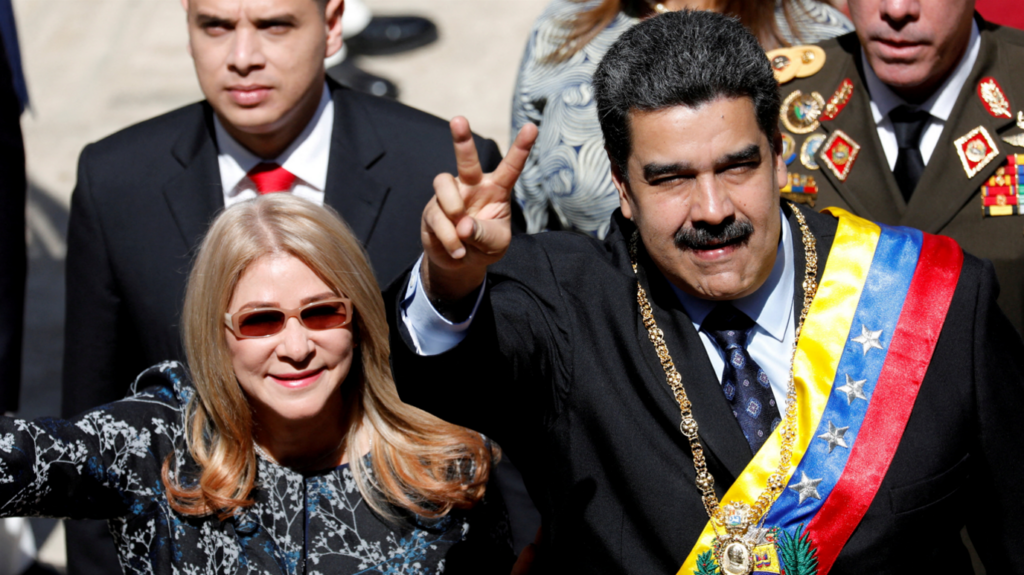
The Russian ministry called for dialogue to prevent further escalation and reaffirmed its “solidarity” with the Venezuelan people and government in a Telegram channel statement. Russia joined calls for an emergency United Nations Security Council meeting to address what Moscow characterized as a deeply concerning violation of international law and Latin American sovereignty.
“Latin America must remain a zone of peace,” Russia’s Ministry of Foreign Affairs declared, labeling the U.S. military action a “deeply concerning” act of aggression. “The pretexts used to justify such actions are unfounded,” the statement continued, directly challenging Trump administration assertions that the strikes represented legitimate counter-narcotics operations or law enforcement actions to apprehend an indicted fugitive.
The Russian condemnation carried particular weight given Moscow’s permanent seat on the UN Security Council, where it maintains veto power over resolutions addressing threats to international peace and security. Russia’s call for an emergency council meeting suggests Moscow may seek formal Security Council action condemning the strikes or demanding U.S. withdrawal, though such measures would likely face American vetoes that would prevent binding resolutions while highlighting international isolation of U.S. policy.
Colombian President Gustavo Petro, whose country shares an extensive border with Venezuela and has absorbed millions of Venezuelan refugees fleeing economic collapse, declared on X that “Caracas is being bombed right now.” Petro stated the bombing involved missiles and called on the Organization of American States and United Nations to convene immediately to address the crisis.
The Colombian president’s real-time commentary on the strikes reflected the alarm with which regional leaders viewed U.S. military action in South America, where historical memories of American interventionism remain powerful political forces. Petro, a leftist leader who has maintained complex relationships with both the Maduro government and Washington, positioned himself as a voice for Latin American sovereignty against what he implicitly characterized as U.S. aggression.
Cuba’s President Miguel Díaz-Canel issued one of the most forceful condemnations, labeling the strikes “state terrorism” and demanding international community response. “Cuba denounces and urgently demands the reaction of the international community against the criminal attack by the U.S. on Venezuela,” Díaz-Canel stated in a post on X, employing rhetoric equating U.S. military action with the terrorism Washington claims to combat.
Cuba and Venezuela maintain strong alliances based on shared ideology, political alignment, and economic necessity. Cuba has deployed thousands of doctors, military advisors, and other professionals to Venezuela in exchange for oil shipments that sustain the Caribbean island’s struggling economy. The strikes on Venezuela therefore represent not just an attack on an ally but a potential threat to Cuban economic interests dependent on Venezuelan petroleum.
The Cuban government’s characterization of U.S. actions as “state terrorism” reflected Havana’s longstanding rhetorical framework for describing American foreign policy toward nations resisting U.S. hegemony. For Cuba, which has endured decades of American sanctions and survived multiple U.S.-backed attempts at regime change including the Bay of Pigs invasion, the Venezuela strikes confirmed narratives about American imperialism that Cuban leaders have promoted throughout the revolutionary government’s existence.
Iran’s Foreign Ministry similarly condemned the strikes, calling on all governments and international organizations to join its denunciation. “The American military attack on Venezuela is a clear violation of the basic principles of the United Nations Charter and the fundamental rules of international law,” the ministry stated in a release published by Iran’s semi-official Tasnim news agency on Telegram.
Iran urged the international community to take “immediate action” to stop what it characterized as “illegal” escalation against Venezuela, arguing the strikes represented blatant violations of Venezuelan “sovereignty and territorial integrity.” The Iranian statement invoked core principles of international law enshrined in the UN Charter that prohibit member states from using force against other nations except in self-defense or with Security Council authorization.
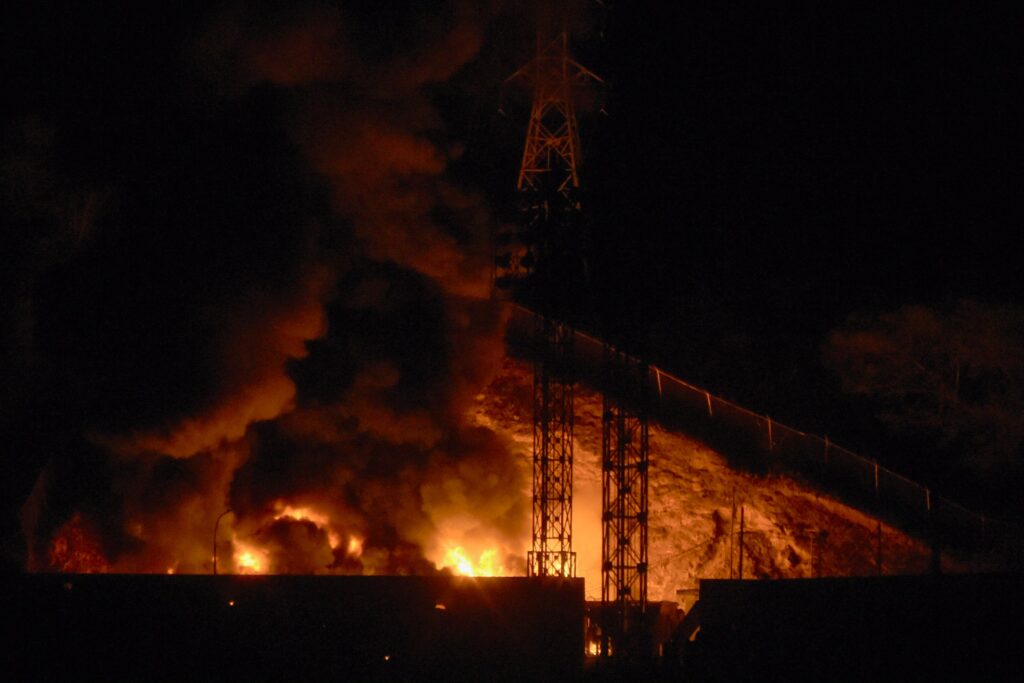
Iran has maintained close ties with Venezuela for years, strengthened by their shared status as targets of U.S. sanctions and their mutual enmity toward Washington. Both nations have cooperated on oil exports, weapons transfers, and diplomatic coordination to counter American pressure. For Tehran, the Venezuela strikes demonstrated what Iranian leaders have long warned: that the United States disregards international law when pursuing regime change objectives against governments it deems hostile.
The Mexican embassy in Venezuela urged calm Saturday morning amid multiple explosions across the South American country. In a post on X, the embassy instructed Mexican citizens to follow orders from local officials and maintain readily accessible documents, water, and medicine. The embassy provided an emergency phone number for Mexican nationals to contact diplomatic personnel for assistance or information about evacuation options.
The cautious Mexican response reflected the country’s delicate balancing act between its geographic proximity and economic integration with the United States and its historical support for principles of non-intervention in Latin American affairs. Mexico’s leftist government under President Claudia Sheinbaum has sought to maintain cordial relations with both Washington and Caracas while avoiding taking sides in confrontations that could damage Mexican interests.
The United States had not officially confirmed it was behind military action in Venezuela by Saturday afternoon, despite President Trump’s social media announcements claiming U.S. forces had conducted strikes and captured Maduro. The absence of formal government statements from the Pentagon, State Department, or White House beyond Trump’s Truth Social posts created unusual ambiguity about the operation’s authorization, execution, and legal justification.
NBC News summarized the situation as President Donald Trump claiming the U.S. carried out large-scale strikes against Venezuela early Saturday and “captured” President Nicolás Maduro, who along with his wife had been flown out of the country according to Trump’s Truth Social post. A series of explosions struck Caracas and surrounding areas Saturday morning, with further details expected at an 11 a.m. ET news conference Trump scheduled at his Mar-a-Lago resort.
The U.S. has escalated pressure on Venezuela for months, assembling massive military presence in the Caribbean, intercepting two fully-loaded Venezuelan crude tankers, and killing dozens in strikes on boats the U.S. alleged were carrying drugs. Trump had repeatedly pressed Maduro to voluntarily relinquish power and told NBC News on December 18 that he was leaving the possibility of war with Venezuela “on the table.”
Thousands of Venezuelans were arrested following sometimes violent protests after July 2024 presidential elections that the opposition and international observers characterized as stolen in favor of Maduro. The disputed election results, combined with Venezuela’s ongoing economic collapse and refugee crisis, provided political context for Trump administration claims that military intervention served humanitarian purposes beyond counter-narcotics operations.
The international condemnation highlighted deep divisions over U.S. military action, with American adversaries and some Latin American governments characterizing the strikes as illegal aggression while right-wing regional leaders including Argentine President Javier Milei celebrated what they viewed as liberation of Venezuela from authoritarian rule. The polarized responses reflected broader geopolitical alignments where attitudes toward U.S. military power increasingly define international relationships.
Russia’s formal support for an emergency UN Security Council meeting created potential for high-stakes diplomatic confrontation where American actions would face scrutiny from international community members concerned about precedents for unilateral military intervention. While U.S. veto power would prevent binding Security Council resolutions condemning the strikes, debate would force American diplomats to defend legal justifications before global audience skeptical of regime change rationales.
The invocation of UN Charter principles by Russia, Iran, and other critics emphasized that international law theoretically prohibits the use of force against sovereign nations except in self-defense or with Security Council authorization. Trump administration officials would need to argue either that strikes represented legitimate self-defense against drug trafficking threats or that executing arrest warrants justified military action—legal theories that most international law scholars would dispute.
Cuba’s characterization of the strikes as “state terrorism” employed provocative language designed to equate U.S. actions with the jihadist violence and insurgent attacks that Washington has spent decades combating. The rhetorical strategy aimed to delegitimize American moral authority on terrorism issues by arguing that military strikes killing Venezuelan officials, soldiers, and civilians constituted terrorism regardless of stated counter-narcotics justifications.
Colombian President Petro’s real-time social media commentary about Caracas being bombed with missiles provided vivid description of the attacks’ intensity while positioning Colombia as a voice for regional concerns about U.S. military action. Petro’s call for immediate OAS and UN meetings reflected understanding that regional and international organizations represented the only potential forums for constraining U.S. actions that individual Latin American nations lacked power to prevent through bilateral diplomacy.
The Organization of American States, historically dominated by U.S. influence, faced pressure to address strikes that many member states would view as violations of OAS charter principles prohibiting intervention in member nations’ internal affairs. However, OAS internal divisions between governments supporting and opposing Maduro would likely prevent consensus condemnation, potentially exposing the organization’s limited effectiveness when confronting U.S. military actions in the hemisphere.
Iran’s emphasis on “sovereignty and territorial integrity” violations invoked concepts that resonate powerfully with developing nations concerned about maintaining independence from great power interference. The Iranian statement aimed to rally Global South support for condemning strikes as neocolonial aggression rather than legitimate law enforcement, potentially building diplomatic coalitions that could complicate U.S. objectives even if they couldn’t prevent military operations.
Russia’s insistence that “Latin America must remain a zone of peace” echoed Cold War-era rhetoric about spheres of influence while positioning Moscow as defender of Latin American sovereignty against U.S. hegemony. The statement reflected Russian strategic interests in maintaining influence with governments resisting American power while demonstrating to other potential U.S. targets including Syria and Iran that Russia supports allies facing Western military pressure.
The international response’s fragmentation along ideological and geopolitical lines illustrated how the Venezuela strikes became proxy for broader debates about American global role, legitimacy of humanitarian intervention, appropriate responses to authoritarianism, and whether international law meaningfully constrains great power military action. The crisis would test whether multilateral institutions retain relevance when addressing military interventions by permanent Security Council members or whether such organizations simply provide theaters for diplomatic posturing without practical enforcement mechanisms.
For Latin American nations navigating between U.S. economic ties and sovereignty concerns, the strikes posed difficult choices about whether to publicly condemn actions that might anger Washington or remain silent and accept tacit legitimization of intervention principles that could theoretically justify future U.S. military actions against any regional government Washington deemed problematic. The varied responses reflected different calculations about national interests, domestic politics, and assessments of whether regional solidarity or bilateral U.S. relationships better served long-term security and prosperity.
NBC/CNN/Reuters/AP





